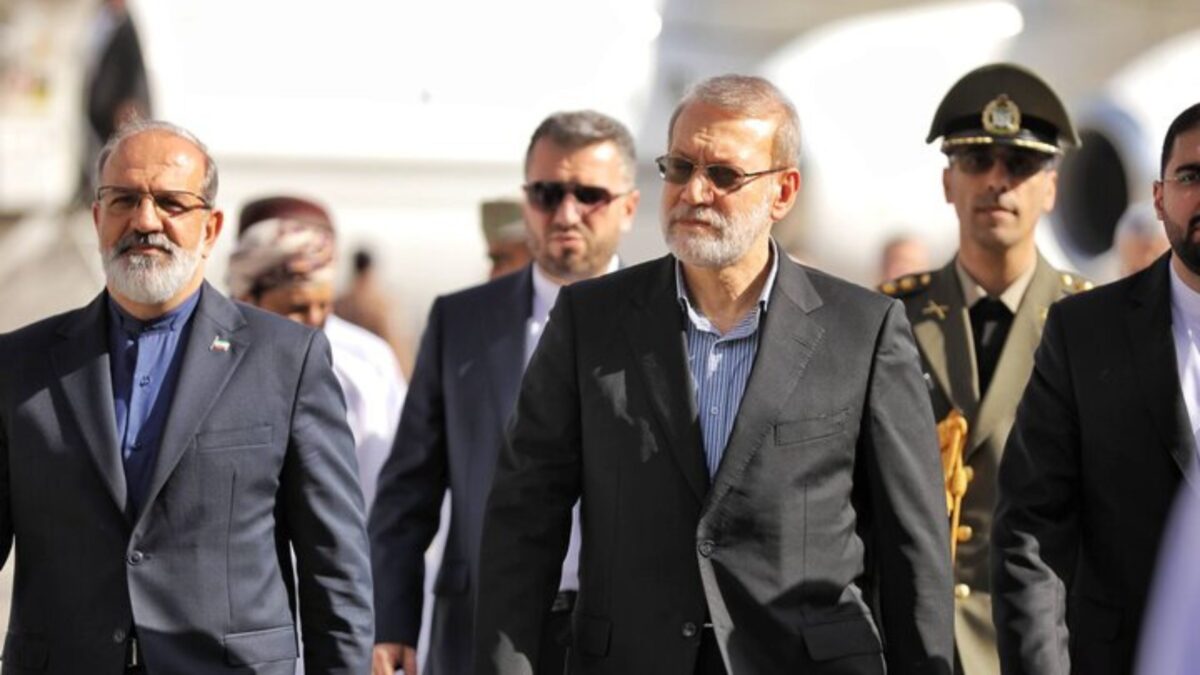
Ali Larijani, secretary of Iran’s Supreme National Security Council, has arrived in Oman following recent indirect talks in the Gulf state between Tehran and Washington over Iran’s nuclear program, Iranian state media reported on Tuesday.
Larijani, a close adviser to Supreme Leader Ayatollah Ali Khamenei, is scheduled to meet Omani Foreign Minister Badr al-Busaidi, who has acted as the main intermediary in the talks, as well as Sultan Haitham bin Tariq al-Said, the state-run IRNA news agency said.
IRNA said Larijani’s visit to Muscat would include discussions on regional and international developments and ways to strengthen bilateral cooperation between Iran and Oman.
Oman hosted indirect talks last week between Iran and the United States aimed at easing tensions and preventing a military confrontation, amid an increased US military presence in the region. A second round of talks has been agreed in principle, though no date has been announced.
Iranian Foreign Minister Abbas Araghchi has held telephone calls with his counterparts in Turkey, Egypt and Saudi Arabia to brief them on the negotiations, IRNA reported.
Iran’s foreign ministry spokesman Esmaeil Baqaei said Larijani’s visit was part of broader regional consultations and had been planned in advance. He said Washington must negotiate independently and without external pressure.
“One of the United States’ problems in the region is its subservience to the demands of the Zionist entity,” Baqaei said, accusing Israel of inflating concerns over Iran’s nuclear program.
Baqaei said the recent talks were intended to assess the seriousness of the US position, adding that Iran remained committed to diplomacy while bearing in mind past experiences. He said Larijani would travel to Qatar after his visit to Oman.
Signals from both sides on progress in the talks have been mixed. On Monday, Iran’s atomic energy chief Mohammad Eslami said Tehran was open to diluting its stockpile of highly enriched uranium if US sanctions were lifted.
Eslami said any reduction of Iran’s uranium enriched to 60% purity — close to weapons-grade levels — would depend on whether all sanctions were removed, IRNA reported.
US President Donald Trump has called for a complete ban on uranium enrichment by Iran, a demand Tehran has rejected. Washington has also pressed Iran to give up its stockpile of enriched uranium, estimated by the U.N. nuclear watchdog last year at more than 440 kilograms.
Araghchi said on Sunday that Iran would not abandon its right to enrich uranium, amid US calls to broaden negotiations to include Iran’s missile program and regional activities.