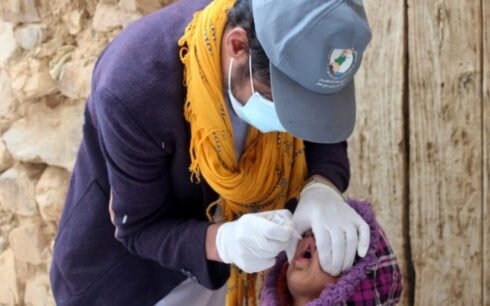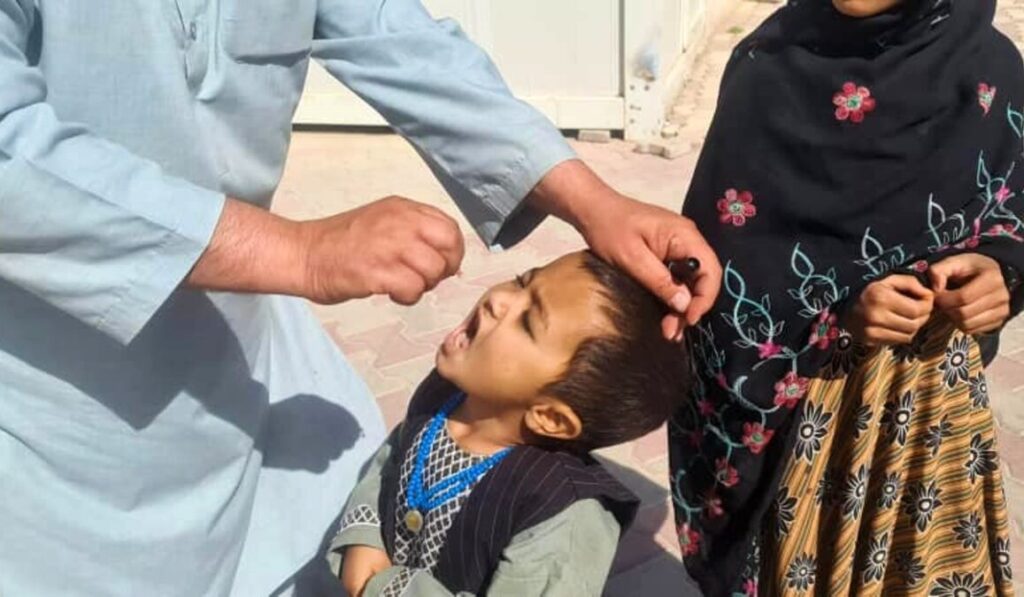
A four-day nationwide polio vaccination campaign was launched in 18 provinces, including Kabul, on Monday, as the country remains one of only two worldwide where the virus is still endemic.
The polio vaccination campaign is being carried out from Feb. 2 to Feb. 5, 2026, across 18 provinces — Kabul, Nangarhar, Laghman, Kunar, Nuristan, Paktia, Paktika, Khost, Ghazni, Kandahar, Helmand, Uruzgan, Zabul, Balkh, Faryab, Kunduz, Herat and Badghis.
The Taliban-run Ministry of Public Health said the campaign would eventually cover 22 provinces, with vaccinations in Kandahar, Helmand, Uruzgan and Zabul set to begin on Tuesday.
Around 7.3 million children under the age of five are expected to receive the oral polio vaccine during the campaign, the ministry said in a statement.
Afghanistan’s polio eradication program urged families to ensure their children are vaccinated, saying immunisation remains the only way to eliminate the disease.
According to the World Health Organization (WHO), nine cases of wild poliovirus were recorded in Afghanistan last year. Globally, the virus is now endemic only in Afghanistan and neighbouring Pakistan.
WHO data show that 25 polio cases were reported worldwide in 2024, while nine new cases have been identified so far in 2025, representing a 64% decrease compared with the previous year.
In Afghanistan, polio cases have been detected in nine provinces, including Badghis, Nimroz, Helmand, Uruzgan, Paktika, Paktia and Kunar — areas often affected by difficult terrain, insecurity and limited access to healthcare.
Health officials said Badghis and Nimroz each reported one case, Helmand two, Uruzgan one, Paktika two, Paktia one and Kunar one.
Taliban have imposed restrictions on polio vaccination campaigns. The campaigns were conducted door-to-door, previously. However, since September 2024, the Taliban have banned house-to-house vaccination and restricted the participation of female health workers, limiting immunisation efforts to mosques and health centers, leaving many without vaccination.
Public health experts have warned that these restrictions could hamper efforts to eradicate the virus, particularly in hard-to-reach communities and among children whose families cannot easily access fixed vaccination sites.