World Migration Day is an annual opportunity to reflect on one of the most complex and persistent crises of the contemporary world — a crisis that has not been contained by walls, laws, or deterrence. Instead, migration has reached unprecedented levels, accompanied by rising human cost and suffering. Contrary to dominant political narratives, migration is rarely a simple choice; it is often a last means of survival for millions whose homes have been stripped away by war, poverty, repression, and the collapse of political systems. Yet today, more than ever, migrants are treated not as human beings but as a “security problem.”
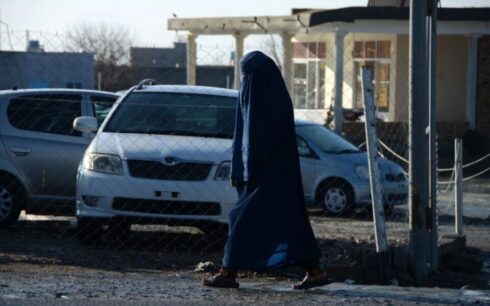
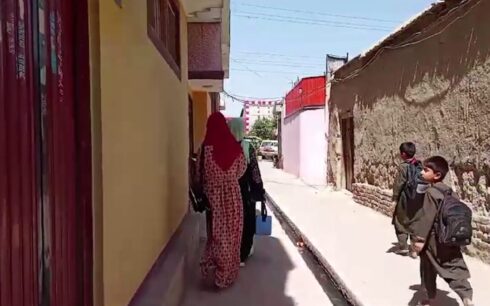
From Afghanistan to Palestine, from Somalia to Sudan, the roots of migration lie in crises largely shaped by prolonged wars, foreign interventions, political instability, and economic collapse. Afghanistan, following the Taliban’s return to power, stands as a stark example of a country whose citizens have been forced into an impossible choice: remain under constant threat or flee toward an uncertain future. Women, journalists, civil society activists, and minorities have borne the greatest burden. For them, migration is not a pursuit of opportunity but an escape from systematic erasure.
The degrading treatment and forced deportation of Afghan migrants from Iran, Pakistan, Turkey, and other countries reflect a practical collapse of human rights commitments and the dominance of a security-driven approach to a profoundly humanitarian issue. Under this lens, Afghan migrants are no longer seen as victims of war, repression, and political breakdown, but as a vague, uniform threat — a narrative that deliberately ignores distinctions between women, children, workers, asylum seekers, and the sick. This “one-size-fits-all” policy has paved the way for humiliation, mass arrests, and rushed deportations, effectively hollowing out the fundamental principle of non-refoulement. These actions are less about enforcing the law and more about rising nationalism and governments attempting to manage domestic crises by sacrificing the most vulnerable.
At the same time, these deportations highlight the international community’s failure to assume responsibility for the Afghan crisis. Iran and Pakistan, under economic and political pressure, are bearing the cost of a crisis whose roots extend far beyond their borders. Yet the chosen response has been to shift suffering onto the weakest link. Forcibly returning Afghans to a country where security, basic freedoms, and a foreseeable future are absent amounts to knowingly placing human lives at risk. Such policies neither halt migration nor create stability; they normalize injustice and deepen the crisis.
In Palestine, migration takes a different but equally painful form. Blockade, repeated wars, and the destruction of infrastructure have condemned generations to permanent displacement — people deprived not only of the right to migrate safely but even of the right to remain with dignity. Gaza today is not merely a humanitarian catastrophe; it is a symbol of the global system’s failure to protect civilians, where migration itself is often not even a viable option.
In Somalia, decades of civil war, terrorism, and drought have made migration part of daily life. Those forced from their land fall prey to deadly human smuggling routes, becoming victims of networks that feed on despair. This pattern repeats across parts of Africa and the Middle East: the geography changes, but the suffering remains the same.
On the other side of this equation lie the migration policies of the United States and Europe — policies that have grown increasingly restrictive over the past two decades. By intensifying border controls, accelerating deportations, and narrowing legal pathways, the United States has made migration more dangerous, not less. Borders may be tighter, but migration has not stopped; only the number of victims has increased.
In Europe, border deals, walls, maritime patrols, and outsourcing responsibility to third countries have reshaped a continent once seen as a champion of human rights into one primarily focused on “crisis management.” The Mediterranean has become one of the deadliest migration routes in the world, claiming the lives of thousands of women, men, and children each year — lives largely absent from policy calculations.
What is most striking is the deep contradiction between human rights rhetoric and operational reality. Western governments speak of human dignity while blocking migrants at their borders. International refugee conventions remain formally valid, but political will to enforce them has eroded dramatically. Migration, rather than being understood as a consequence of global crises, has been reduced to a domestic threat.
The reality is clear: migration cannot be stopped by walls or suppressed by laws. As long as war continues in Afghanistan, occupation and blockade persist in Palestine, collapse endures in Somalia, and injustice spreads across the Global South, people will keep moving. Hardline policies may alter official statistics, but they do not change the human reality.
World Migration Day should remind us of a fundamental truth: migrants are neither numbers, burdens, nor threats. They are human beings carrying the weight of political failure, war, and injustice on their bodies. The migration crisis is not, at its core, a border crisis — it is a crisis of global conscience, one that remains unresolved because the world has yet to confront its root causes.
Sayed Mahmoud Hamrazm is a writer and researcher.
The views expressed in opinion pieces published in Amu TV’s opinion section are solely those of the authors.