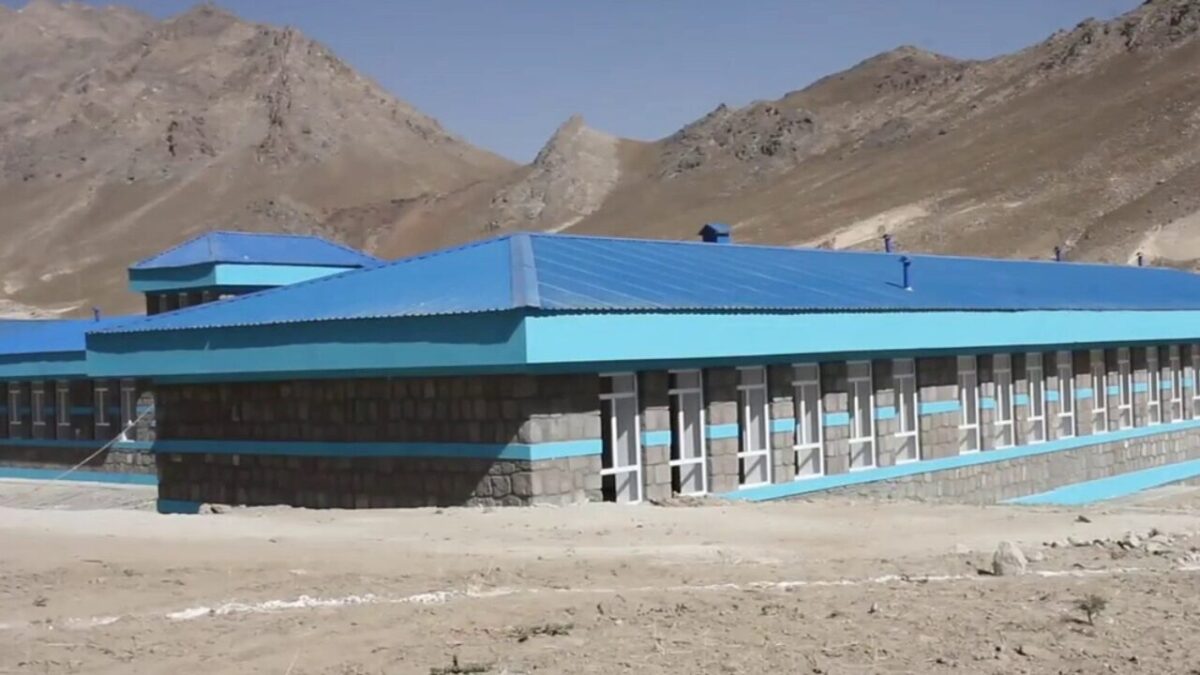
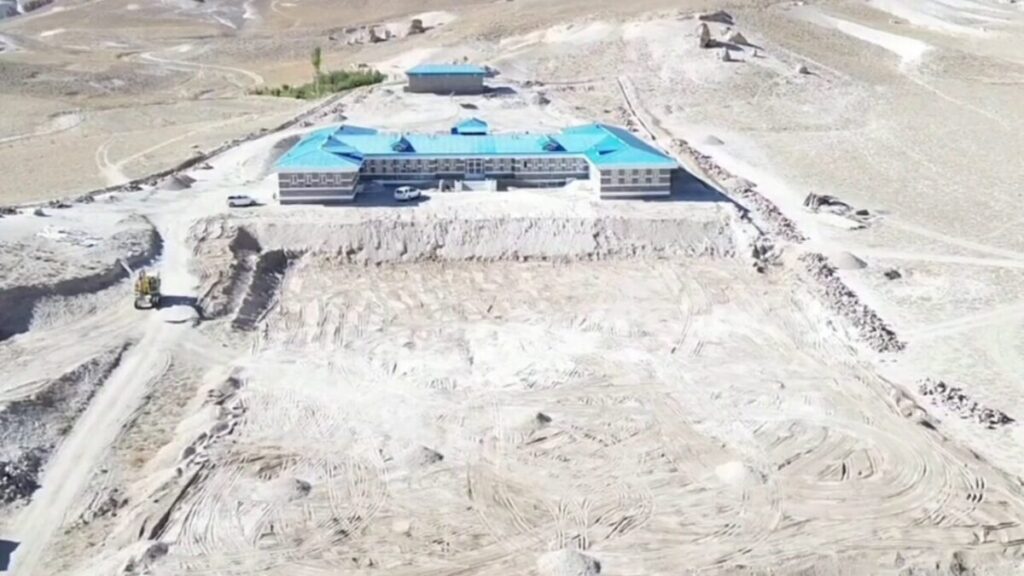
After years of limited access to formal education, residents of Jaghori district in Ghazni Province have taken matters into their own hands, building two new schools with funding from local and diaspora communities.
Despite the growing demand for education in the district, a severe shortage of teachers continues to hamper learning. Local education officials say that while community members are paying the salaries of 180 teachers out of pocket, the district still lacks around 220 qualified instructors.
“In Jaghori, we are short by about 220 teachers,” said Bismillah Hamid, the head of education in the district. “Of that number, 180 have been hired with the financial support of the local people. Their salaries are paid entirely by the community.”
The construction of the two schools — Shughla Aliatu and Maarefa Primary School — was completed in the past week, offering relief to students who previously walked long distances to attend classes. In many cases, students had to spend hours on foot just to reach the nearest school.
The construction of the two schools has cost 27.4 million afghanis (at least $421,000), one teacher said.
“Before, we had to walk to the high school,” said Muddassa, a young student. “We would spend two to two and a half hours walking each day. Because of the exhaustion, we would forget much of what we had learned.”
While the Taliban have imposed sweeping restrictions on female education beyond sixth grade across the country, younger girls in Jaghori — a predominantly Hazara and relatively progressive district — still attend primary school. In some areas, community-driven efforts have kept educational opportunities alive despite official neglect.
“We are very happy about the new school, especially for the younger children,” said Razia, a local resident. “The previous schools were so far away — at least a two-hour walk. Some children would fall sick in the summer because of the long journey.”
Since the Taliban returned to power in 2021, their administration has focused more on expanding religious seminaries than investing in formal schooling. New construction of secular education facilities has slowed dramatically, and there has been little sign of interest from Taliban authorities in establishing new schools in underserved areas like Jaghori.
Still, local communities continue to push forward — determined, against the odds, to give their children an education.