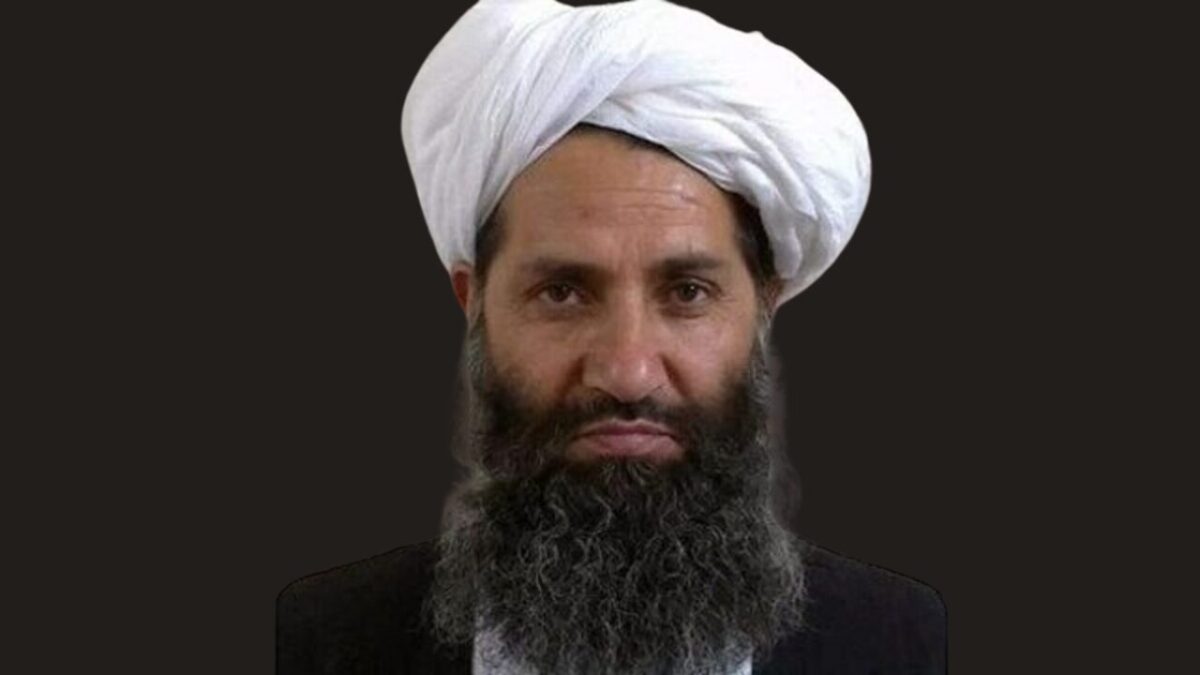
A new open-source investigation has identified multiple heavily fortified compounds in Kandahar believed to serve as residences, meeting locations, and operational hubs for the Taliban’s reclusive supreme leader, Hibatullah Akhundzada, shedding light on one of the world’s most secretive political figures.
The investigation, conducted independently by the research group Intel Focus, used satellite imagery, geolocation tools, and local media reports to trace Akhundzada’s likely movements across four primary sites. The findings, released publicly Thursday, provide the clearest picture yet of the Taliban leader’s tightly guarded world — more than four years after the group’s return to power.
Since the fall of Kabul in August 2021, Akhundzada has remained almost entirely invisible to the public. He has never been photographed at official events or filmed delivering speeches, fueling speculation about his health, whereabouts, and level of control within the Taliban hierarchy. In contrast, senior Taliban officials such as Interior Minister Sirajuddin Haqqani have become more publicly active in recent years.
A network of compounds
The Intel Focus investigation identified four key compounds in and around Kandahar, the spiritual heartland of the Taliban movement:
Mandigak Palace, a historic complex in central Kandahar where Mullah Mohammad Omar once held office, has reportedly been heavily reinforced and is believed to host key meetings between Akhundzada and senior Taliban officials. Security has increased significantly in recent months.
An “Unknown Compound” northeast of the city, constructed after the Taliban’s return to power, shows signs of long-term occupation. Satellite imagery reveals multiple guarded entrances, watchtowers, US-made military vehicles, and cultivated land, suggesting the site is designed for extended stays.
Attal Palace in the Aino Mina neighborhood, once the guesthouse of the late Kandahar police chief Gen. Abdul Raziq Achakzai, is now reportedly used by Akhundzada’s circle. The area has seen increasing fortification since 2023.
The Kandahar Governor’s Office, while more public in function, remains one of the city’s most secure administrative buildings and is said to be visited occasionally by the Taliban’s top leader.
Due to Akhundzada’s extreme secrecy and the absence of human intelligence or firsthand visuals, investigators emphasized that they could not confirm the timing or duration of his stays at any specific location.
A new security apparatus
The report also sheds light on a special security force tasked with protecting the Taliban leader: Amir-ul Momineen Khas Zwak (Special Force of the Commander of the Faithful). This elite unit, commanded by Kandahar police chief Mawlawi Abdul Ahad Talib, is estimated to include between 100 and 140 personnel, many equipped with US-origin M4 rifles and traveling in convoys of Toyota Hilux and Land Cruiser vehicles.
Visual analysis of the unit shows at least one vehicle outfitted with anti-aircraft guns and others armed with rocket launchers or mounted machine guns. The force also uses motorcycles for rapid deployment in urban areas.
The emergence of this unit appears to coincide with heightened international scrutiny. In mid-September 2024, reports surfaced that the International Criminal Court had issued arrest warrants linked to human rights abuses in Afghanistan, particularly regarding the systemic repression of women and girls. In response, the Taliban reportedly strengthened the Supreme Leader’s personal protection and hardened access to his locations.
A shadowy figure in power
Unlike many Taliban officials who appear regularly in public or speak to state-run media, Akhundzada has opted for near-total invisibility. He rules largely through religious decrees, which are distributed through Taliban ministries and often justify policies such as the ban on girls’ education or restrictions on women’s movement.
Still, questions persist about whether Akhundzada is the ultimate source of Taliban policy or a symbolic figurehead for the powerful southern faction centered in Kandahar. The compounds outlined in the Intel Focus report — particularly the Mandigak and Unknown compounds — underscore the degree of secrecy and militarization surrounding the leader.
One of the locations, reportedly within Aino Mina, has been cited by Afghan and international sources as the detention site of Mahmood Shah Habibi, an Afghan-American citizen declared missing by the FBI in 2022. The Taliban have denied holding him, but the report points to the area’s transformation into a tightly sealed compound since 2021.
A landscape of fear and fortification
Since their return to power, the Taliban have systematically dismantled the former republic’s institutions and imposed a rigid vision of Islamic governance. In Kandahar, their traditional stronghold, they have centralized power around Akhundzada’s inner circle, sidelining more publicly visible officials and restricting access even among the group’s mid-level commanders.
The Intel Focus report does not claim definitive proof of Akhundzada’s current location, but the security architecture and post-2021 structural changes across the four sites strongly suggest they are central to the Taliban’s leadership operations.
“The opacity surrounding Hibatullah Akhundzada’s whereabouts reflects the Taliban’s deep internal security concerns and the enduring role of Kandahar as the heart of decision-making,” the report concluded.