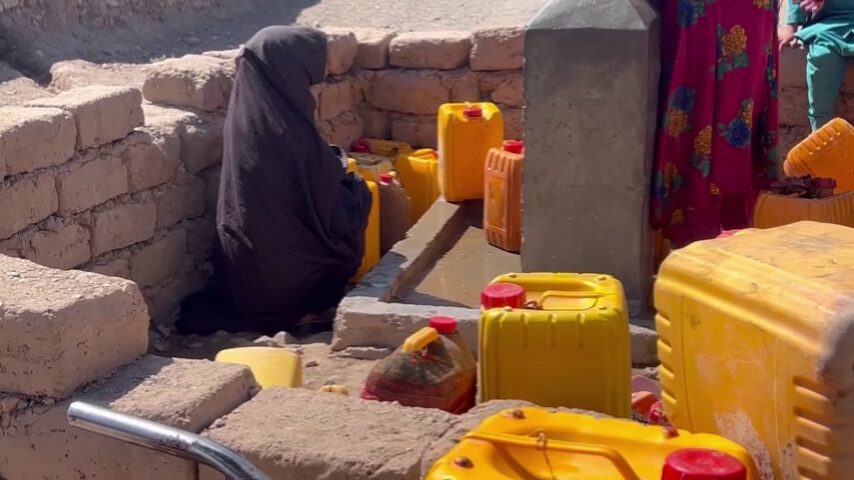
Residents of Badghis province say they are facing a worsening shortage of drinking water this year, with many families struggling to access even a few buckets of clean water each day.
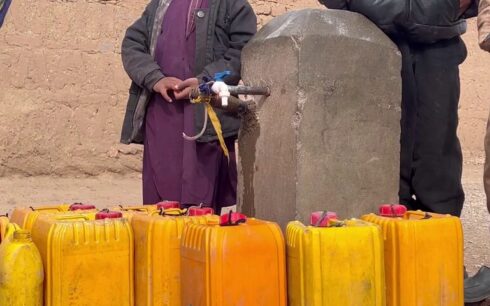
Locals in the Ghormach district told Amu that a two-inch pipeline provides water for more than 500 families, but only for three to four hours a day, leaving most households without enough to meet basic needs.
“We have a serious problem with water, and no one has paid attention to it,” said Jalal, a resident of Badghis. “The available water is very little, but the demand is huge. In addition to water shortages, we have no school or clinic, and some families don’t even have food for the morning and evening.”
Other residents said the situation has worsened compared to previous years. Mohammad Zaman, another local, said: “We have severe problems with drinking water. In an entire day, we barely get one or two buckets from the tap. Many people are sick, and our situation is beyond imagination.”
Despite the mounting crisis, residents said local authorities have taken no action to improve water distribution or find alternative sources.
“This year the water shortage is worse than ever,” said Abdul Kamal, a resident of Ghormach. “Around 500 houses live here, but maybe 100 get water — the rest have none. The problem is massive; there’s simply no water.”
Access to safe drinking water remains one of the major challenges in Afghanistan’s rural areas. Locals warn that the lack of clean water not only disrupts daily life but also poses serious health risks, particularly as sanitation and medical facilities remain limited in remote districts like Ghormach.