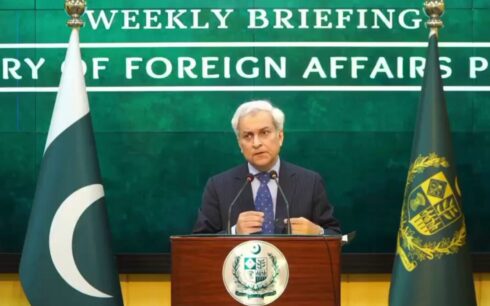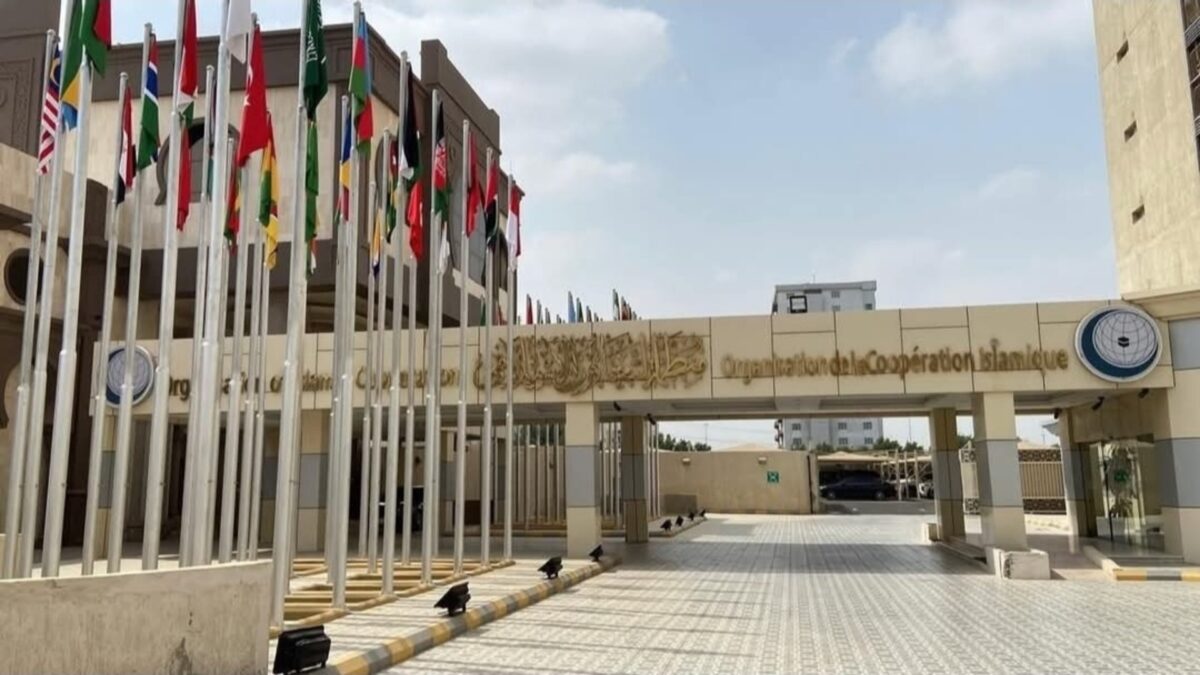
Pakistan has proposed the creation of a working group of experts from Organization of Islamic Cooperation member states to draft a practical roadmap addressing Afghanistan’s challenges, Pakistani media reported Thursday.
The proposal was presented by Pakistan’s Foreign Minister Muhammad Ishaq Dar during the opening session of the OIC Contact Group on Afghanistan, held in New York on the sidelines of the U.N. General Assembly. The contact group, which includes 50 OIC members, was formed in 2009 under Germany’s oversight.
According to reports, the group has sent a clear message to the Taliban, urging them to lift what it called “unjust restrictions contrary to Islamic principles and values” imposed on women and girls. The appeal follows a recent Taliban order banning books authored by Afghan women.
Dar outlined six recommendations for OIC action. First, he urged member states and international donors to provide adequate funding for humanitarian needs in Afghanistan without political conditions. Second, he said the group should help stabilize Afghanistan’s economy and revive its banking system to enable trade, regional connectivity projects, and job creation.
Third, Dar called for support of regional and multilateral dialogue with the Taliban to encourage them to meet their international obligations. Fourth, he highlighted U.N.-led initiatives to support former poppy farmers with alternative livelihoods, saying OIC states should expand these programs to create sustainable opportunities.
The fifth recommendation focused on women’s rights. Dar said the OIC should press the Taliban to lift restrictions on women and girls that are inconsistent with Islamic norms. “Our outreach must aim at persuading the Taliban to reconsider their policies,” he said.
Finally, Dar said the return of Afghan refugees should be prioritized. He urged the Taliban to create conditions for voluntary resettlement and integration of Afghans displaced in neighboring countries, with international support.
Dar also stressed that terrorism “emanating from Afghanistan” remains Pakistan’s most pressing concern. He said Islamabad is deeply alarmed by the presence of more than a dozen militant groups inside Afghanistan, including Tehrik-i-Taliban Pakistan, the Baloch Liberation Army, the Majeed Brigade and the East Turkestan Islamic Movement, which he said cooperate with al-Qaida and pose a serious threat to regional and global security.
He added that meaningful progress in all priority areas will require the Taliban to take “concrete and verifiable actions” to ensure Afghan soil is not used for cross-border terrorism, especially against Pakistan.
“Pakistan remains committed to supporting all efforts for a peaceful and prosperous Afghanistan,” Dar said. “But this requires mutual respect, sincerity and the necessary political will from the Taliban leadership to help us help themselves.”