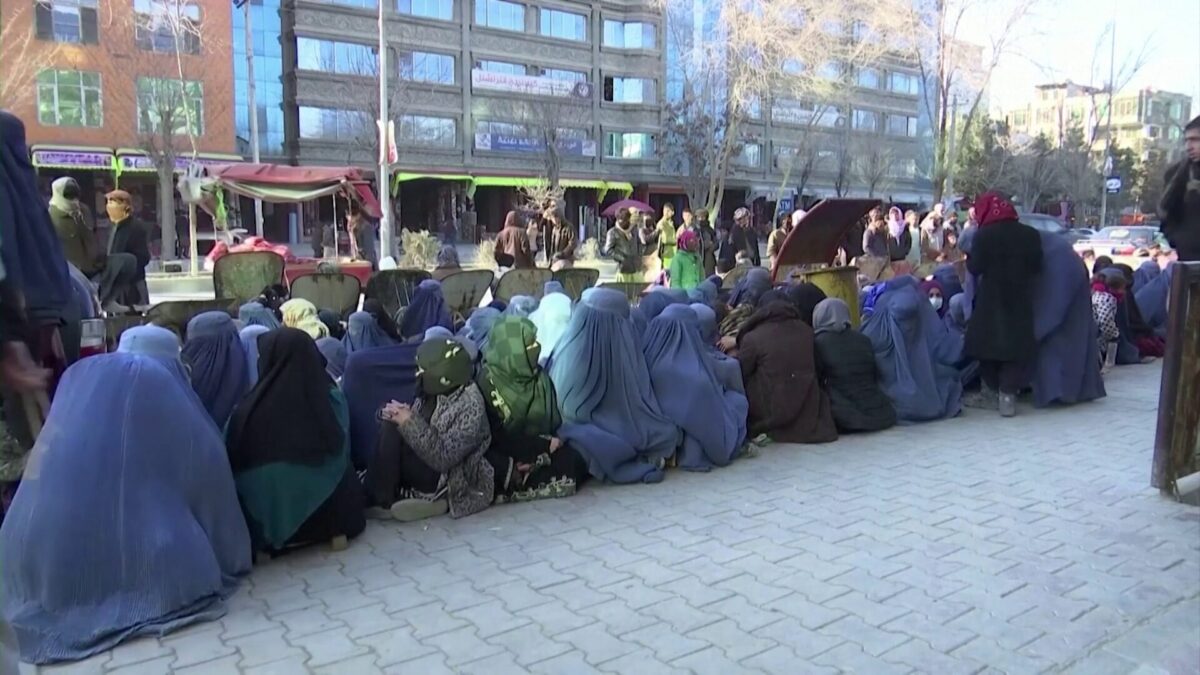
Four years into Taliban rule, Afghanistan’s economy has not grown. Instead, poverty and hunger have reached unprecedented levels, according to the latest UN report, which says more than half of the population now relies on humanitarian aid.
The Global Hunger Index ranks Afghanistan among countries with a “serious” level of hunger. In recent years, the Taliban have handed over control of many large and small mines to private companies, mostly Chinese, in a bid to boost revenue.
Since the Taliban took power in 2021, Afghanistan’s economy has been hit hard. Foreign aid was cut off, sanctions were imposed, foreign reserves were frozen, and the banking system largely collapsed.
The Global Hunger Index ranked Afghanistan 116th out of 127 countries, with a score of 30.8, and said more than 30% of the population suffers from malnutrition.
According to U.N. and World Bank figures, annual per capita income dropped from $500 in 2020 to $360 after the Taliban takeover. Gross domestic product has fluctuated but remains below pre-2021 levels:
2020: $19.9 billion
2021: $14.2 billion
2022: $14.4 billion
2023: $17.2 billion
2024: $17.7 billion
Mariam, 28, lost her husband five years ago in Iran and has since supported her three children. She once worked for a nongovernmental organization as a health worker, earning 20,000 afghanis a month, but lost her job after a Taliban decision in late 2022 banned many women from employment.
“My children are orphans,” she said. “Before the Taliban came, I could send them to school. Now I have no job, no income. I am educated, and I don’t want to raise my children with haram money or charity. This hard life has turned our world into hell.”
The Taliban-run Ministry of Mines and Petroleum says it has awarded 175 small-scale mining contracts and 28 large-scale contracts in the past four years, worth $7.5 billion. Major projects, including the Amu Darya oil field, the Altimore cement plant in Logar, and a gold mine in Takhar, have been given to Chinese companies.
However, in May 2024 the Taliban canceled the Amu Darya oil field contract with its Chinese partner. In Takhar, residents protested the $310 million gold mine deal awarded to a Chinese firm, accusing both the Taliban and the company of looting local resources.
The International Monetary Fund projects Afghanistan’s 2025 economic outlook will remain weak, citing limited access to international financial systems, reduced foreign aid, restrictions on women’s participation in the workforce, high unemployment, food insecurity, and a fragile banking sector.