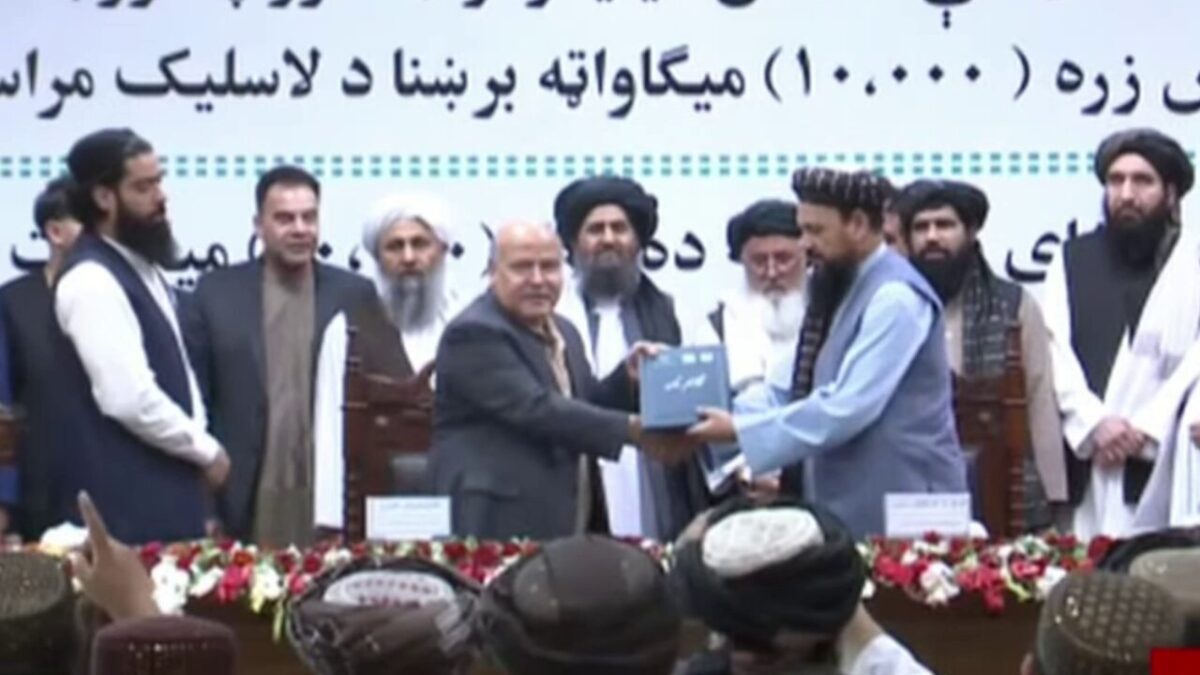
The Taliban-run Ministry of Energy and Water signed a contract Saturday with Azizi Group for a $10 billion power generation project aimed at producing 10,000 megawatts of electricity by 2032.
The agreement was signed in Kabul between Azizi Group Chairman Mirwais Azizi and the Taliban’s minister of energy and water Latif Mansour.
Addressing the event in Kabul, Azizi said the project is intended to “reduce unemployment and boost economic growth” in Afghanistan.
Company officials said the project will draw on coal, water and wind resources, with 700 megawatts expected to come from wind power.
Azizi added that up to 150,000 Afghans would be employed directly or indirectly and that 98% of project staff would be local hires. A training center will also be established to provide technical education.
“This project will not only meet Afghanistan’s energy needs but also increase domestic revenue, promote industry and agriculture, and create more job opportunities,” Azizi said.
Meanwhile, Mansour welcomed the investment, saying Afghanistan had strong potential for power generation. “These resources need work and investment,” he said, adding that his ministry is ready to cooperate with investors.
According to the planned framework, the project’s electricity generation will be supplied from various sources: 2,600 megawatts from coal, 3,700 megawatts from gas, 2,000 megawatts from hydropower, 700 megawatts from wind, and 200 megawatts from solar energy.
The $10 billion power project is planned to run from 2026 to 2032 and will draw energy from multiple sources across Afghanistan. According to project details, coal plants in Balkh, Bamiyan, Herat and Baghlan are expected to generate 3,400 megawatts of electricity, while gas facilities in Jawzjan, Herat and the northern zone will contribute 3,700 megawatts. Hydropower projects in Kabul, Kapisa and Daikundi are projected to add 2,040 megawatts. Wind farms in Herat and Farah will provide another 700 megawatts, and solar installations in Kabul, Kandahar and Ghazni will generate 200 megawatts.
This comes as statistics by the Taliban-run Da Afghanistan Breshna Sherkat show that only 40 percent of the country’s population has access to electricity. Most of this electricity is imported from countries in the region.