Abstract: As Pakistan grapples with surging domestic militancy linked to Tehrik-i-Taliban Pakistan (TTP), its recent diplomatic overtures toward the Taliban regime in Kabul highlight a pivotal recalibration in regional security engagement. This article explores the strategic implications of Pakistan’s Interior Minister’s meeting with Taliban leader Sirajuddin Haqqani and how it may reshape cross-border counterterrorism dynamics.
Introduction
In the aftermath of the Taliban’s return to power in Afghanistan, the regional security calculus of South and Central Asia has undergone seismic transformation. Pakistan, long positioned as both a stakeholder and a concerned neighbor, finds itself at a crossroads—beset by a renewed wave of militant violence and the urgent need to recalibrate its approach toward Kabul. The relationship between Islamabad and the Taliban-led government in Afghanistan has been punctuated by sharp accusations, mutual distrust, and a series of tense, sometimes violent, border incidents. At the heart of this friction lies the persistent belief among Pakistani officials that the Afghan Taliban provides sanctuary to Tehrik-i-Taliban Pakistan (TTP) militants—a charge that Kabul consistently rebuffs.
Yet, the recent high-profile visit of Pakistan’s Interior Minister to Kabul, culminating in direct talks with Sirajuddin Haqqani—the Taliban’s powerful interior minister and a central figure in Afghanistan’s new order—signals a nuanced, deliberate shift in diplomatic posture. This encounter, laden with symbolism and tactical calculation, may well reshape the contours of regional counterterrorism cooperation.
Strategic Context
The backdrop to this engagement is a rapidly deteriorating security environment within Pakistan’s own borders. Over the past year, militant attacks attributed to the TTP and affiliated groups have surged, targeting security personnel, public installations, and soft civilian targets. This resurgence has not only alarmed Pakistani policymakers but has also forced a reevaluation of the tools available to stem the tide.
From my perspective as a seasoned counterterrorism analyst, the Interior Minister’s visit to Kabul can best be interpreted as a tactical maneuver—an attempt to extract security assurances from the Afghan Taliban without resorting to overt confrontation or public antagonism. While official communiqués from both sides emphasized mutual trust and the pursuit of stability, the true agenda centered on stemming the renewed flow of TTP activity from Afghan soil into Pakistan’s tribal belt and urban centers.
The Taliban regime in Kabul, meanwhile, faces its own balancing act. The need to project authority and control over Afghanistan’s fractious territory must be weighed against the risk of alienating hardline factions within its own ranks or provoking regional isolation. Thus, the meeting with Pakistan’s Interior Minister is as much about internal signaling—demonstrating a willingness to engage with neighbors on security—as it is about external diplomacy.
Key observations and insights
1. Symbolic diplomacy
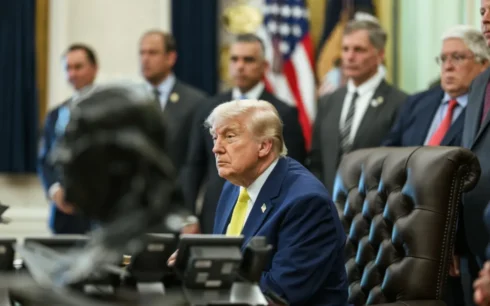
The optics of the visit were carefully orchestrated. Public images and official readouts projected an image of amity and cooperation, replete with promises of enhanced coordination and mutual understanding. However, beneath this veneer lay deep-seated anxieties about the persistence of cross-border militancy and the durability of any security assurances provided by the Taliban. This brand of symbolic diplomacy is designed both for domestic audiences—signaling resolve and proactive engagement—and for the international community, seeking to present both governments as responsible actors in an unstable region.
2. Haqqani’s pivotal role
Sirajuddin Haqqani’s prominence in the proceedings cannot be overstated. As one of the most influential figures in the Taliban’s power hierarchy, and with deep roots in both militant and political spheres, Haqqani’s engagement provides critical insights into the Taliban’s internal calculus. His willingness to meet with Pakistani officials suggests an interest in shaping the external messaging strategy of the Taliban government, perhaps to allay fears of Afghanistan becoming a safe haven for anti-Pakistan elements. At the same time, Haqqani’s background as the leader of the Haqqani Network—long viewed with suspicion by international intelligence agencies—adds an additional layer of complexity to the process. For Islamabad, engaging directly with Haqqani is both an opportunity and a risk: the chance to access the Taliban’s inner circle, but also the challenge of dealing with a figure whose loyalties and intentions may be multifaceted.
3. Pakistan’s strategic imperatives
Facing escalating domestic security threats, Islamabad’s willingness to engage—even cautiously—with the new rulers in Kabul reflects a pragmatic recognition that stability in Afghanistan is intrinsically linked to Pakistan’s own security interests. The alternative—a policy of disengagement or open antagonism—risks further inflaming cross-border tensions and undermining any prospect of coordinated counterterrorism efforts. Pakistan’s approach appears to be guided by several imperatives:
- Prevention of Cross-Border Attacks: Islamabad seeks credible guarantees from Kabul that TTP militants will not be allowed to operate with impunity along the porous frontier.
- Intelligence Sharing: Effective counterterrorism operations hinge on timely and actionable intelligence; Pakistan’s outreach is aimed at establishing mechanisms for information exchange and operational coordination.
- Managing Domestic Optics: The government must demonstrate to its own population that it is taking proactive steps to address the security crisis, without appearing subservient to the Taliban regime.
- Maintaining International Credibility: By engaging with Kabul, Pakistan also signals to global partners—particularly the US and regional actors—that it remains committed to the fight against terrorism and regional stability.
Implications for Regional Security
The outcome of this recalibrated diplomatic engagement remains uncertain. Should the Taliban government in Kabul prove willing and able to meaningfully curtail TTP activities, a new era of pragmatic cooperation could take root, potentially reducing the risk of cross-border violence and fostering greater stability. Conversely, should assurances prove hollow, the risk of renewed escalation—both rhetorically and militarily—remains acute.
For regional and international observers, the meeting stands as a test case for the Taliban’s ability to act as a responsible governing entity, capable of mediating complex security challenges and balancing competing interests. For Pakistan, it is a strategic gamble—one that underscores the enduring complexity and volatility of the Afghan-Pakistani borderlands.
Conclusion
Pakistan’s recent outreach to the Taliban regime, epitomized by the Interior Minister’s meeting with Sirajuddin Haqqani, marks a significant shift in both tone and substance. It reflects Islamabad’s recognition that engagement—however fraught—is essential to countering the evolving threat landscape posed by cross-border militancy. As both governments navigate this delicate transition, the true measure of success will lie not in symbolic gestures, but in concrete, sustained actions to address the sources of insecurity that continue to destabilize the region.
Ajmal Sohail is a graduate in terrorism and extremism studies from both Leiden University in the Netherlands and Maryland University in the United States. He works in the meantime as an intelligence analyst and Counter-terrorism expert. He is the co-founder and co-president of the Counter Narco-Terrorism Alliance Germany, directing its intelligence and counter-terrorism portfolios.
This article reflects the author’s views and not necessarily those of Amu TV. The piece is based on the author’s analysis and includes references to publicly available reports and media coverage.