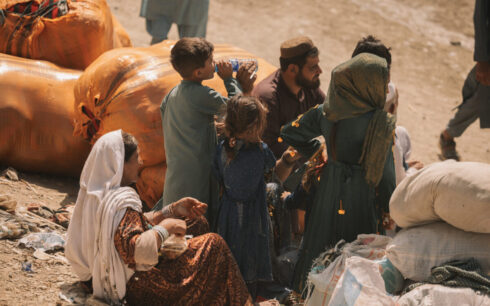
Migrants deported from Iran are struggling to secure housing in Herat, where rental prices have surged amid a sharp increase in returnees and mounting pressure on local infrastructure.
Many returnees interviewed by Amu TV said they have spent weeks searching for accommodation without success. Several reported that rents have doubled, rendering even modest homes unaffordable for those who returned with few or no resources.
“For those of us who were deported, it’s nearly impossible to find a place,” said Ahmad, who asked that his full name not be used for security reasons. “A house that used to rent for 5,000 Afghanis is now 10,000. We are stuck. We ask homeowners to show some compassion — most returnees left their money behind in Iran.”
Ahmad said he had been deported with his family while attempting to transit through Iran en route to Turkey. His children, he said, are ill and require regular medical care, but the lack of housing has become his most immediate concern.
Abdul Rahim, another returnee, said he lost the bulk of his savings during the deportation process. “They took everything,” he said. “I had six million tomans in Iran. Now I’m left with just 600,000. At every checkpoint, they would take 200,000 or 300,000 — for any excuse.”
Suleiman, also recently returned, described poor treatment by Iranian authorities. “They gave us no food or water,” he said. “They insulted and humiliated us.”
Local officials and residents in Herat confirmed that rents and land prices have spiked in recent weeks, as the mass return of Afghan nationals from Iran — many of them forcibly expelled — has accelerated. According to the International Organization for Migration, more than 450,000 Afghans have returned from Iran since early June, part of a broader trend of rising regional deportations.
The influx is straining Herat’s limited housing stock and compounding difficulties for returnees, many of whom arrive without identification documents, employment, or access to basic services. Humanitarian agencies warn that Afghanistan’s already fragile infrastructure is ill-equipped to absorb such large numbers, particularly in urban hubs like Herat that serve as primary entry points.