BADGHIS — As the three-day Eid al-Adha holiday came to an end, many residents in the remote western province of Badghis said they had little to celebrate — no food, no gifts, and no joy.
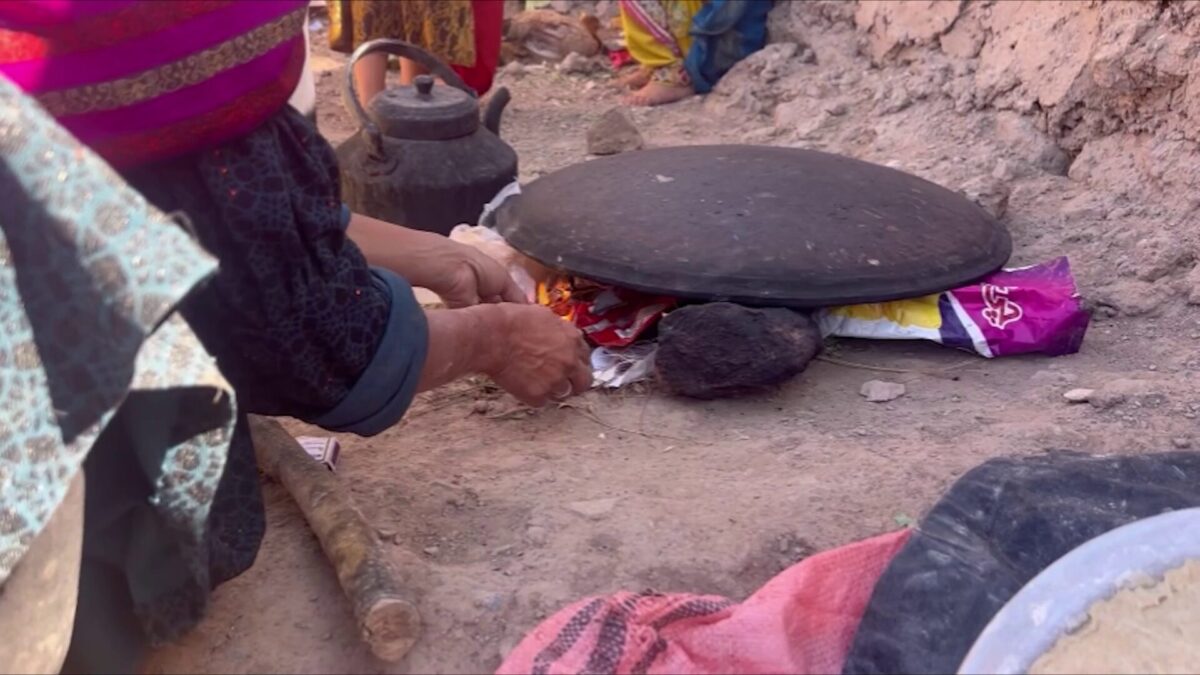
For families like that of Saera, a mother of nine, Eid this year passed in hunger and quiet despair. Instead of preparing festive meals, she spent her morning scavenging for scraps of plastic, dried twigs, and half-burnt garbage — anything she could find to substitute for cooking fuel.
“I have nothing,” she said, her hands blackened from sifting through ash outside her makeshift kitchen. “No stove, no proper place to bake bread. I am sick, and we are nine people. I try to cook outside in the open. Even the flour I have is poor quality.”
Her children wore no bright clothes. They had no sweets, no meat, no hint of a celebration. Their silence, she said, was more telling than words.
In another corner of the province, Jamaluddin, a father, pointed to his hands, cracked and worn. “My children have nothing this Eid. We couldn’t afford sweets. I’m sick. Look at my hands — how can I work or earn anything?”

Across Badghis, many families say the holiday, typically a time of abundance, sacrifice, and shared joy, has instead laid bare the depth of poverty and neglect.
“We have no clothes, no sweets — not even a few coins to spend on the days of Eid,” said Abdul Nasir, another resident. “What kind of celebration is this?”
The province, like much of rural Afghanistan, has suffered through months of drought, inflation, and rising unemployment. Aid organizations have warned of worsening food insecurity, while local residents say the economic collapse has left them with little hope — even during religious holidays that once brought communities together.
In places like Badghis, Eid has become not a celebration, but a painful reminder of widening inequality — and of those left behind.