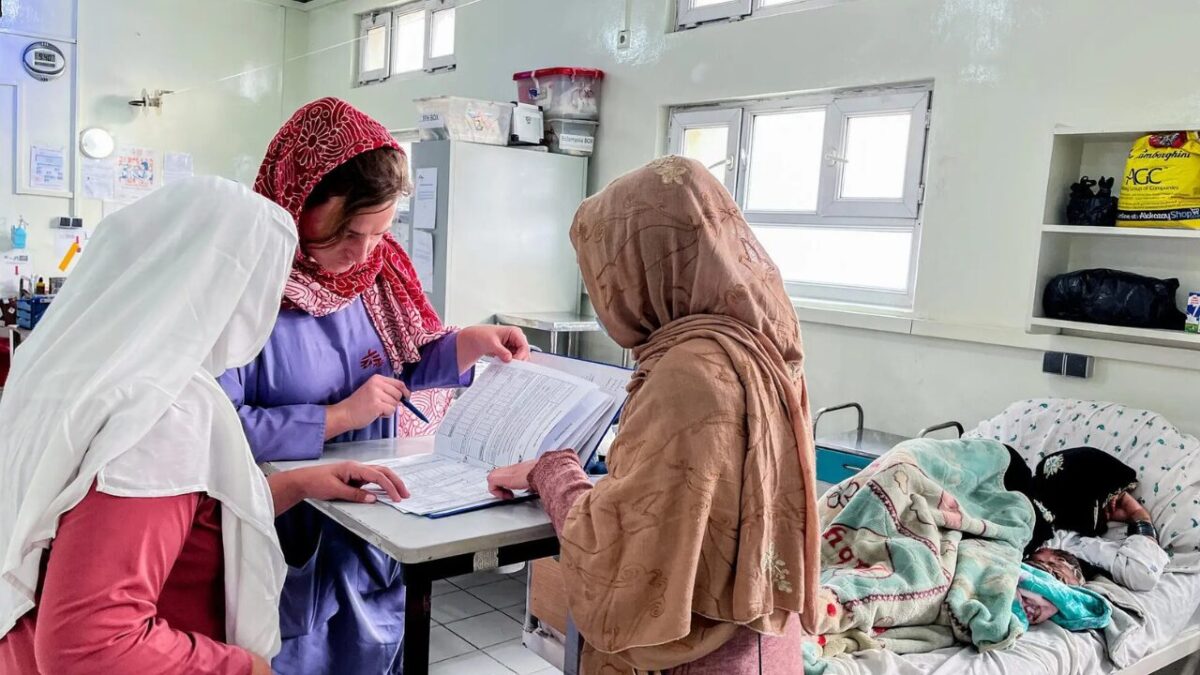
International aid cuts, combined with the Taliban’s continuing restrictions on women, are pushing women-led organizations in Afghanistan into a deep financial crisis, raising the risk that many could soon shut down, UN Women said in a report released Thursday.
The report found that nearly three-quarters of 74 women-led organizations surveyed experienced funding cuts in 2025. Two-thirds said they have enough funding to operate for six months or less, while more than half expect to suspend or permanently cease operations within the next year.
UN Women warned that the loss of these organizations would sharply reduce access to essential services for Afghan women and girls at a time when restrictions on their rights and freedoms continue to expand.
The report also found that half of the organizations have received no new funding since 2025, while 92 percent have reduced staff, limiting their ability to provide health care, protection, livelihoods and other critical support.
Masouma Haidari, who heads one women’s organization, said funding cuts have already forced difficult decisions.
“In 2025, funding declined even further,” she said. “We had to reduce spending on medicine, cut staff salaries and significantly downsize our team. Ultimately, it is women, families and the wider community who suffer.”
She said programs that once served 200 to 300 women now reach only 70 to 75 because of shrinking resources.
For many Afghan women, the consequences are immediate.
“My daughter is sick,” said Faiqa, a resident of Badghis Province. “I can’t afford to take her to a doctor. We have no money and no resources.”
The warning comes as the United Kingdom announced it will provide £105 million ($142 million) annually over the next three years to support humanitarian and development programs in Afghanistan.
In a statement to Parliament, Hamish Falconer, the UK’s parliamentary under-secretary of state for foreign, Commonwealth and development affairs, said nearly 22 million people in Afghanistan require humanitarian assistance, underscoring the scale of the country’s crisis.
Another Afghan woman, Bibi Gul, said assistance that once reached her community has disappeared.
“I bake bread for other families,” she said. “Sometimes they give me 20 afghanis, sometimes 10 or five. That is how we survive. We used to receive help through a health center, but that has stopped. We have received nothing for the past three years.”
UN Women said the need for support has grown as the Taliban have imposed increasingly restrictive policies on women and girls. It urged international donors to sustain and expand financial support for women-led organizations, warning that further funding cuts would leave millions of Afghan women and girls without access to essential services and protection.