Annalena Baerbock, president of the United Nations General Assembly, warned against appeasement in response to the Taliban’s treatment of women and girls, saying that lowering human rights standards would never produce results.
Addressing the UN Human Rights Council on Monday, Baerbock criticized arguments suggesting that “Kandahar is different and perhaps Kabul might be more moderate,” saying such reasoning had led to dangerous compromises.
“If women are not safe, no one will be safe,” she said.
In remarks that were both critical and self-reflective, Baerbock referred to debates within the United Nations system and in world capitals over how to continue delivering humanitarian aid to Afghanistan while the Taliban were barring women from working — including for UN agencies — and preventing girls from attending school.
She acknowledged that in some of those discussions, the imperative to protect women’s rights had, at times, been softened in favor of maintaining access for aid delivery.
“These were difficult debates and difficult decisions,” she said, noting that some policymakers had hoped that more moderate voices within the Taliban might prevail.
Baerbock warned that history shows major systems rarely collapse in a single dramatic moment. “They erode slowly, rule by rule, commitment by commitment,” she said.
Her remarks come as human rights groups increasingly describe the situation of women in Afghanistan as “gender apartheid,” a term Baerbock referenced in her speech.
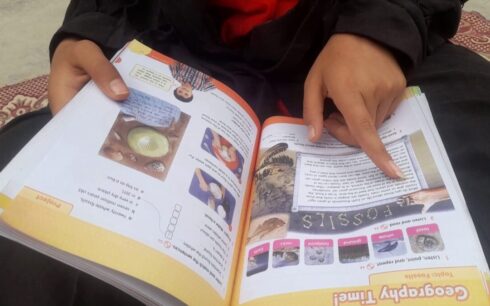
Since returning to power in 2021, the Taliban have barred girls from secondary education, closed universities to women and imposed sweeping restrictions on women’s employment, travel and public participation.
Calling her speech “a call to action,” Baerbock urged governments and international institutions not to normalize what she described as severe structural human rights violations.
“Women’s rights are the benchmark for the state of a society,” she said. “If half of the world’s population is not safe, no one will be safe.”