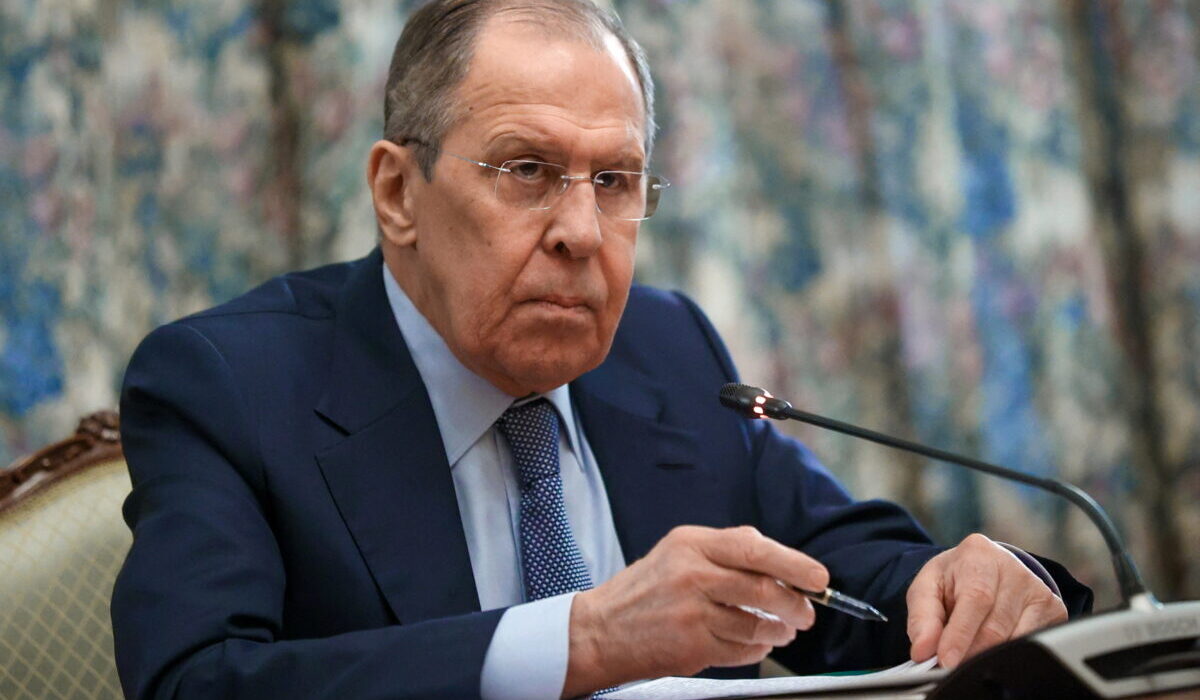
Russian Foreign Minister Sergei Lavrov said on Monday that counterterrorism efforts in Afghanistan and surrounding regions are among the key priorities of the BRICS group this year, under India’s rotating presidency.
Speaking to BRICS International television, Lavrov said Russia and India were cooperating at the United Nations to advance a proposed global convention on counterterrorism, though he acknowledged that international consensus on the initiative had yet to be reached.
Lavrov said India was also placing emphasis on food and energy security, as well as information and communications technology security, as part of its agenda for the bloc.
His remarks come amid shifting regional dynamics following renewed tensions between the Taliban and Pakistan, and as Russia has expanded contacts with the Taliban since their return to power in 2021. Moscow has said it is engaging with the Taliban on security and regional stability, though it has not formally recognized their administration.
Lavrov also said India would host an international conference on artificial intelligence in February, with Russia playing an active role in shaping the agenda. He stressed the need for transparency in the military use of artificial intelligence and warned against attempts by some countries to establish global control over emerging technologies, a move he said BRICS members would oppose.
Commenting more broadly on Russia’s foreign policy, Lavrov said the world was moving toward a multipolar order no longer dominated by one or two powers. He said the economic growth of BRICS members and other emerging centers in Asia and Africa, including China, India and Brazil, had altered the global balance.
“For many years the United States acted as the engine of the global economy and the regulator through the dollar, but its economic influence is now declining as new centers of growth emerge,” Lavrov said.
He added that Western efforts to restrict trade, investment and military-technical cooperation involving Russia and its partners, including India and other BRICS members, reflected attempts to preserve what he described as an outdated global order.
BRICS, originally comprising Brazil, Russia, India, China and South Africa, was formed in 2009 to strengthen economic, trade and technological cooperation among major emerging economies and to increase their influence in global decision-making. The group has since expanded and has sought a greater role in discussions on security, energy, development and global governance.