The UN in a new quarterly report has recorded 3,687 security and safety incidents across Afghanistan between February and April, a 57.7 percent increase from the same period last year, warning that the country is facing mounting challenges.
The report, submitted by UN Secretary-General António Guterres to the UN Security Council and General Assembly, paints a picture of a country struggling with rising insecurity, a worsening humanitarian crisis, economic fragility, large-scale returns of migrants and continuing restrictions on women and girls under Taliban rule.
Despite the increase in security incidents, the report says the Taliban continue to maintain effective control over the country and face no immediate threat to their rule from armed opposition groups. Anti-Taliban groups claimed responsibility for 18 attacks during the reporting period, including shootings, rocket attacks and grenade assaults targeting Taliban forces.
“From 1 February to 13 April, armed opposition groups posed no significant challenge to the de facto authorities’ control over the national territory,” the report says. It notes that the Afghanistan Freedom Front, the National Resistance Front, the National Mobilization Front and the Afghanistan Green Trend Movement claimed responsibility for attacks in Badakhshan, Baghlan, Herat, Kabul, Kandahar, Khost, Kunar, Kunduz, Panjshir and Zabul provinces. Sixteen of the 18 claimed attacks were verified by the United Nations.
The UN also warned that ISIS-K continues to retain operational and combat capabilities despite not claiming any major attacks during the reporting period.
The UN documented 92 security incidents directly affecting UN personnel between February and April, compared with 62 incidents during the same period last year.
Civilian casualties linked to Pakistan conflict
Among the report’s most striking findings is the toll from escalating tensions between Taliban and Pakistan.
According to the UN, hostilities between the two sides resulted in 764 civilian casualties between Jan. 26 and March 31, including 372 deaths and 392 injuries. Most casualties were attributed to airstrikes, while others were caused by cross-border shelling.
The deadliest incident occurred on March 16, when an airstrike struck the Omid Drug Rehabilitation Hospital in Kabul, killing at least 269 people and injuring 122 others, most of them patients. Pakistan said its military operations targeted terrorist and military infrastructure, while Taliban accused Islamabad of attacking civilians.
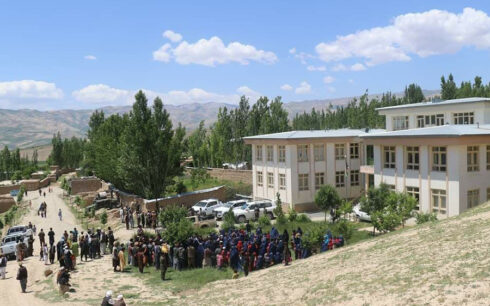
The report also documented another major incident on April 27, when cross-border shelling in Kunar province caused at least 88 civilian casualties, including seven deaths and 81 injuries. Students and professors at Sayed Jamaluddin Afghani University were among those affected.
The report further documented an attack against civilians on April 10, when gunmen opened fire near the Sayed Mohammad Agha shrine in Herat’s Injil district, killing 11 civilians and wounding 11 others. Women and children were among the victims. No group claimed responsibility.
Former security forces continue to face abuses
The report says human rights violations against former government officials and members of the former Afghan National Defense and Security Forces continued despite Taliban promises of amnesty.
Between Jan. 26 and March 31, UNAMA documented at least five killings, 20 arbitrary arrests and detentions, and eight cases of torture and ill-treatment involving former officials and security personnel.
Hundreds subjected to corporal punishment
The United Nations documented 228 instances of corporal punishment carried out by Taliban during the reporting period. Those punished included 29 women, 196 men and three boys.
According to the report, offenses leading to punishment included adultery, running away from home, homosexuality, alcohol consumption and gambling.
Children remain at risk
Between Jan. 1 and March 31, the UN verified approximately 300 grave violations affecting at least 200 children, including 67 girls.
The most common violations involved killings and injuries, attacks on schools and hospitals, and denial of humanitarian access, accounting for 96 percent of all verified cases.
Nearly half the population needs aid
The United Nations estimates that 21.9 million people — roughly 45 percent of Afghanistan’s population — will require humanitarian assistance in 2026.
However, international funding continues to decline. As of April 30, only 14 percent of the $1.7 billion required under the Humanitarian Needs and Response Plan had been secured.
Between January and March, humanitarian agencies reached 4.7 million people with at least one form of assistance. Three million received food assistance, 1.4 million healthcare support, nearly one million nutrition services and one million protection services.
Food insecurity remains widespread. The report estimates that 17.4 million people are experiencing acute food insecurity, while 4.9 million children and pregnant or breastfeeding women require treatment for acute malnutrition.
The humanitarian situation has been further complicated by climate-related disasters. Heavy rainfall and flash floods between March 26 and April 16 affected 31 provinces, impacting about 73,300 people and leaving more than 31,600 in urgent need of assistance.
The report says drought and water shortages continue to threaten agricultural livelihoods, particularly in rural areas where farming remains the primary source of income.
Mass returns add pressure
The report highlights the growing strain caused by the return of hundreds of thousands of Afghans from neighboring countries.
Between January and April, more than 548,000 Afghans returned to the country, including 328,094 from Pakistan and 220,509 from Iran.
The report notes that approximately 2.9 million Afghans returned during 2025 alone.
The UN warns that many returnees face limited access to housing, employment and basic services, increasing their vulnerability to poverty and displacement. Women and girls are considered particularly at risk.
Hostilities with Pakistan have also displaced an estimated 94,000 people since February, more than half of them women and children.
Economy remains fragile
Although some macroeconomic indicators have stabilized, the UN report says Afghanistan’s economy remains fragile and unable to generate sufficient growth to meet the needs of a rapidly growing population.
The World Bank, cited in the report, points to declining international assistance, rising food prices, trade disruptions and weak private investment as key challenges. Economic growth remains below population growth, resulting in declining per-capita income.
The report says trade through the Pakistan corridor has fallen by more than 90 percent since the border closure in October 2025. Transport costs have increased by 30 percent, inflation rose from 6.4 percent in February to 7.6 percent in March, and food basket costs increased by 6.8 percent.
Women and girls remain excluded
The secretary general again raised concerns about Taliban restrictions on women and girls, describing them as one of Afghanistan’s most pressing human rights challenges.
March marked the fifth consecutive year that girls have been barred from education beyond sixth grade, contributing to an estimated 2.6 million out-of-school children.
The report says women continue to face severe restrictions on movement, employment and participation in public life. In provinces such as Herat and Kandahar, Taliban continue to enforce strict dress requirements, with reports of women facing public reprimands and verbal abuse.
Women are also restricted from traveling alone beyond 78 kilometers and, in some areas, are required to be accompanied by a male guardian while shopping, visiting shrines or traveling between districts.
The UN also criticized Taliban Decree No. 12 on judicial separation, saying it formalizes gender discrimination, undermines women’s legal rights and could expose them to greater violence and abuse.
The report notes that Taliban continue to prohibit Afghan women employed by the United Nations from accessing UN offices, a restriction that has significantly hampered UN operations inside the country.
Media restrictions continue
The report says media freedoms remain under pressure.
In February, Taliban suspended Rah-e-Farda television and radio after comments by its owner were deemed supportive of Pakistani military action. In Ghazni Province, Taliban temporarily suspended a private radio station after a female caller spoke with a male host during a program.
Call for engagement
Despite the challenges, Guterres said the United Nations remains committed to engagement through the Doha process and broader efforts to reintegrate Afghanistan into the international community.
He called on Taliban to establish a structured mechanism for engagement with UNAMA and urged neighboring countries to ensure that refugee returns are voluntary, safe and dignified.
“The objective of the international community regarding Afghanistan,” Guterres wrote, “is an end state in which Afghanistan is fully reintegrated into the international community, meeting its international obligations and ensuring the rights and well-being of all of its people.”