Pakistan’s economy has been in a state of crisis for many years; meanwhile, India – a frequent point of comparison in Pakistani discourse – has managed a far stronger economic performance in the same period. After the COVID-19 pandemic, the two economies moved in very different directions.
In 2022, Pakistan saw a decent rebound with around 6% GDP growth, but this proved short-lived. By 2023, the country’s economy had all but stalled, and the IMF forecast only 0.5% growth. On the other hand, in India, the economy remained one of the world’s fastest growing economies with a rise of 6.8% in 2022 and, despite a slight moderation, was projected to grow about 6.1% in 2023 and then rise again to 6.8% in 2024. Such robust growth made India the “bright spot” of the global economy, accounting for a significant share of world growth, while Pakistan’s troubles were being acknowledged even from within its own power structure. At a business event in Islamabad, Lt-Gen Sarfraz Ahmed, the national coordinator of the Special Investment Facilitation Council (SIFC), bluntly said Pakistan had “no growth plan,” and that the country’s fiscal situation had been badly mishandled.
One of the clearest signs of Pakistan’s economic crisis has been inflation, which hit 37.97% in between 2022 and 2023, and is said to be the highest in 30 years, that has caused a severe crisis for many with the cost of living. This high inflation has hurt many common people the most and has left many families struggling to afford basic goods, as their salaries cannot keep up with the price rise due to inflation. According to the World Bank, the surge in prices pushed an additional 13 million Pakistanis into poverty, and this coupled with high unemployment rate, raised the poverty rate in Pakistan from 21.9% to 25.3% by 2023 to 2024, which means roughly one in four Pakistanis lives below the poverty line now across the country, and under a higher global poverty threshold, nearly 45% of Pakistan’s population could be considered poor.
India also faced inflation during this period, but to a much lesser degree. In 2022, India’s consumer inflation averaged about 6.7%, which was mostly driven by global oil and supply problems, and that was above its central bank’s target but nowhere near Pakistan’s inflation rate. By 2023, India’s inflation had come down to around 5–6%, and fell further in 2024. In late 2023, India’s retail inflation was below 5% after food prices were brought under control. To curb inflation, India raised interest rates, and further, the government also used trade measures to manage food prices, such as a 40% export duty on onions, and in some cases reduced import duties on certain food items to improve domestic supply and bring prices down and by the end of 2025, India even saw periods of very low inflation, thanks to good harvests. So yes, while this means that Indians felt some price rises in fuel and certain foods, the situation was far more stable than Pakistan’s, with a stark contrast that an average Pakistani consumer faces price increases five times higher than an average Indian consumer.
India’s employment and poverty trends, although had some challenges, have been more positive in recent years. After the shock of the pandemic in 2020 which affected employment, India’s job market gradually recovered, and the Indian government’s data shows that by 2022 to 2023, India’s unemployment rate had fallen to about 3.2%, down from over 4% a couple of years earlier, as the economy grew and jobs were added. On poverty, while India has not released its recent official poverty numbers, according to the World Bank, the proportion of people living on less than 4 US dollars a day, which is the international benchmark for extreme poverty, fell sharply from 16% to just 2.3% by 2023. That doesn’t mean India has solved the inequality that exists in India, but it does show the overall direction has been downward on extreme poverty rather than upward.
An important difference between Pakistan’s and India’s economies is their relationship with and dependence on the IMF assistance, as well as their overall external economic stability. Pakistan has been dependent on IMF bailouts repeatedly, and the country has gone to the IMF 24 times for help since 1958, and the latest arrangements include a $3bn Stand-By Arrangement from 2023 to 2024 and the approval of a $7 billion arrangement for a 37-month period in Sept 2024, which runs to 2027. To get the money from these IMF deals, Pakistan had to follow strict conditions, including letting the rupee’s value be set more by the market, cutting government support that keeps electricity and fuel cheaper, and raising taxes, that all together led the Pakistani rupee to fall, making imports more expensive, electricity and fuel bills go up, and everyday goods become costlier for Pakistani people. The lack of management has even made the IMF itself to acknowledge that Pakistan’s economic challenges are “complex and multifaceted,” with exceptionally high risks.
India, on the other hand, has not needed the IMF in decades, and the last time India went to the IMF for a loan was in 1991, during a balance-of-payments crisis that sparked major economic reforms. Since then, India has handled its foreign finances more carefully and built a large emergency fund as backup in times of need. By the mid 2020s, it had built one of the world’s largest foreign currency reserves, about $600-700 billion. By late 2025, reserves were around $701 billion, enough to pay for about 11 months of imports if needed. This is a huge cushion against external shocks and is in stark contrast to Pakistan’s near empty reserves. The IMF has actually praised India as a pillar of stability, as the country contributes to global growth and even to IMF resources, rather than drawing on them. For example, IMF Managing Director Kristalina Georgieva noted that India alone is expected to contribute 15% of global growth in 2023 and called the country a “bright spot” due to its policy measures fostering growth and jobs.
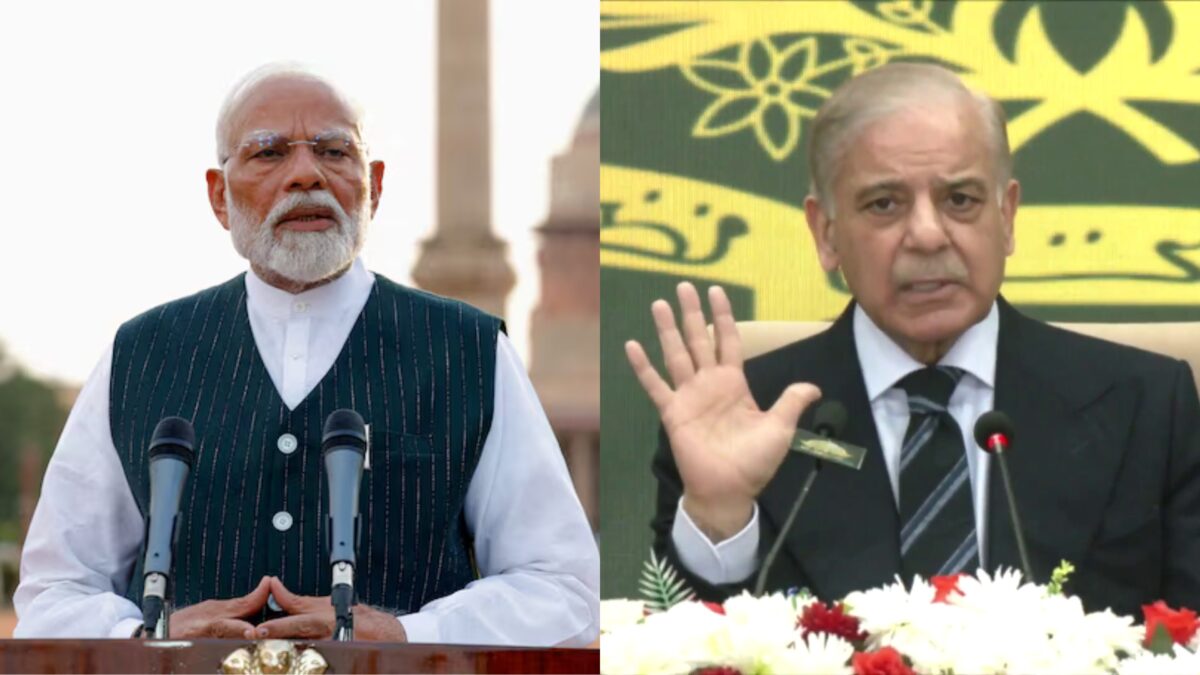
Indeed, one cannot ignore government performance when assessing the economic performance, as it does not occur in a vacuum, and governance and political stability play a crucial role; here too, Pakistan and India present a huge contrast. Pakistan’s political system from 2022 to 2025 has been turbulent. The civilian government under Prime Minister Shehbaz Sharif was a coalition that faced legitimacy issues and intense pressure from the opposition. In April 2022, Imran Khan was ousted as PM via a no-confidence vote, which led to protests and a polarised political environment. By mid-2023, as the economy worsened, Pakistan postponed its general elections and installed a caretaker government, which essentially was a non-elected regime, and that, along with massive control by the military over the government, and the passing of a 28th Constitutional Amendment prolonged the democratic uncertainty.
India’s political and governance atmosphere in the same period has been comparatively stable and favorable for economic policymaking. Since 2014, India has been governed by Prime Minister Narendra Modi’s administration, which enjoys a strong majority in parliament, and this has allowed his administration to implement medium term economic initiatives without interruption. Importantly, unlike Pakistan’s unelected interim setup, India’s government derived authority from elections. Modi was re-elected in 2019 and, in 2024, won a third term, this time leading a coalition. The next general election is due in 2029.
This democratic legitimacy tends to translate into greater investor confidence, as policies are seen as more predictable and not subject to abrupt regime change. Furthermore, there has been a general consensus across party lines in India on core economic reforms since the 1991 liberalization, so even when state or national leadership changes in India, the economic direction usually remains reformist and investment friendly and welcome for business. This all been complemented by the presence of a robust media and judiciary in India, despite some tensions, but those tensions generally have not prevented grievances from being voiced and addressed more openly. All these governance factors, stability, accountability, and consensus on growth, helped India maintain a healthier economy.
For people of both countries, these differences have many impacts on their lives. For many Pakistanis, recent years have meant relentless pressure, with paying far more for basic needs, coping with stagnant incomes or job losses, and seeing little certainty about what comes next, while for many Indians the period has been more mixed but overall more hopeful as inflation has been more manageable, incomes have generally grown, and opportunities have expanded alongside economic growth; and while the two nations cannot be compared on “success” as if they are starting from the same baseline, it is almost like comparing a country stuck in repeated crises with one that has stability to keep moving forward, so perhaps Pakistan could draw clear lessons from India’s trajectory, and the next time Pakistani officials try to sell the narrative of “competing with India,” they should first ask whether they are really in any position to do that when they can’t even secure the basics at home.
Natiq Malikzada is a journalist and human rights advocate. He holds an MA in International Relations and an LLM in International Human Rights Law from the University of Essex.
This op-ed reflects the views of the author, not necessarily those of Amu TV.