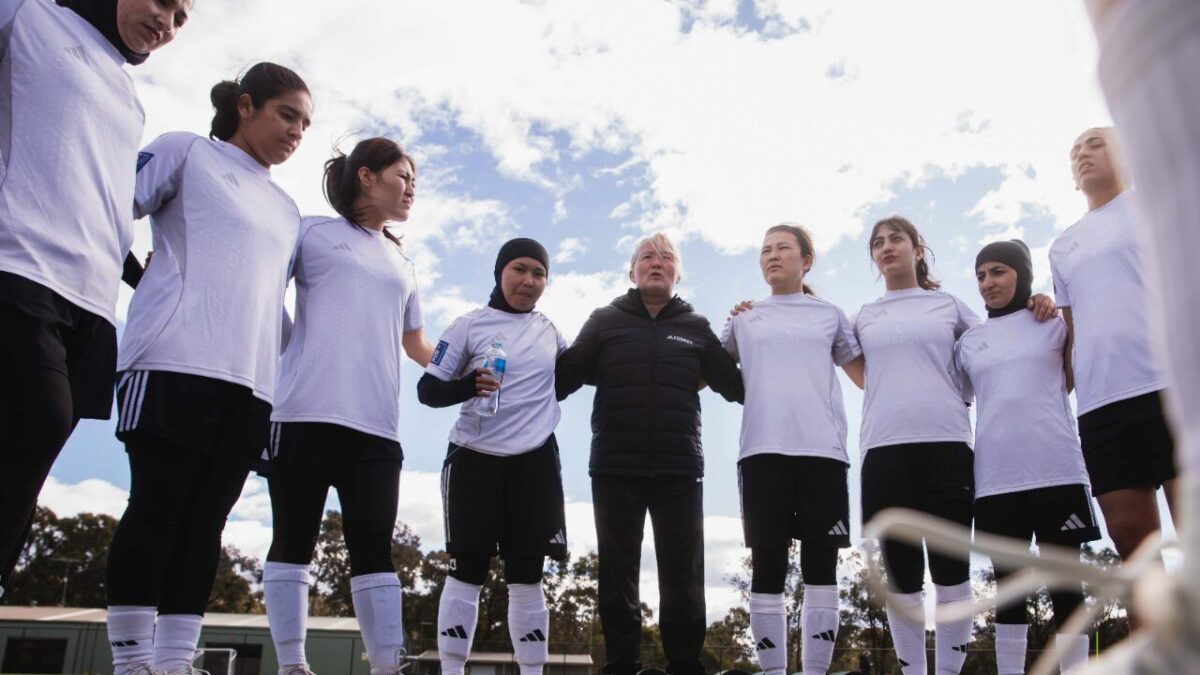
The Afghan women’s refugee football team has begun its journey back to international play with its first talent identification camp in Sydney, FIFA said.
The weeklong camp, held July 23–29 at a sports complex in western Sydney, brought together Afghan refugee players as part of a FIFA-approved initiative to form a team that will play international friendlies later this year. The project was endorsed by the FIFA Council in May as part of the three-pillar FIFA Strategy for Action for Afghan Women’s Football.
Scottish coach Pauline Hamill, who earned 141 caps for Scotland and has coached youth teams in Scotland and Saudi Arabia, is leading the effort. She will oversee three global talent ID camps before naming a 23-player squad. “It’s great to have the players here. Now we have the chance to work with them and try to evaluate their performance, and they can all come together again in an environment that they always wanted to be a part of,” Hamill said. “I think it’s an incredible project. It’s given the players the chance to perform and play together again.”
FIFA said the project goes beyond traditional trials. Players will receive support services such as equipment, access to local clubs, counseling, media training and pathways into coaching and refereeing. Whether or not they make the squad, participants will benefit from programs designed to strengthen community ties in their new homes while maintaining their connection to Afghanistan.
For many of the players, the camp was a lifeline. “Football gave me the chance to be here. My life is safe. I have a lot of opportunity. My voice is loud, and football helps me and the other girls,” said Nilab, one of the participants. “My goal is not just about me. It’s about all Afghanistan, especially women and girls.”
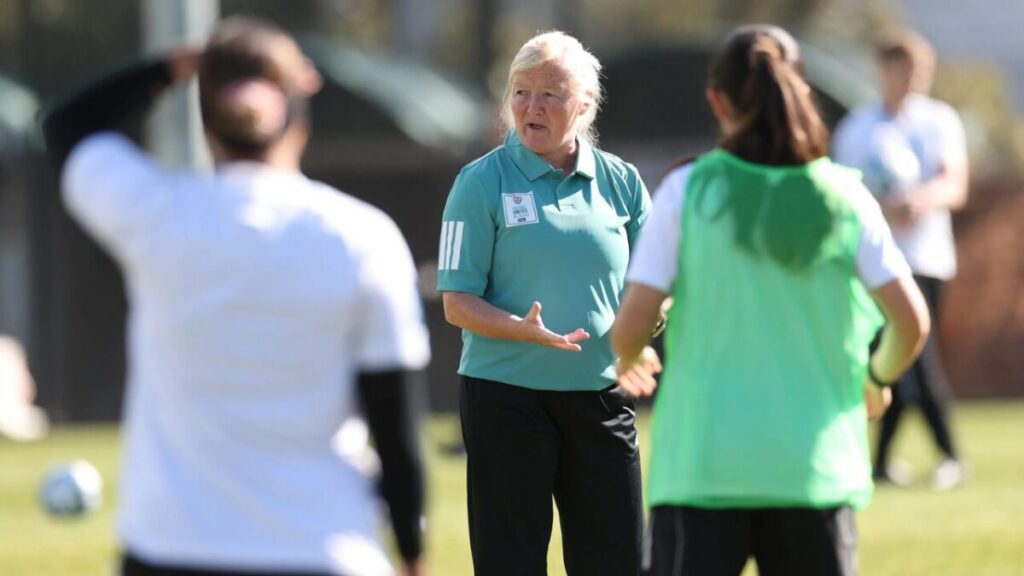
FIFA President Gianni Infantino said the initiative was a significant milestone. “One year after the commitment we made in Paris, I was deeply moved to see the first images from the talent ID camp for the Afghan women’s refugee team and to hear how empowering that experience was,” he said. “We are proud of this pilot project, and our aim is to expand it in the future to include women from other countries as well.”
The Sydney camp was supported by a 15-member staff and visited by veteran women’s coach Tom Sermanni, who has led the national teams of Australia, New Zealand and the United States. “The great thing that football does is connect people,” Sermanni said. “It works across borders. It works whether people are rich, poor or whatever background they come from.”
Two more talent ID camps will be held before the squad is finalized later this year, paving the way for Afghan women’s football to return to the international stage for the first time since the Taliban banned women from playing in Afghanistan.