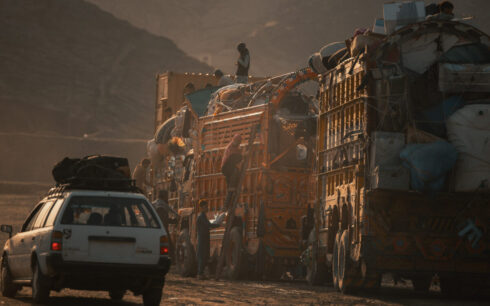
In an unprecedented move, Iran’s Ministry of Interior has declared migrant census registration cards invalid, warning all holders to leave the country before the end of the current Persian calendar year or face forced expulsion.
The ministry announced that, effective immediately, these census documents—previously recognized by Iranian authorities as a form of identification for undocumented migrants—will no longer confer any legal status or entitlements. After the deadline, holders will be denied access to public services and forcibly removed from the country.
Simultaneously, Iran’s Bureau for Aliens and Foreign Immigrants Affairs reported that more than 772,000 Afghan migrants have been deported in less than four months—part of a broader crackdown on undocumented migration.
According to Iranian officials cited by domestic media, close to 800,000 Afghans have either been deported or repatriated voluntarily since the beginning of the current solar year, which started in March.
The Ministry of Interior reiterated that all migrants holding now-invalid census registration cards must depart voluntarily before the end-of-year deadline. After that point, individuals will lose access to all public and consular services and face forced removal from Iranian territory.
The escalation in deportations has drawn international attention. On a recent visit to the western Afghan city of Herat, Rosa Otunbayeva, U.N. Special Representative and head of the U.N. Assistance Mission in Afghanistan, met with Taliban officials to assess the condition of returnees.
A statement from local Taliban authorities said the U.N. delegation was conducting an evaluation of deportee needs and coordinating humanitarian responses.
But deported migrants, many of whom have returned to Afghanistan under difficult circumstances, describe distressing experiences at the hands of Iranian authorities.
“There were many problems in Iran,” said one recently expelled migrant. “The police treated us with disrespect and insulted us. Wherever we went, we were mistreated.”
The United Nations estimates that more than 1.6 million Afghans have returned—either voluntarily or by force—from Iran and Pakistan since the start of 2024. This figure includes large numbers of women and children.
Aid organizations and observers warn that many of the deportees lack access to basic necessities, including shelter, clean drinking water, food, and medical care. Humanitarian agencies are urging greater international support to address the growing crisis.