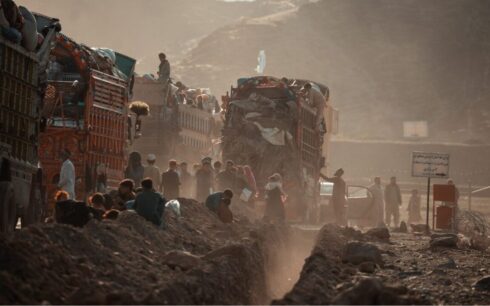
More than 14,000 families were expelled from Iran over the past three days as deportations from the neighboring country continue, according to data compiled by Amu from the Taliban-run refugees ministry’s statements.
Between July 4 and July 6, a total of 14,973 families returned to Afghanistan either by force or under pressure, including 14,643 from Iran and 330 from Pakistan, the data shows.
Of those returning from Pakistan, 128 families crossed through the Torkham border in eastern Nangarhar Province, 201 via the Spin Boldak crossing in Kandahar Province, and one family entered through Angoor Adda in Paktika Province.
In the west, 4,952 families crossed into Nimroz Province at the Pul-e-Abrisham checkpoint, while 9,691 reentered through Islam Qala in Herat Province, a major corridor for returns from Iran.
The surge in deportations follows what rights advocates describe as an intensifying crackdown on undocumented Afghan migrants in both countries. Iran, in particular, has accelerated removals ahead of a previously announced deadline for unregistered Afghans to leave the country voluntarily.
Migrants say that thousands of Afghans — including women and children — have been expelled without warning or access to support services.
The International Organization for Migration estimates that more than 450,000 Afghans were expelled from Iran since June 1, often detained at night and sent directly from holding centers to border crossings such as Islam Qala.
Pakistan has also continued its policy of arresting and deporting Afghan migrants, a campaign that has drawn widespread condemnation from humanitarian groups and international observers.