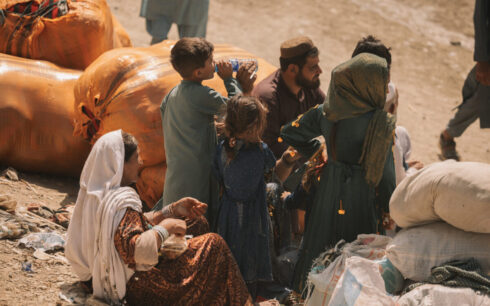
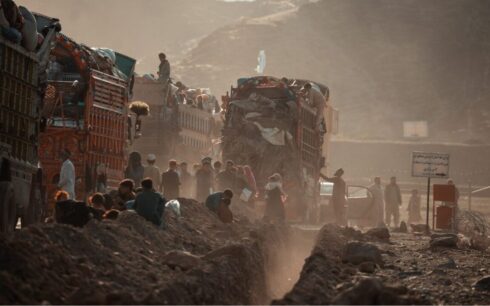
Amnesty International on Saturday called for an end to the deportation of Afghan refugees and asylum seekers, warning that those returned to Afghanistan face serious risks, including arbitrary detention, poverty, displacement and human rights violations.
Marking World Refugee Day, the organization said the growing number of deportations from countries including Iran and Pakistan is placing additional pressure on a country already struggling with one of the world’s most severe humanitarian crises.
“The unlawful expulsions of Afghan people must stop and people with international protection needs must be safeguarded as per international human rights law,” Amnesty said in a statement and accompanying campaign materials.
The organization argued that many deportations violate the international principle of non-refoulement, which prohibits returning individuals to countries where they face persecution, torture, arbitrary detention or other serious human rights abuses.
“No one leaves their country without a reason,” one of Amnesty’s campaign graphics stated, highlighting the experiences of Afghan refugees forced to flee conflict, repression and economic hardship.
The warning comes amid a sharp increase in returns to Afghanistan.
According to data cited by Amnesty, more than 5 million Afghans have returned from neighboring countries since 2023, while millions more continue to face uncertainty over their legal status abroad.
Humanitarian agencies have reported that large-scale deportation campaigns in Pakistan and Iran have accelerated returns over the past two years, with many Afghans arriving at border crossings with few possessions and limited access to assistance.
Amnesty said Afghan refugees and asylum seekers in host countries face a range of challenges, including arbitrary arrests, police raids, family separation and deportation without adequate assessments of their protection needs.
The organization warned that conditions inside Afghanistan remain dire for many returnees.
Among the risks identified by Amnesty are unemployment, displacement, poverty, family separation, lack of documentation and limited access to basic services such as shelter, clean water and healthcare.
Women and girls face additional challenges because of Taliban restrictions on education and employment, the organization said.
The rights group also pointed to a series of recent UN reports documenting concerns about Afghanistan’s human rights situation, including restrictions on women and girls, reports of arbitrary arrests, public punishments and alleged abuses against some returnees.
According to U.N. estimates cited by Amnesty, more than 21 million people in Afghanistan relied on humanitarian assistance as of May 2026, underscoring the country’s continuing economic and humanitarian crisis.
Amnesty’s appeal comes as several European countries continue to debate the return of Afghan migrants and hold discussions with Taliban representatives on migration issues.
Rights groups and UN experts have repeatedly argued that Afghanistan remains unsafe for many categories of returnees, particularly women, journalists, human rights defenders, former government employees and others who may face persecution under Taliban rule.
The Taliban have rejected allegations of widespread human rights abuses and have maintained that conditions in Afghanistan are stable and secure. International rights organizations, however, continue to warn that forced returns could expose vulnerable Afghans to serious harm.
On World Refugee Day, Amnesty urged governments to halt deportations and ensure that Afghans with international protection needs are given access to asylum procedures and legal safeguards.
“The expulsions of Afghan refugees must stop,” the organization said. “People with international protection needs must be protected in accordance with international human rights law.”