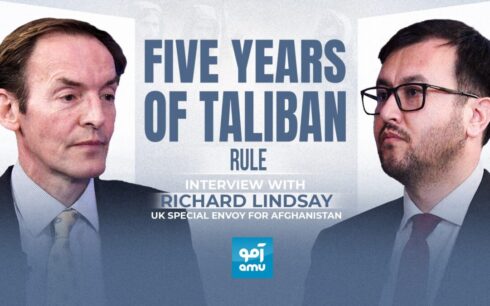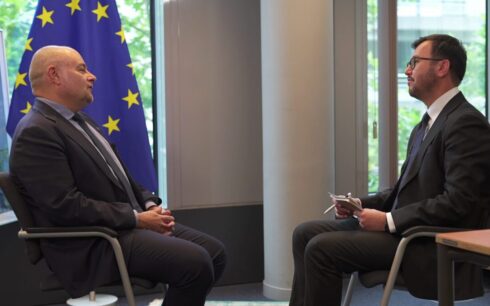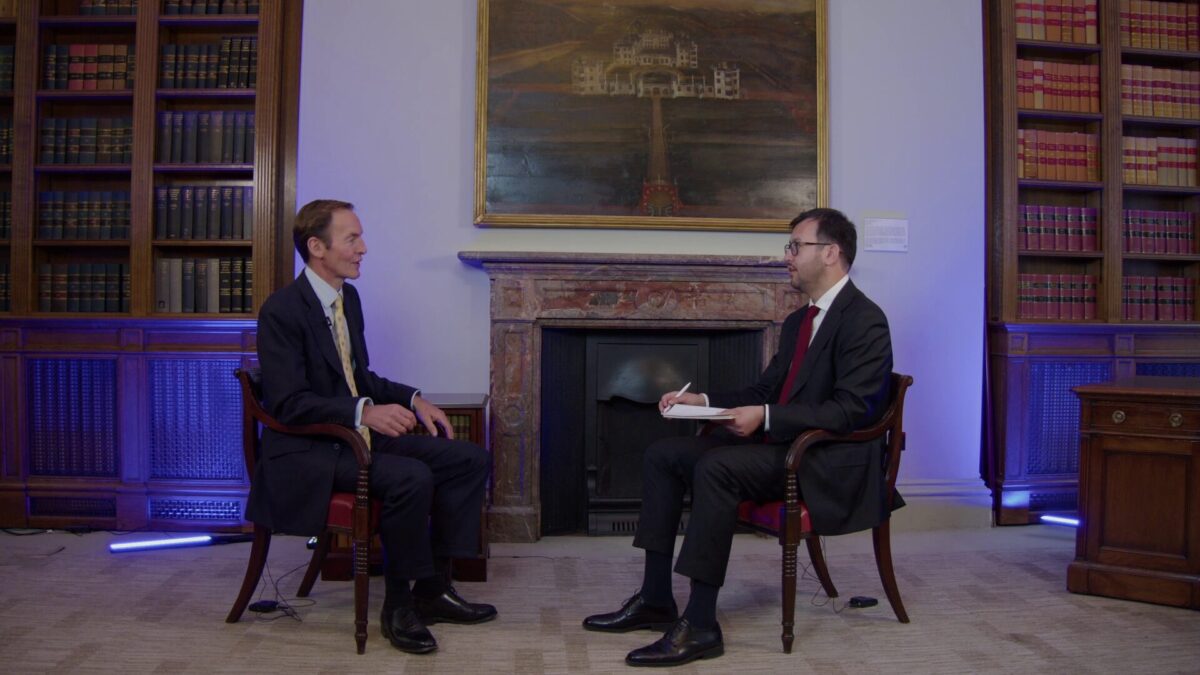
In this interview with Amu TV’s Lotfullah Najafizada, Richard Lindsay, the UK’s Special Envoy for Afghanistan, discusses the Taliban’s governance, women’s rights, terrorism, regional security, humanitarian aid and the prospects for international engagement.
Here is the full transcript of the interview.
Najafizada:
Mr. Richard Lindsay, the UK Special Envoy for Afghanistan. Thank you for your time.
Lindsay:
Very nice to be here. Thank you.
Najafizada:
We are approaching the fifth anniversary of the return of Taliban to power in Afghanistan. Which direction do you think the country is heading to?
Lindsay:
We regret the direction that the country is travelling in. We think that the country needs to change direction where more people can be involved in governance of Afghanistan, but the rights of Afghans can be protected and the economy and the humanitarian situation can be improved. So we are very worried about the direction in which Afghanistan is currently travelling.
Najafizada:
What direction is it? How would you describe it?
Lindsay:
It’s hard to put a word on exactly that direction because it’s multifaceted, but it is Taliban authorities have created a very unique form of governance, which is excluding people from the country and excluding millions of people from the economy and from growth and from education.
Najafizada:
I’m afraid that’s the wrong direction.
Lindsay:
It feels like the wrong direction, definitely.
Najafizada:
And what could have been done differently? What kind of Afghanistan we could have seen now?
Lindsay:
So when the Taliban returned to power, they could have chosen a different direction. They could have chosen an inclusive governance. They could have brought other people into govern with them and ensured that they governed in the interests of all Afghans. Really importantly, they could have not brought in these restrictive measures particularly over girls’ education, over women participating in the workforce. And they could have taken very clear measures and steps to address the threat, which continues to emanate from Afghanistan from terrorism. And that’s a really critical point where we still see that terrorists can operate from Afghanistan.
Najafizada:
Right. We will, of course, discuss that, which is very important and a pressing issue. But I’m curious to know your views, whether this was by design that the Taliban wanted to take the country to the direction that they have been leading the country to, or this is a capacity issue.
Lindsay:
I don’t think it’s for me to determine or to judge on exactly what the Taliban were thinking on why they’ve been thinking. I can say that we have consistently engaged with the Taliban since 2021 and described to them the different choices and different directions they could be going. So whether they’ve done this by design or whether this has been by default, they have made those choices fully aware of the alternative direction they could have taken.
Najafizada:
Right. But this is certainly a man-made decision, particularly when it comes to the restrictive measures against women.
Lindsay:
Undoubtedly so,
Najafizada:
Yes. Not women-made.
Lindsay:
No, no. The Taliban leadership, they’re all men, have made these decisions knowing that there are alternatives they could have taken. And as I say, we have been making those choices aware to them all the time. An important point to emphasise, it’s not because the international community have abandoned Afghanistan. The United Kingdom has continued to be a very significant donor to the Afghan people and supporting the Afghan people.
Najafizada:
And in your view, why there is so much hate for women from the Taliban, which is very difficult to understand.
Lindsay:
It’s inexplicable, which is why we continue to make these points. It’s not only inexplicable, but it’s indefensible that women should be excluded from the workplace and that particularly that girls should have the right to education stolen from them. And we’ve now seen a whole generation of girls who are not having the opportunity to be educated. And this is a point that I make every single conversation I have with the Taliban.
Najafizada:
There are about 2.6 million girls who are now out of school because of the Taliban edicts and every year about a 250,000 added to that. I mean, that is hurting the future of the country.
Lindsay:
It’s absolutely hurting the future of the country. The other point is that it’s not just girls at school, it’s older students and women who are trying to be educated in, particularly in things like healthcare, where they’re getting into vocational education and Afghanistan will at some point no longer have Afghan women who can deliver essential healthcare services to their own women. This will be a catastrophe for the country.
Najafizada:
The other day, they also opened fire at women in Herat and they’re also using violence. They have of course issued a lot of edicts, but this Herat incident must have been alarming.
Lindsay:
It was very alarming. And I mentioned this, made a statement about this. I’m extremely concerned that there are evidence of violence being used against demonstrators and the demonstrators, as I understand it, and the situation is of course murky, but as I understand it, they were demonstrating against the enforced adherence to very strict rules around dress code. Now it’s not for us to determine those rules, but it is for us to call out where we see force being used unreasonably against people.
Najafizada:
It’s for the Afghan women to determine.
Lindsay:
The rights of women and girls are absolutely top priority for the British government and it’s top priority for my foreign secretary and we will call out where we see their rights being trampled on and this is evidence of that.
Najafizada:
And also child marriage is legalised. Don’t you think that there’s a very strategic long-term social re-engineering of the society?
Lindsay:
So I’m not an expert in Hanafi jurisprudence and I wouldn’t claim to know the details of this, but where I see things that appear to be advocating for child marriage or the like, then we will certainly call it out and we think that child marriage is abhorrent under any circumstances. So we will certainly call that out. In terms of where this direction is going, I do see that there is a clear plan to implement a theocratic vision across the country. I don’t understand that theocratic vision, but I do understand the practicalities of how it is being applied and the impact that has on the people of Afghanistan. And our interest here is about the people of Afghanistan and that’s why we are continuing to be so deeply engaged.
Najafizada:
We talked about girls being sort of pushed out of education, doors of schools have been closed on them. I was also surprised that you and your government closed the Chevning a scholarship, particularly for women which was merit-based. What’s your response to many Afghan women and men who wanted to use this opportunity and come to the UK for education?
Lindsay:
So it’s really important that you raise this point. We’ve actually closed the visa scheme. So there are no longer offering visas for work or study for any Afghans. So that’s the key point. And the reason why we’ve done that is because of the numbers of Afghans who came in on those work or study visas and abused the terms of their visas. So they claim asylum as a result of getting here. Once they’ve come here, they may work, they may study, but at the end of that process or during that process, they will then claim asylum. So it was becoming a route for people to illegally abuse their visa terms and to end up claiming asylum in our country. So it’s about the government clamping down on visa abuse and people claiming asylum. It’s not about trying to prevent people from legitimacy pursuing scholarship opportunities and so on. The impact of it is that people, Afghans can no longer take advantage of the scholarship scheme.
Najafizada:
And you expect Afghan girls to go back to Afghanistan once they come here and is that given the situation that you-
Lindsay:
The point that I’m making is that a scholarship scheme is for the reason why we invest in a scholarship scheme is for to invest in people’s education for people who will go back to the country from which they come and then contribute to the future growth of that country. It undermines the whole principle if they come here and stay here. And this is not an argument about whether Afghanistan is safe or not safe. It’s an argument about whether it is right for us to be using a scholarship scheme to be getting people to effectively claim asylum in the UK.
Najafizada:
It’s a migration issue.
Lindsay:
It’s a migration issue and that’s what ministers have taken. The government has taken that decision that because of the data we’ve stopped issuing visas to Afghans for work or study.
Najafizada:
I understand that at points about a thousand people come to the UK through, I mean illegally, including many Afghans. Is that a still a concern? A lot of Afghans do come to the UK illegally?
Lindsay:
Yes. All irregular migration is a deep concern and it’s got very deep concern across the whole of the United Kingdom. So it is a very emotive issue and the government is committed to clamping down on irregular migration, including those who come by small boat.
Najafizada:
And are you talking to the Taliban about their deportation? Is that on your agenda?
Lindsay:
About their deportation?
Najafizada:
Deportation of individuals. Afghan nationals who have come to the UK illegally?
Lindsay:
So we’ll not talk about the details of our conversations with the Taliban in public here, but this is an issue, as I said, which is of significant concern to the United Kingdom.
Najafizada:
The Europeans do. I mean, they have engaged. Germany has deported many Afghans and they have accepted Taliban diplomats to come to Germany and process that. Is that a direction you’re taking?
Lindsay:
It’s for Germany to just discuss and describe what their arrangements they have. We don’t have arrangements in place for the Taliban for this.
Najafizada:
And I’m curious if criminals of Afghan origin who are in the prison here in the UK or elsewhere, would it be better for them to roam around freely in Afghanistan or serve their sentences in the West? That is deeply a moral and of course, a security question for many countries. It must be for you as well.
Lindsay:
If someone offends in this country, they will be and they are convicted. They’ll be imprisoned in this country and they will serve their term in this country. And at the end of that, once they’ve served their term for their conviction, we would normally expect them to return to their country of origin if they have no right to be here.
Najafizada:
On your engagement with Afghanistan and with the Taliban, I remember you closed your office in Doha last year, you moved to London, but you do go to Kabul quite regularly. Why don’t you open your embassy in Kabul?
Lindsay:
We reunited all of our work on Afghanistan. We repatriated it from Doha to HQ in London and we operate a united team from HQ here. We visited Kabul from Doha. We visit Kabul now from London. It makes very little difference where we’re coming from. So we’re doing exactly the same as we were before. We’re not in the case in the situation of planning to open our embassy because the relationship with the Taliban government is not, the Taliban administration, is not at any way at that level yet. We would like to have a better relationship with the authorities in Afghanistan, but until they take certain decisions, we are not going to be moving to opening an embassy.
Najafizada:
Certain decision and-
Lindsay:
Certain decisions around the issues which are of most concern to us. So as I mentioned, this is about the rights- Human rights. Human rights- Counter-terrorism. Situational counter-terrorism and steps towards a more inclusive governance, which is these are all really important steps. They need to abide by and uphold their international obligations.
Najafizada:
And you’re not planning to allow Taliban to have diplomats here in London so you can meet with them on daily basis.
Lindsay:
No, because we need to have … As I said, we need to have that relationship. I can pursue that through my visits to Kabul. I go and visit regularly and we’ll continue to do that, but it’s only when we get that basis of a relationship which is strong enough for us to then build and deliver which we can move on from to allow us to have embassies open.
Najafizada:
And how far is the Taliban government to be recognised, let’s stay by a country like the United Kingdom?
Lindsay:
So the really important point here is that the international community are united in a position towards the Taliban, which is that we are collectively saying we’re not opening, we’re not going to give international recognition or give the Taliban their aspiration of a seat on the recognition of the United Nations, et cetera, in order to make sure they understand the pressure. So we are some way from opening embassies or recognition, but this is the same for other countries as well.
Najafizada:
It’s a long way. I mean, there’s a huge gap, I guess.
Lindsay:
As I said, this is in the hands of the Taliban. This is not a decision. We have made very clear that the Taliban need to change the way in which they govern in order to attain these goals.
Najafizada:
And you think they care?
Lindsay:
If I didn’t think they care, I wouldn’t be engaging with them. I think they do care. I think they have an aspiration to be recognised.
Najafizada:
And then what kind of justifications they provide to you when you raise some of these issues? Is this work in progress or they’re asking for more time?
Lindsay:
A lot of different reasons. I mean, I won’t explain all the details, all the detailed explanations here, but they have a lot of different reasons and there are clear tensions there and I’d like them to come back to me with a collective position on how they’re going to deal with these tensions that they have. Now they are, as you say, almost five years in power.
Najafizada:
And speaking of tensions, they have, of course, internal tensions and rifts as well as with some of the regional players, particularly Pakistan, which we’ll discuss in a minute. But given that you also acknowledge that there are tensions domestically within the Taliban government, you engage with the hardliners as well, or that is a no-go area they are not interested in talking to countries like the United Kingdom.
Lindsay:
As I said, I’ll engage with all Afghans, whether Taliban, hardliner, Taliban, moderate Taliban, if that’s a description. I engage with Afghans who are non-Talibs and that is my job as a UK envoy and I’m happy to engage with everybody and it’s up to them whether they are prepared to engage with me.
Najafizada:
But you haven’t met with the Taliban leader yet, I guess.
Lindsay:
I haven’t travelled outside Kabul.
Najafizada:
And that is because-
Lindsay:
At the moment, for various security reasons, but I would be very happy to engage with the Taliban leader.
Najafizada:
I thought Afghanistan was very safe under the Taliban.
Lindsay:
I wouldn’t change my views and I will engage and I will very happily talk about these issues with the Taliban leader.
Najafizada:
You’re saying it’s not safe for you to travel to Kandahar or they’re not willing to.
Lindsay:
At the moment, we don’t have the ability to travel to Kandahar, but we would be happy to seek to achieve that if we could.
Najafizada:
How deep is that rift? Now, you have been in your current role for about a year, but you have been following Afghanistan for much longer, particularly from a counter-terrorism sort of angle. How deep is that rift and what does that mean for your engagement with them and for the decisions that they might take?
Lindsay:
Which rift?
Najafizada:
Between the Taliban
Lindsay:
The Taliban have their own internal politics like any administration and I’m not the judge of that. I will give my messages to everybody that I see and when they need to take the steps, and this is an important point when we’re talking about the relationship between Afghanistan and Pakistan, if they need to take steps to address the threat of terrorism, that needs to be a collective and united position. So it’s really important that there aren’t differences of view within the Taliban that they can take clear and decisive steps to improve that relationship, which is critical for the future of Afghanistan.
Najafizada:
But they make some united decisions when they ban girls from going to school or they issue edicts. I’m sure Hibatullah is not sending his own bodyguards across Afghanistan to sort of shut down girls’ schools. I mean, there are other Taliban leaders who implement that and ministries. So what kind of lack of unity are we talking about?
Lindsay:
Well, I’d say on terrorism, it’s very important that Taliban give a clear view about whether they are going to adhere to their commitment not to allow any part of Afghanistan to be used to threaten another country or not. And if they are prepared to do that, which I advocate that they do, that needs to be followed through and implemented with deep commitment from every part of government and all agencies, because we absolutely condemn terrorism in all its forms and there’s no justification for this.
Najafizada:
My understanding is that the one area that the Taliban was getting sort of a higher score from the international community was their counter-terrorism sort of measures and now it seems that you’re not very happy with that progress. Are they dealing with terrorists enough or they are not? And what terrorism is in Afghanistan of today?
Lindsay:
So there is very clear that there is support for the TTP, which is operating and causing a lot of casualties within Pakistan, this is a real problem and there is an alphabet soup of different terrorist groups and there is lots of movement around within that. And what we’re not seeing is a complete commitment across the whole of the Taliban system, Afghan authorities, to crack down on that and prevent anyone from using Afghan soil to threaten other countries.
Najafizada:
So TTP is a terrorist group?
Lindsay:
Indeed. Yes, it is.
Najafizada:
And the Taliban, they’re allowing them to operate in Afghanistan.
Lindsay:
It’s receiving support from Afghanistan, yes.
Najafizada:
From the women of Afghanistan or from the ordinary people of Afghanistan or from the Taliban leader, when you say they receive support from Afghanistan, how would you unpack that?
Lindsay:
Well, the TTP has a lot of familial links across this very complicated tribal border region and there is support and it is, I’m not going to explain in detail where the support is coming from, but it is the authorities who are in charge in Kabul and Kandahar who need to take decisive steps to address that problem as we expect any government in any country to address a security threat. They wouldn’t expect other countries to determine exactly what they need to do, but it’s very clear that there is a threat and they need to address that.
Najafizada:
The argument of the Taliban is that TTP is an internal Pakistan problem. They are in tribal areas. They go and attack places in Pakistan. It’s for them to address that. What kind of support is it? It’s just because they are in Afghanistan or they are training camps in Afghanistan, they are receiving food or equipment or there’s just sort of a psychological support.
Lindsay:
Well, all of these things. If there are training camps in Afghanistan, if there are weapons that have been used that have come from Afghanistan, if there is financial support, if Afghanistan is a safe haven for terrorists running away from security operations in Pakistan, all of these things need to be addressed to provide security and safety in that region and to provide the reassurance that the TTP, which is a Taliban-Pakistan is not receiving external support and it’s something then that the Pakistan authorities can deal with domestically.
Najafizada:
And why do Taliban should support the TTP?
Lindsay:
That’s a question you should put to the Taliban.
Najafizada:
I’m sure you’ve asked them.
Lindsay:
Yeah. Well, exactly. You should ask the Taliban this question because it’s not for me to answer that. I’ve repeatedly said this is something they should not be doing. This is what’s causing the instability, this is what’s causing the military response from Pakistan.
Najafizada:
Particularly in the past nine months, there has been a surge in escalation and you have been pretty vocal and you have called for sort of a deescalation. Are you hopeful that there will be some sort of settlement?
Lindsay:
There have been a series of countries all of whom have sought to bring Pakistan and Afghanistan together to-
Najafizada:
China, Qatar, Turkey, Saudi, I guess.
Lindsay:
Exactly.
Najafizada:
And the UK as well?
Lindsay:
All of these countries have been involved in trying to bring them together and I absolutely support their efforts to do so. I don’t think it needs another country to join the list of mediators, but this requires political will to take the steps to address the support for terrorism within Pakistan. And we call for deescalation and we call for dialogue and it’s really important that both sides can return to a dialogue, but that does require steps to be taken to stop attacks, when attacks in Pakistan, which are receiving support from within Afghanistan. I should say also that this is causing the Pakistanis are responding militarily.
Najafizada:
Airstrikes and Kabul and Mazar.
Lindsay:
These are causing civilian casualties, which is terrible and we absolutely regret all civilian casualties in any of these conflicts and my thoughts go out to all people who’ve been affected in this way and it’s very easy to point fingers at both sides, which is what I think is happening at the moment, but there are many civilians who have been killed and indeed security officials in Pakistan through terrorism and there’s many civilians who are tragically being killed in Afghanistan through as a collateral from the military airstrikes. None of these are good or positive outcomes. So return to dialogue and deescalation is absolutely where both sides need to go.
Najafizada:
So you want also the Pakistanis to stop bombing Afghanistan?
Lindsay:
They need to stop where I would like to see no civilian casualties.
Najafizada:
What if they bombed TTP? You think they have the right of self-defense?
Lindsay:
Of course there’s a right to self-defense. Yes, absolutely. If there is a clear evidence that this is a threat, that they’re reaching that is absolutely a country’s right.
Najafizada:
How about Al-Qaeda? Are you concerned that they are still having some relevance in Afghanistan or that’s a done deal?
Lindsay:
I would never say it’s a done deal and I think that we all need to be alert to the risk of a resurgence from Al-Qaeda, from we need to be alert to the threats from ISKP and other groups which may be operating-
Najafizada:
IMU, ETIM.
Lindsay:
As I said, it’s an alphabet soup of-
Najafizada:
I know. It’s a long one. I think the UN said like 20 groups or so. Which one is a done deal?
Lindsay:
I would be rash to suggest that any group is a done deal.
Najafizada:
Afghanistan is a hub for terrorism.
Lindsay:
This is exactly my point. And this is a point that I raise with the Taliban when I speak to them all the time. They need to take steps to address this risk and the fluidity of people moving through being trained as fighters and moving into different groups.
Najafizada:
But they did commit in Daoha that they will cut ties with groups like Al-Qaeda and others.
Lindsay:
Correct.
Najafizada:
Apparently they have not.
Lindsay:
Yeah.
Najafizada:
They have not delivered on the inter-Afghan dialogue. They have not delivered on the kind of terrorism front. They have of course not upheld Afghanistan’s commitments to the international community when it comes to human rights. How would you define this? Then there’s a stalemate.
Lindsay:
Yeah. And the tragedy of this situation is as it applies to the people of Afghanistan. The people of Afghanistan deserve so much better than this and it is now a situation where over half the population of Afghanistan are dependent on food aid and we’re providing significant amounts of food aid for their We’re trying to help them with sustainable livelihoods and to move into a situation where people can live and survive. You described this as a stalemate. The people that are really affected are the Afghan people and that is what is of most concern to the British people.
Najafizada:
And how the British people are helping the Afghan people?
Lindsay:
So we have a very significant aid budget.
Najafizada:
Like in tens of millions of pounds.
Lindsay:
Tens of hundreds of millions of pounds. So in the last year we’ve spent 154 million pounds on aid for Afghan people. That’s I think somewhere around 13 billion AFS. That’s a vast amount of money and that is going in to literally keep people alive, to provide essential healthcare services. And at least 50% of that aid goes to women and girls because that is such a high priority for this government.
Najafizada:
So you run clinics, you run other initiatives.
Lindsay:
We provide support for a whole range of healthcare services through a lot of the UN and other affiliated bodies which work in Afghanistan on the ground. And it’s really important to emphasise this is something which is one of the largest humanitarian budgets that we have across all countries in the world. And the commitment of our government is very strong to this. Even in an environment where our aid budget is declining overall, there is a strong, deep commitment to continue to support those who are in most need and they are Afghan people.
Najafizada:
And why is that?
Lindsay:
We’ve got very longstanding links with Afghanistan and obviously we have a history over the last 20 years. People feel a link to Afghanistan, but it’s also because we are genuinely a country whereby we want to support those people who are most in need around the world and we see that Afghans are those people.
Najafizada:
There are groups or parts of the Afghan people that you said you talked to all of them who do not see another way but to topple the Taliban. And the reason I ask this is because at least in two or three occasions you explicitly mentioned that you do not support them. You don’t want them to sort of go and topple the Taliban through violence. What was the rationale behind it?
Lindsay:
It’s really important for me to make absolutely clear about this. We do not support any armed opposition groups or anyone who advocates any violence in Afghanistan. Afghanistan has had more than its share of violence over the last five decades. And we think the Afghan people deserve better than this. They deserve to have an evolution of the politics. So they deserve a change in politics, but they deserve something that is not violent and we are not supporting violent opposition.
Najafizada:
And if you’re a young man, let’s say in Logar or in Bamyan or in Nazar and you’re in your 20s and you see this as you and I see it from London and there is no hope that the Taliban make progress now that we are basically discussing their achievements five years in. What other options you have left?
Lindsay:
So I don’t believe that progress, there is no hope. I think that’s really important that that message is not what I give. I don’t think there is no hope. I think there is hope.
Najafizada:
What is that?
Lindsay:
And I think the hope that the Taliban will change, they will become a more inclusive governance. And that I think is a critical point, that they will be open to different views and including all people, all Afghans in the governments and govern for all Afghans. And I think that is where I see change coming.
Najafizada:
It’s an evolution of the Taliban into a more receptive government.
Lindsay:
Yeah.
Najafizada:
Well, that’s breaking news. I would love for you to elaborate that hope a little bit.
Lindsay:
Well, that is an aspiration. I would like to see the Taliban do that. That is why I talk to the Taliban about the need for a more inclusive governance because that is the future for the country because it is the people of Afghanistan who are suffering from not being included and they are the people who need to be who are the future. So as you’ve described, and as I say, the Afghan Taliban is a smaller group, is not representing the whole of the country, that in itself is unsustainable.
Najafizada:
And unsustainable means what will happen to them?
Lindsay:
Well, that is why I’m encouraging them to change direction. Ensure that they can manage this situation in a way which doesn’t result in a breakdown in order across the country or any further violence. So that’s the critical point that we don’t end up in a situation where Afghan people have to suffer yet more violence.
Najafizada:
And where are you getting that sense that there is hope for the Taliban to go to that direction? I understand you made your point very clear and you have done it privately in your engagements as well. Have they told you that we have planned the saying, give us two more months and we’re going to do this?
Lindsay:
No, no. I’m not saying that there is any … I’m not revealing any confidences from the Taliban here. This is the message that we are giving to them and I think it’s incumbent on all of us to continue to engage and to continue to emphasise this point to the Taliban that they need to change.
Najafizada:
But let me ask one more time. Then where is that hope coming from, that you’re saying that there is hope that a country will go towards a better future?
Lindsay:
As you said, there are tensions within the Taliban. I think the Taliban, different leaders within the Taliban have different perspectives on the future of the country and that is an important point to pick up on because I don’t think this is a united position. It can’t be because as I say, and I think others recognise that this is not a sustainable long-term settlement for Afghanistan.
Najafizada:
So the good Taliban overcome the bad Taliban if I … Those are not your words. But I’m trying to understand what you’re saying, that there are two camps and the hope is-
Lindsay:
No, you’re putting words into my mouth there, which is not what I said. So there are difference of views in the Taliban and that debate needs to come out into a result which ends up in a more inclusive form of governance.
Najafizada:
Let’s talk a little bit about the economy. Borders are closed, prices are going up, particularly in places like Herat, for instance. How the economy functions and what’s your take, especially when you visit the country, what’s your impression of the lives of the Afghan people?
Lindsay:
So it’s very difficult for me to give a honest view on that from what I visit the country, because I have a very, very partial picture from the centre of Kabul and it’s not a true reflection of the whole country. What I do know from the economic analysis that I look at is that the economy is suffering. Prices, as you say, are going up and the economy is really struggling from the closure of the border. The border’s been closed for nine months and the conflict in Iran has added to the pressure there. So the price of bringing in commodities is significantly increased and that’s filtering down into people on the ground. There is economic activity, of course. But I am worried about the way in which the direction of this economy is travelling and I’m worried that this is going to have even greater impacts on the people, which is why we are so focused on the humanitarian work that we do and the longer term livelihoods work that we do to support people in agriculture and so on.
Najafizada:
Also because the humanitarian assistance is also not very sustainable. Some countries have reduced their footprint.
Lindsay:
And feeding people is not a sustainable activity, much better to invest in livelihoods which are sustainable.
Najafizada:
When you go to Afghanistan, you meet with women and you meet with women in businesses who run businesses, you meet with the civil society. What’s your message to them?
Lindsay:
So my message to them is very clear is that the British people are absolutely standing behind them. We have great admiration for the way in which they’re working in a complicated and very challenging environment. And I think it’s really important to emphasise that point is that this is a difficult environment for them to work in and they are doing this bravely and with a great deal of innovation and creativity to be able to deliver their work and we support that. And so it’s a message of solidarity and a message of support and where we can, as I say, we are doing a lot of our work, particularly for women and girls is targeted particularly at making sure that they are the beneficiaries.
Najafizada:
And what would be your message to girls in Afghanistan who watch this interview? How would you give them assurances that there is a better future?
Lindsay:
So for those watching this interview, I would hope that the girls who are able to watch this interview are also able to pursue their education online and find other ways to continue to invest in their own development because that will be critically important for them in the future and for their country because it’s only through that deep commitment and I see it so often in the people that I meet that the future for all of Afghanistan will be a better one.
Najafizada:
Mr. Richard Lindsay, the UK Special Envoy for Afghanistan, thank you so much for your time.
Lindsay:
Thank you.