Afghanistan’s dramatic collapse in opium production following the Taliban’s nationwide drug ban is fundamentally reshaping global heroin markets, reducing supplies of the drug while raising the risk that traffickers and users will increasingly turn to more dangerous synthetic opioids, according to a United Nations report released Friday.
The World Drug Report 2026, published by the UN Office on Drugs and Crime (UNODC), says Afghanistan’s role as the world’s dominant producer of illicit opiates has changed more rapidly than at any point in recent history after the Taliban enforced a ban on poppy cultivation and narcotics production in 2023.
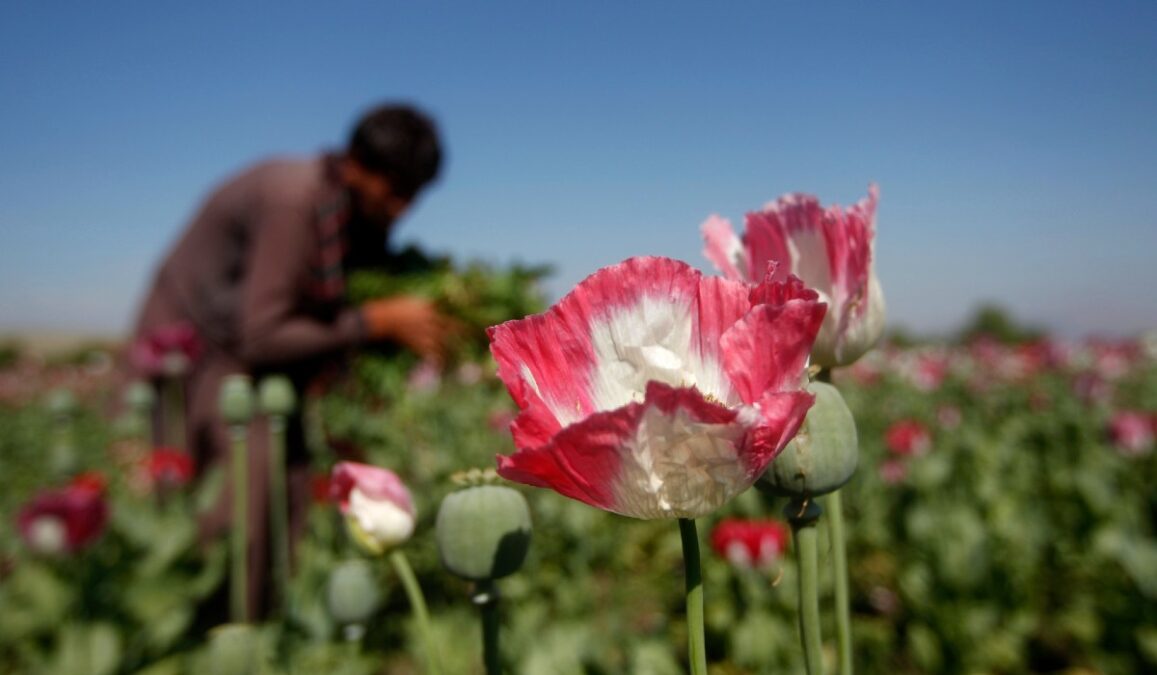
According to the report, opium poppy cultivation in Afghanistan has fallen by 95 percent, from an estimated 232,000 hectares in 2022 to 10,200 hectares in 2025. Opium production declined from about 6,200 metric tons before the ban to 296 metric tons last year. The collapse has driven global illicit opium production to its lowest level in decades.
UNODC said the sharp reduction has created a global supply shock that is expected to become more pronounced as existing stockpiles are depleted.
Although traffickers continue to rely on opium harvested before the ban, the agency estimates those reserves could continue supplying international heroin markets until the end of 2026. After that, shortages are expected to become increasingly visible in countries that have traditionally relied on Afghan heroin.
“The sharp decline in opium production in Afghanistan is creating a global supply shock with long-term implications,” the report said.
UNODC said there are already indications that Afghan heroin supplies are tightening in some major consumer markets. While heroin seizures worldwide still largely involve Afghan-produced opiates from earlier harvests, the agency warned that shrinking supplies could push criminal networks toward synthetic opioids that are easier and cheaper to manufacture.
The report identifies fentanyl, nitazenes and orphines among the substances most likely to replace heroin in some markets, warning that these drugs are substantially more potent and have been linked to rising overdose deaths in Europe and North America.
Despite the collapse of the opium economy, UNODC said Afghanistan’s methamphetamine industry has remained resilient.
Indicators of methamphetamine production and trafficking continue to point to sustained or expanding supply across South-West Asia. Wholesale methamphetamine prices inside Afghanistan have continued to fall, while seizures have increased across the region, suggesting production has not been significantly disrupted despite the Taliban’s broader counternarcotics campaign.
The report also points to changing patterns of drug use inside Afghanistan.
According to treatment data cited by UNODC, increasing numbers of Afghan men are seeking treatment for dependence on pharmaceutical opioids, sedatives and tranquilizers rather than traditional opiates, indicating that domestic drug consumption may be shifting alongside declining heroin availability. At the same time, methamphetamine use has continued to rise in Afghanistan, reflecting broader regional trends.
UNODC said recurring droughts, economic hardship and political instability continue to shape Afghanistan’s illicit drug economy, even as the opium trade contracts.
The report noted that dry opium prices inside Afghanistan have declined over the past year but remain well above levels recorded before the Taliban’s cultivation ban, reflecting limited supply and continued demand.
While Myanmar has overtaken Afghanistan as the world’s largest producer of illicit opium, the agency said no country appears capable of replacing Afghanistan’s former production levels.
Myanmar’s output increased from roughly 420 metric tons in 2021 to more than 1,000 metric tons in 2025, but UNODC said that increase stems primarily from conflict inside Myanmar rather than an effort to compensate for Afghanistan’s lost production.
The report also found anecdotal evidence that some poppy cultivation may have shifted to neighboring countries. Reported eradication of illicit poppy more than doubled in both Pakistan and India between 2022 and 2023, although the agency said those increases remain too limited to offset Afghanistan’s production collapse.
Heroin trafficking routes have also remained largely unchanged.
UNODC said most heroin seized globally in 2024 was still produced from Afghan opium harvested before the ban, with the Balkan Route continuing to serve as the principal corridor supplying European markets. The agency expects that route to come under increasing pressure as Afghan stockpiles diminish.
More broadly, the report concludes that Afghanistan’s drug ban is transforming global illicit drug markets rather than eliminating them.
Instead of a large-scale return of poppy cultivation elsewhere, UNODC said the more likely long-term consequence is an accelerated shift toward synthetic opioids, which are easier to manufacture, transport and conceal than plant-based narcotics.
The agency warned that without expanded prevention, treatment and international cooperation, the decline of Afghanistan’s heroin industry could unintentionally hasten the global spread of far more potent synthetic drugs, creating new public health and law enforcement challenges well beyond the region.