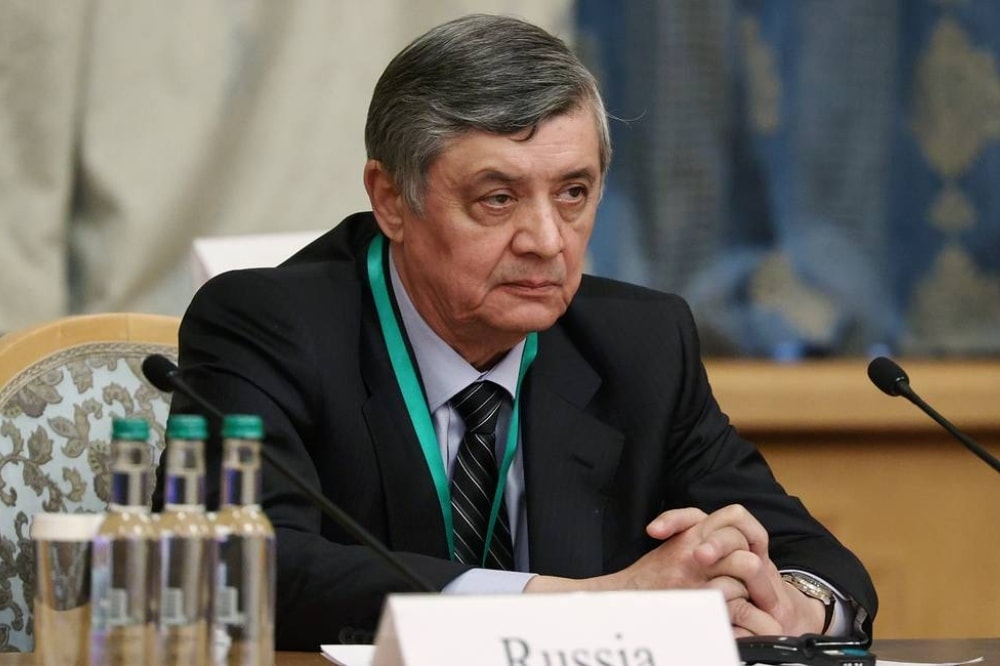
Zamir Kabulov, Russia’s special envoy for Afghanistan, said the mandate of the UN Assistance Mission in Afghanistan, or UNAMA, is expected to be extended, but added that questions remain about the mission’s activities and future role.
“Yes, of course its mandate will be extended, but with certain conditions, because there are questions regarding the mission’s activities,” Kabulov told the Russian newspaper Izvestia. “We hope all of these issues will be taken into account.”
Kabulov did not elaborate on the conditions he was referring to.
The Russian envoy also pointed to Afghanistan’s humanitarian crisis, saying the international community should move beyond statements and declarations and focus on practical measures, both through the United Nations and bilateral channels.
“Practical action is needed more than ever,” he said.
His remarks come as UN member states continue to debate the future of UNAMA, which has operated in the country since 2002.
In March, the UN Security Council approved only a three-month extension of UNAMA’s mandate after the US declined to support a draft resolution that would have renewed the mission for another year.
The short-term extension marked the first time since UNAMA’s establishment that its mandate was not renewed on an annual basis.
At the time, the US argued that a comprehensive review of the mission was needed before a longer extension could be approved. Washington said UNAMA is among the UN’s most expensive special political missions and operates in a highly complex environment, raising questions about whether its current mandate remains appropriate and effective.
The review is expected to assess the mission’s structure, priorities and effectiveness amid Afghanistan’s evolving political and humanitarian challenges under Taliban rule.
UNAMA plays a central role in coordinating international engagement with Afghanistan under Taliban rule and monitoring issues including human rights, humanitarian assistance, economic conditions and the status of women and girls.
Russia has gradually expanded its engagement with the Taliban since they returned to power in 2021. Earlier this year, Moscow became the first country to formally recognize the Taliban rule.