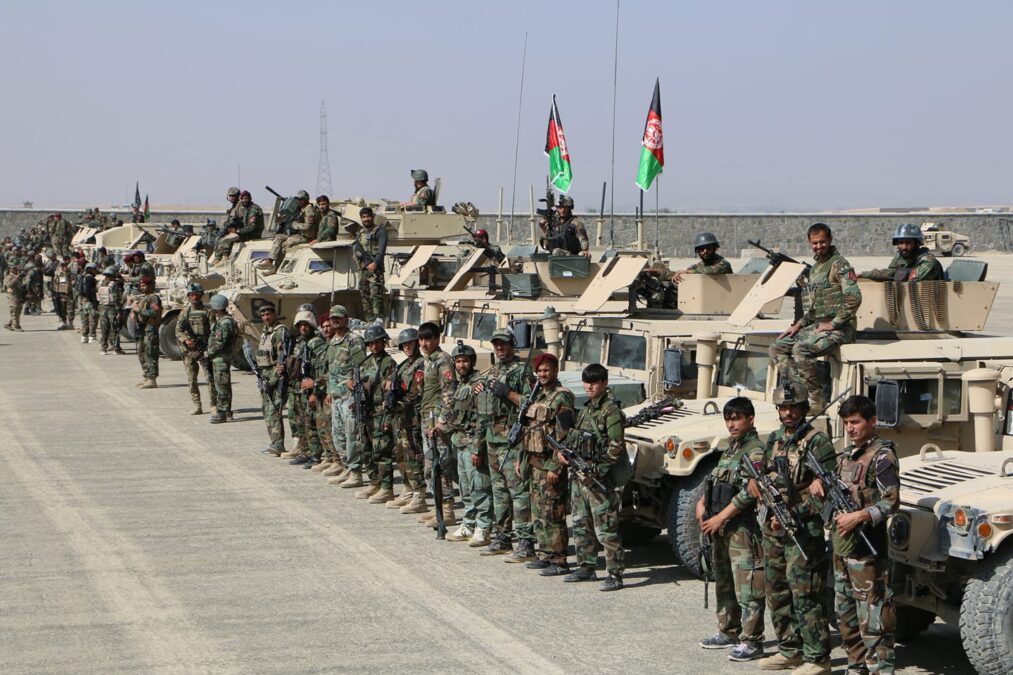
The UN Assistance Mission in Afghanistan said it documented at least five killings of former Afghan security force members between January and March 2026, alongside dozens of arbitrary arrests and cases of torture involving former government officials and ex-members of the Afghan National Defense and Security Forces.
In a new quarterly human rights report released Tuesday, the UN said it had also recorded at least 23 cases of arbitrary arrest and detention and nine cases of torture or ill-treatment involving former Afghan officials and former security personnel.
The report further documented eight human rights violations against former security force members and government officials who had recently returned to Afghanistan, some after being forcibly deported from neighboring countries.
One of the cases cited involved a former pro-government militia commander in Jawzjan province who was shot and killed in his home by unidentified attackers after returning from Iran, where he had fled following the Taliban takeover in 2021.
The findings come despite repeated Taliban assurances that former members of the previous government and security forces would be protected under a general amnesty announced after the Taliban returned to power.
The UN report also documented a broader pattern of restrictions and abuses during the first quarter of the year, including public floggings, media repression and expanding enforcement of Taliban morality rules.
According to the report, Taliban authorities carried out judicial corporal punishment against at least 312 people — including 39 women and four boys — between Jan. 1 and March 31.
In one case highlighted by the UN, Taliban court officials publicly flogged five men and three women at a high school in Parwan province after convicting them of “illicit relationships.”
The report also said Taliban morality police carried out at least 336 arbitrary arrests and detentions during the three-month period, mostly linked to beard styles, clothing, music and alleged violations of hijab rules.
Women continued to face severe restrictions on work, movement and education, the report said.
The UN noted that Afghan women had been barred from entering UN offices nationwide for more than 200 consecutive days by the end of March.
The report said Taliban authorities in some provinces had also removed women from government payrolls after years of restrictions preventing them from working.
Meanwhile, the Taliban’s ban on girls’ education beyond sixth grade entered its fifth consecutive year.
UNAMA further documented growing pressure on the media sector.
The report said Taliban suspended two media outlets during the quarter and continued to detain journalists and media workers accused of promoting women’s education or opposing Taliban policies.
The report also highlighted a new Taliban judicial decree, known as their penal code, expanding punishments for acts deemed contrary to the Taliban’s interpretation of Islamic law.
The decree includes provisions allowing the death penalty for offenses such as blasphemy, apostasy and same-sex relations, and criminalizes criticism of Taliban and policies.
Taliban have repeatedly defended their policies as consistent with Islamic law and Afghan cultural values.
Taliban’s vice and virtue spokesman in a statement rejected UN findings, particularly on women’s rights and floggings, claiming that women’s rights, including their right for heritage, has been ensured under their rule.