More than 13.8 million people in Afghanistan are facing acute food insecurity as economic collapse, unemployment and climate-related shocks continue to deepen the country’s humanitarian crisis, the World Food Program said.
The UN agency warned that rising regional tensions and increasing food prices are further worsening conditions for vulnerable families, particularly women and children.
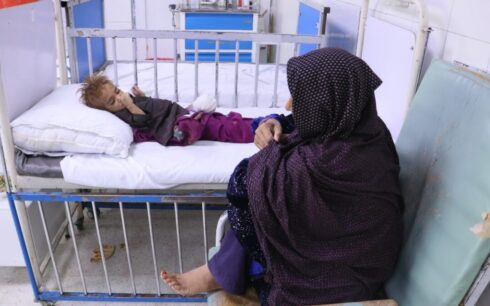
Nearly five million children, as well as pregnant and breastfeeding women, are suffering from malnutrition across the country, the WFP said.
“The little food we can afford we give to our children, but that is not enough,” said Raqiba Ahmadi, a resident of Faizabad in northeastern Afghanistan, according to a statement shared by the United Nations. She said her youngest daughter was recovering from malnutrition while her husband remained unemployed.
The World Food Program said the overlapping crises had severely strained humanitarian operations and depleted stocks of specialized nutritional food used to treat malnourished mothers and children.
“Programs such as nutrition assistance are essential, not optional,” John Aylieff, the WFP country director for Afghanistan, said in the statement.
He warned that the disruption of aid programs was already having serious consequences for vulnerable families.
“Unfortunately, this lifeline has already been severed, threatening the lives of hundreds of thousands of mothers and children,” Aylieff said.
Afghanistan has faced mounting economic hardship since the Taliban returned to power in 2021, triggering a sharp decline in international funding and widespread unemployment.
Humanitarian agencies have repeatedly warned that cuts to international aid, combined with drought, climate shocks and rising prices, have left millions of Afghans struggling to secure basic food supplies.
The country’s fragile economy has also been affected by regional instability and disruptions in trade routes, factors that aid agencies say are increasing the cost of essential goods.
Women and children have been among the most severely affected, humanitarian groups say, particularly as Taliban restrictions on women’s employment and public life have limited many families’ ability to earn income.
The UN has repeatedly appealed for increased international support for Afghanistan, warning that reductions in humanitarian funding could push millions deeper into hunger and poverty.
Aid agencies say nutrition programs remain one of the few remaining safety nets for vulnerable families across the country, especially in rural areas where access to health services and stable employment is limited.