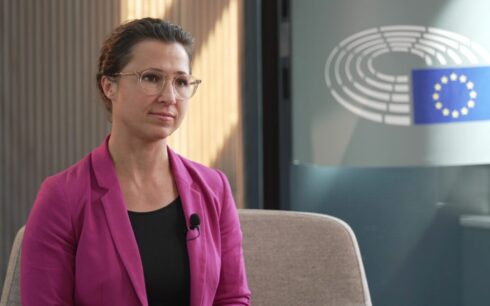
Hannah Neumann, member of the European Parliament, has criticized the EU’s plans to host Taliban representatives in Brussels, warning that such engagement risks granting legitimacy to the Taliban as European governments seek to expand deportations of Afghan migrants.
Neumann said in a post on X that European Union officials were “rolling out the red carpet” for the Taliban, responding to reports that a delegation could visit Brussels in the coming weeks.
“Let’s be clear: recognition for deportation is a recipe for disaster,” Neumann wrote. “No legitimacy for the Taliban. No backdoor deals.”
Her remarks follow reporting by AFP, which cited diplomatic sources as saying that European officials are preparing to host a Taliban delegation, expected to consist of technical representatives, for discussions on returning Afghan nationals who do not have legal status in the bloc.
The proposed visit, which has not been formally confirmed, would be coordinated by the European Commission in conjunction with several member states, according to the report. The talks are expected to focus on logistical issues, including flight arrangements, capacity at Kabul’s airport and the treatment of those returned.
European officials have already held two rounds of what they described as “exploratory” discussions in Afghanistan, as governments across the bloc face mounting political pressure to tighten migration policies.
Around 20 EU countries have been examining ways to deport Afghan nationals, particularly those convicted of crimes. Germany has deported more than 100 Afghans since 2024 using charter flights facilitated by Qatar, while Austria has taken similar steps.
The initiative reflects a broader shift in European politics, where migration has become a central issue and right-wing parties have gained ground in several countries.
At the same time, the prospect of engagement with the Taliban has drawn concern from lawmakers and humanitarian organizations, which warn against legitimizing a government that the European Union does not formally recognize. The Taliban returned to power in Afghanistan in 2021 and have imposed various restrictions on women’s rights in particular.
Rights groups and the United Nations refugee agency have also raised concerns about deportations to Afghanistan, citing the country’s deepening humanitarian crisis, marked by widespread poverty, drought and a sharp decline in foreign aid.
Afghans have been among the largest groups seeking asylum in Europe in recent years. Between 2013 and 2024, about one million Afghans applied for asylum in EU countries, and they represented the largest group of applicants last year, according to European data.
The planned visit, initially expected in late March, has been delayed and is now anticipated in the coming weeks, according to the diplomatic sources cited by AFP.