Taliban intelligence on Saturday raided the home of the Taliban’s health minister, detaining several senior officials from the ministry, many of them relatives of the minister, on corruption charges, multiple sources familiar with the matter said.
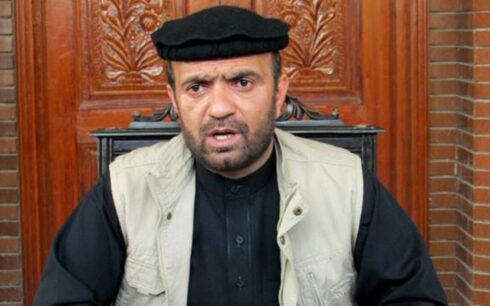
The raid, carried out Saturday by a Taliban intelligence unit known as Directorate 08, targeted the residence of Noor Jalal Jalali, the Taliban’s health minister. According to the sources, the unit was specifically seeking to detain individuals linked to the minister who were accused of financial and administrative corruption.
Those arrested include the heads of curative medicine, human resources, narcotics control and planning within the Health Ministry, the sources said. A legal adviser to the ministry and a close aide to the minister — identified as Hikmat — had also been detained in recent days, including one arrest in Shahr-e-Naw area in downtown Kabul.
Two other figures — the ministry’s transport chief and a senior adviser, Baryal Kakar — managed to escape during the operation, the sources said.
A series of allegations
The investigation appears to center on a series of Taliban officials tied closely to Jalali, raising allegations of entrenched nepotism and corruption within the ministry.
According to the sources, several of those implicated are relatives of the minister, including his son, nephew, cousin and extended family members.
Among them are the head of human resources, described as a relative of the minister’s wife; the head of the narcotics department, identified as the minister’s nephew; the minister’s chief of staff, Mohammad Tahir Halim, also described as a relative; and a senior aide, Hikmat, also said to be a nephew.
The minister’s son, who is accused of taking $64,000 in bribes and acquiring four armored vehicles from pharmaceutical companies, fled to Turkey months ago and remains there, the sources said.
Another relative, who served as head of a key administrative unit, was recently arrested abroad in Jeddah after allegedly being found with narcotics and is now in custody, according to the sources.
Wealth and personal gains
The allegations extend beyond bribery to claims of personal enrichment through public resources.
Mohammad Tahir Halim, the Taliban minister’s chief of staff, is accused of purchasing large tracts of land using ministry funds, including 10 jeribs (5 acres) in Maidan Wardak province, 20 (10 acres) in Kunduz and eight (4 acres) in Tashqurghan, in central and northern Afghanistan, the sources said. They added that he held a fourth wedding ceremony in Nangarhar province in eastern Afghanistan on Saturday, April 4.
Another adviser to the minister, identified as Israel, was said to have provided dozens of armored vehicles to Jalali — including at least 24 that were allegedly used for private business purposes or rented out.
The adviser was described by the sources as having previously worked with special units under the former government.
Expanding crackdown
The raid follows earlier arrests within the ministry and appears to mark an escalation in the investigation.
Sources said Directorate 08 initially detained several suspects before transferring them to Directorate 40, another intelligence branch associated with interrogations and detention cases.
Taliban have not commented on the raid or the allegations, and the ministry’s spokesman did not respond to requests for comment.
The Public Health Ministry is one of Afghanistan’s most aid-dependent institutions, relying heavily on international funding to sustain basic services.
Analysts say the scale of the allegations — particularly involving senior Taliban officials and their minister’s relatives — could undermine donor confidence in a sector already facing severe constraints.
Afghanistan’s health system has long struggled with limited access, especially in rural areas, and shortages of trained staff. Restrictions on women’s education, particularly in medical fields, have further deepened those challenges. The case also highlights broader questions about governance under the Taliban, who have repeatedly claimed to have eliminated corruption.