At least 28 people have been killed and 49 others injured across Afghanistan after days of heavy rain, flash flooding, landslides and lightning strikes, according to preliminary data released by the Taliban-run Afghanistan National Disaster Management Authority (ANDMA).
The extreme weather, recorded between March 26 and March 30, affected more than two dozen provinces, highlighting the scale of the damage across the country.
The ANDMA said at least 130 homes were completely destroyed and more than 170 others were partially damaged. Dozens of shops were also reported damaged, while thousands of acres of farmland were washed away.
The destruction extended to infrastructure. At least 90 kilometers of roads were damaged, water supply networks were disrupted and livestock losses were reported.
The ANDMA said that 130 homes had been destroyed and more than 400 others damaged. It added that 30 water supply networks and 2,901 jeribs of farmland had also been affected. In total, the agency said, 1,130 families have been affected.
It added that that 246 head of livestock had been perished.
The impact has been especially severe in rural areas, where many families depend on agriculture and have limited access to emergency assistance.
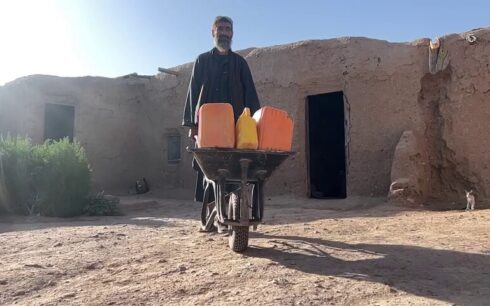
In Badghis province, one of the hardest-hit areas, residents described losing everything in the floods.
“Everything I had — my home and my belongings — was swept away,” said one resident. “Even the little wheat I had stored is gone. My children are hungry, and we have nothing left.”
Another resident said families had spent hours fleeing rising floods in search of safety. “Women and children are displaced,” he said. “We have been on the road for nearly a full day, trying to find a safe place.”
ANDMA said flooding and landslides were reported in provinces including Kabul, Kapisa, Parwan, Panjshir, Bamiyan, Daikundi, Paktia, Paktika, Logar, Zabul, Kandahar, Helmand, Herat, Ghor, Balkh, Badghis, Samangan, Sar-e Pol, Baghlan, Takhar, Jawzjan, Faryab, Badakhshan, Nangarhar and Laghman.
The Taliban’s Ministry of Public Works said floodwaters had forced the closure of several key highways, particularly in northern provinces such as Balkh, Sar-e Pul, Badghis and Faryab, disrupting travel and the delivery of aid.
Emergency response teams have distributed cash assistance, food and other essential supplies to some affected communities. ANDMA said additional aid has been pre-positioned in provincial warehouses and could be deployed as needed.
The disaster management authority said it was coordinating with domestic and international humanitarian organizations to scale up relief efforts.
Residents have been urged to avoid rivers and flood-prone areas and to heed weather warnings as further rainfall is expected.
Afghanistan is highly vulnerable to natural disasters, and aid agencies have repeatedly warned that climate shocks — combined with poverty and weak infrastructure — are intensifying humanitarian risks. With millions already dependent on assistance, the latest floods are expected to deepen existing vulnerabilities, particularly in remote and underserved areas.