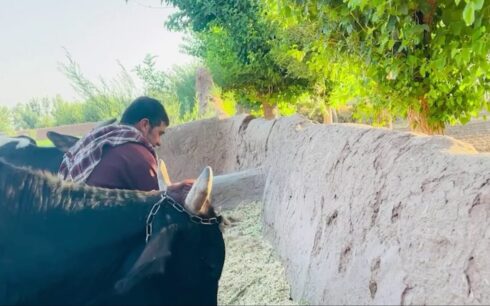
Farmers in Kapisa province in central Afghanistan have begun tending to their fields and orchards with the arrival of the new year, but many say persistent shortages of fertilizer and inadequate storage facilities are threatening their livelihoods.
Several farmers said rising production costs, combined with limited access to markets, have made it difficult to sustain agricultural work. Without proper storage, they said, crops are often sold at low prices, reducing incentives to continue farming.
“If one kilogram of onions sells for 150 afghanis ($2.3), it motivates me to keep working,” said Mohammad Fiqr, a farmer. “But when it sells for 30 or 40 (50 to 60 cents), I lose hope. I cannot continue like this.”
Others said the lack of cold storage facilities forces them to sell produce quickly, often at unfavorable prices, particularly during peak harvest periods.
Farmers also called for greater institutional support, including access to chemical fertilizers and improved infrastructure.
“We need fertilizer for our trees so we can take care of our orchards and improve production,” said Habibullah, another farmer. “This is what we ask from the authorities.”
Agriculture remains a primary source of income for many households in Kapisa, a province around 100 kilometers north of Kabul, but farmers say that without targeted support — including affordable inputs, storage capacity and reliable market access — their ability to continue working the land will diminish.
They urged relevant institutions to address these challenges, warning that declining incentives could lead to reduced agricultural output in the province.