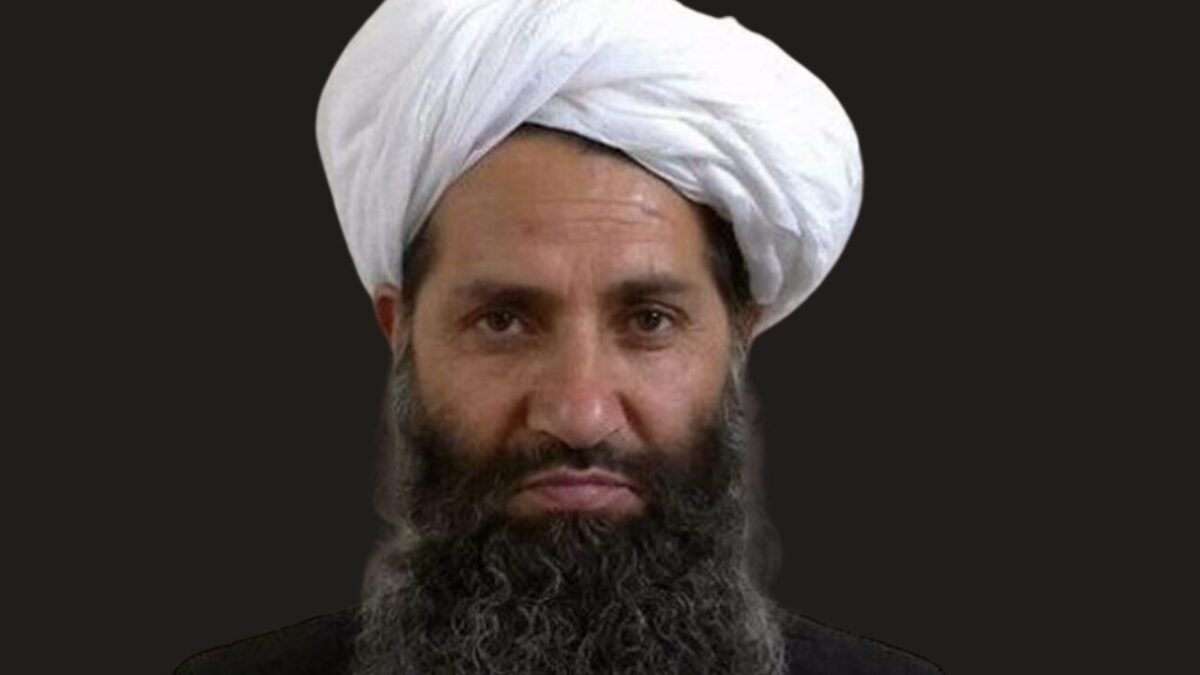
Taliban leader Hibatullah Akhundzada made no reference to recent Pakistani attacks, the ongoing clashes with Pakistan or the issue of girls’ education in a lengthy message issued for the Eid holiday.
Instead, the message focused largely on calls for obedience to him, prayers for his protection and the survival of the Taliban rule, and praise for Taliban morality enforcers.
Akhundzada urged the people to be grateful for what he described as security and stability in the country.
The message comes as cross-border clashes between Pakistani forces and Taliban have entered their 19th day. Pakistani fighter jets on Friday targeted a special unit linked to the Taliban leader in the southern province of Kandahar, according to local sources.
The Taliban leader’s statement also made no reference to women or girls. Instead, the public was addressed using phrases such as “honorable brothers,” “believing brothers” and “brave and mujahid people.”
In one section of the message, Akhundzada asked people to pray for him and his rule.
“Today is a day when Allah forgives sins and accepts prayers,” he said. “You should pray for your Muslim brothers, especially for the Amir al-Mu’minin, the mujahideen and officials, for protection, steadfastness and the continuation of the Islamic system.”
Akhundzada also praised the Taliban’s morality enforcers — formally known as the Ministry for the Promotion of Virtue and Prevention of Vice — saying its enforcers are working to prevent corruption in society.
He called on the public to strongly support Taliban security and defense forces.
“Support your security and defense forces decisively,” the message said.
Hibatullah also urged members of the Taliban to avoid internal disagreements and remain united.
“You should strive to protect the Islamic system just as you sacrificed to establish it,” Akhundzada said, calling on Taliban members to obey their leaders and avoid divisions.
He also called on Afghans to strengthen unity and avoid what he described as regional, linguistic and ethnic prejudices.
Akhundzada again emphasized obedience to Taliban authority, saying compliance with the orders and laws of leadership is a religious obligation.
“Obedience and adherence to the commands, laws and rulings of those in authority is an obligation for every Muslim,” the message said.
While the statement did not address girls’ education directly, it called on people to make “full efforts” in education and upbringing. The message emphasized religious education and encouraged the construction of mosques in areas where none exist so that children and young people can receive Islamic instruction.
Since returning to power more than four years ago, the Taliban have barred girls from attending school beyond the sixth grade. So far, Akhundzada has issued numerous decrees restricting the rights and freedoms of women and girls.
On foreign relations, Akhundzada said the Taliban administration wants good relations with Muslim nations and seeks ties with other countries based on what he described as Islamic principles.
He also called on other countries to respect Afghanistan’s religious values and refrain from interfering in its internal affairs.
“We ask all sides to respect the beliefs and values of the Afghan people and not interfere in our internal matters,” he said.
Although the message did not directly mention the situation in Iran or Gaza, it condemned what it described as injustices and violations of the rights of Muslims anywhere in the world.