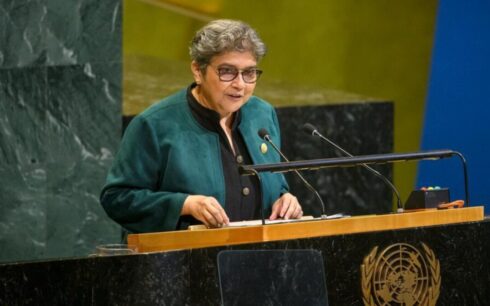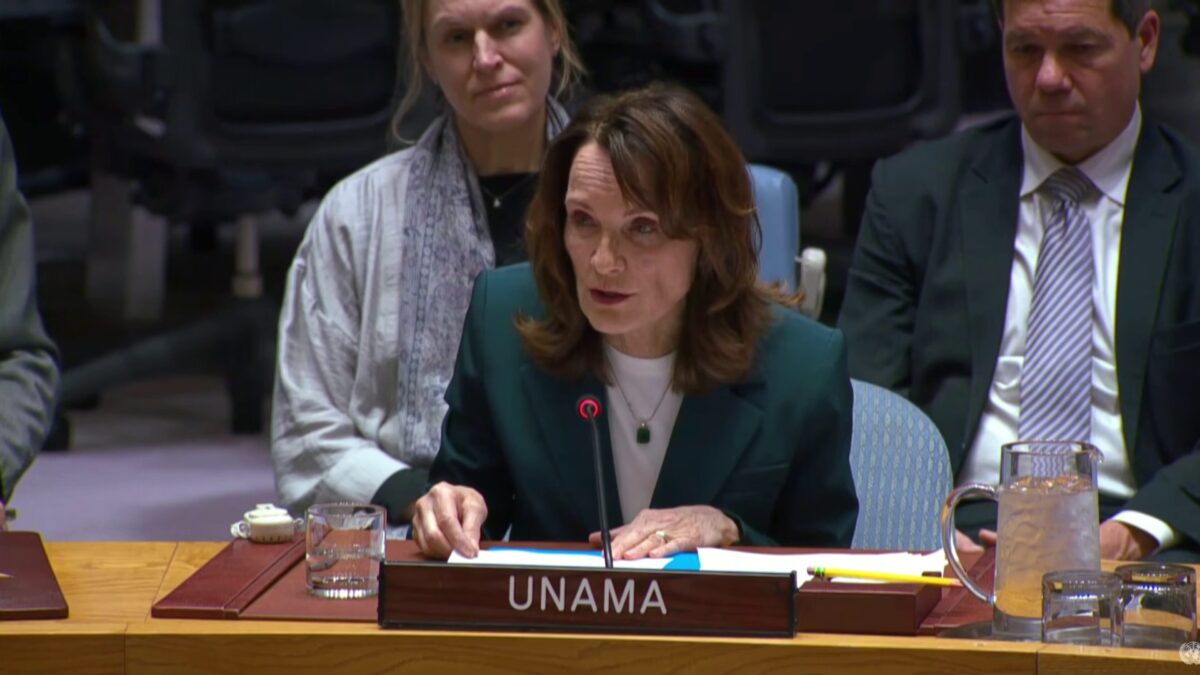
Georgette Gagnon, the UN Assistance Mission in Afghanistan’s acting head, warned the UN Security Council that regional tensions, economic pressures and Taliban policies are worsening Afghanistan’s fragile situation and hindering the country’s reintegration into the international community.
Gagnon said the council’s goal remains an Afghanistan “at peace with itself and its neighbours, fully reintegrated into the international community and meeting international obligations.”
Speaking during a Security Council briefing on Afghanistan, Gagnon said recent fighting between Taliban forces and Pakistan has caused significant human and economic costs and risks further destabilizing the region.
“We reiterate the secretary-general’s deep concern about the escalation and impact on civilian populations,” she said, calling for an immediate ceasefire and urging both sides to resolve differences through diplomacy.
Regional tensions and economic strain
Gagnon said the conflict has disrupted trade routes and added pressure to Afghanistan’s fragile economy.
With the Afghanistan-Pakistan border closed, Iran had provided an alternative trade corridor, but that route is now uncertain because of ongoing conflict in the Middle East, she said.
“As a result, prices of basic commodities in Afghanistan have begun to rise,” Gagnon told the council.
She warned that instability along Afghanistan’s borders undermines the country’s stability and could worsen economic and humanitarian conditions.
International isolation
Gagnon said Afghanistan’s continued isolation from the international system remains a central challenge.
“This prevents other issues, such as economic self-sufficiency, security cooperation, counterterrorism commitments, human rights concerns and the humanitarian crisis, from being fully addressed,” she said.
Without progress on these issues, Afghanistan could again become a source of regional instability through migration, terrorism and narcotics trafficking, she added.
Humanitarian crisis and funding gaps
Gagnon also highlighted worsening humanitarian conditions, warning that funding shortages and growing needs are straining Afghan communities.
Humanitarian partners aim to assist 17.5 million Afghans in 2026 through a $1.71 billion appeal, but the plan is currently only about 10% funded.
Large urban centers are under increasing pressure as millions of Afghans return from neighboring countries and families face economic hardship and climate-related shocks, she said.
Restrictions on women
The UNAMA acting chief also criticized ongoing restrictions on women and girls imposed by the Taliban.
She noted that Afghan women and girls are entering their fifth year of near-total exclusion from public life and education beyond the sixth grade.
Gagnon also warned that the Taliban’s ban preventing Afghan female UN staff from reporting to their workplaces for the past six months has hindered humanitarian operations.
“Their absence deprives the UN of their skills and experience and reduces our ability to provide vital support to Afghan women and the wider community,” she said.
Security concerns
Gagnon said Taliban still need to demonstrate stronger commitment to counterterrorism obligations.
Although Taliban forces have been “generally effective” against Islamic State’s regional affiliate, concerns remain among Afghanistan’s neighbors about extremist groups operating from Afghan territory, she said.
The unresolved issue of Tehrik-i-Taliban Pakistan has also contributed to “cross-border conflict between Afghanistan and Pakistan, including airstrikes in Afghan cities,” she said.
Doha process
Gagnon said the United Nations continues to facilitate the Doha process aimed at creating conditions for Afghanistan’s reintegration into the international community.
However, she emphasized that progress ultimately depends on actions by the Taliban and support from UN member states.
“The United Nations is the convener of the Doha process, but it is the member states that can best demonstrate and provide the incentives for reintegration,” she said. “And it is the de facto authorities that must do more through their actions to show they are ready and interested in achieving this end state.”
She said continued engagement and support from the Security Council will be critical as the UN mission’s mandate comes up for renewal.