The United Nations marked World Day of Social Justice by calling for equal access to quality education, decent work and social protection for all, warning that deep inequalities persist around the world.
In a statement, the organization said social justice cannot be achieved without ensuring that people have access to quality schooling, fair employment opportunities and comprehensive social support systems.
“Across the globe, people continue to grapple with profound inequalities,” the statement said. “Social justice for all means access to quality education, decent work and universal social protection.”
The International Labor Organization echoed that message, emphasizing that equal access to decent work is a cornerstone of social justice. Its Afghanistan office said social justice is not only about reducing inequality but about building a world in which every individual — regardless of background — has the opportunity to grow and prosper.
“Social justice means creating a more prosperous and dynamic world where everyone, irrespective of their background, has the opportunity to thrive,” the organization said.
The message comes at a time when conditions in Afghanistan have drawn increasing scrutiny from rights groups. Since the Taliban returned to power in 2021, women have been barred from secondary and university education and restricted from many forms of employment, deepening gender disparities. Human rights organizations say the measures have intensified social and economic inequality.
In Kabul, a woman, Mahbouba, said that ordinary citizens are unable to exercise their basic rights. “As an ordinary citizen of Afghanistan, we are not allowed to use our human rights,” she said. “We have been deprived of education and work. Social justice does not exist for women.”
Additional concerns have been raised over new regulations issued by the Taliban leader that divide society into hierarchical categories and reference terms such as “free” and “slave” in legal provisions. Rights advocates say such language and classifications contradict international human rights principles and undermine the concept of equality before the law.
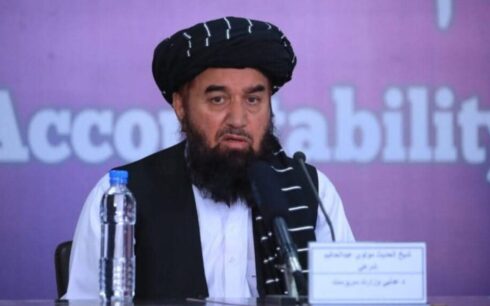
Taliban officials have repeatedly rejected accusations of discrimination, saying they uphold the rights of all citizens, including women, within what they describe as an Islamic framework.
Human rights groups, however, argue that ongoing restrictions on women and limits on civic freedoms continue to pose serious obstacles to achieving social justice in Afghanistan.