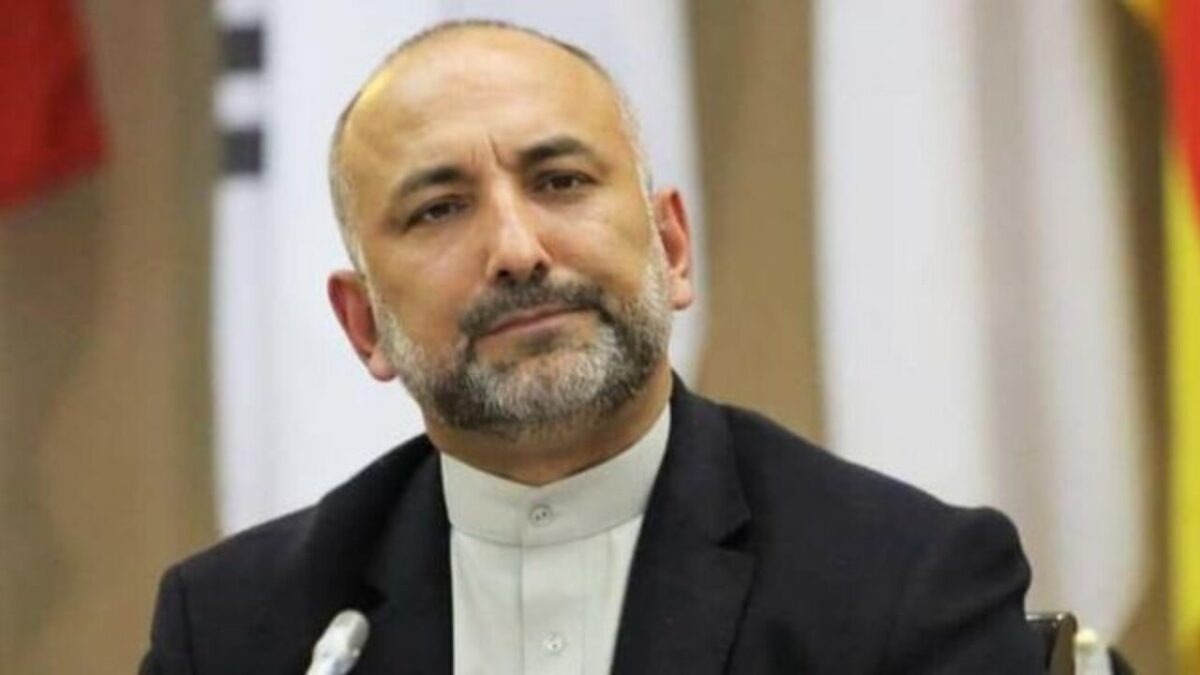
The Afghanistan National Movement for Peace and Justice, a political group led by Mohammad Haneef Atmar, the former foreign minister, confirmed on Sunday that a split had emerged among its senior members, saying the break stemmed from disagreements over the party’s emphasis on a political solution to the country’s crisis and efforts to build broader political alignment.
In a statement, the movement said five of the 17 members of its leadership council had separated from the party. It did not identify them by name.
Reports of internal divisions had circulated on social media in recent weeks. The movement said the departing members opposed two recent policy directions: pursuing a political resolution to Afghanistan’s situation and promoting what it described as “national alignment” with other political and civic forces. It said those decisions were consistent with the party’s charter.
The statement described accusations made by the splintering members as “baseless.”
The party said its leadership council had held weeks of discussions, totaling dozens of hours, in an effort to preserve unity while upholding its founding principles. It added that 80 percent of its founders participated in a vote last week, with 88 percent supporting the continuation of the movement’s political program and national alignment efforts. Eight percent — 12 individuals — voted against the direction and declared their separation, according to the statement.
The movement also renewed its call for the Taliban to respond to the demands of Afghans and the international community by accepting a political settlement and engaging in intra-Afghan negotiations.
In December, Mubarez Rashidi, a member of the movement’s leadership council, publicly announced a split. In a post on Facebook, he wrote that some individuals had joined a newly announced alliance based on personal positions, while “the majority of important and reputable political figures” within the founders’ council and leadership council opposed the move and did not attend the meeting.
Rashidi, who had been described as a senior member of the leadership council, said he would continue what he called his struggle for justice and would soon provide further clarification to the public.