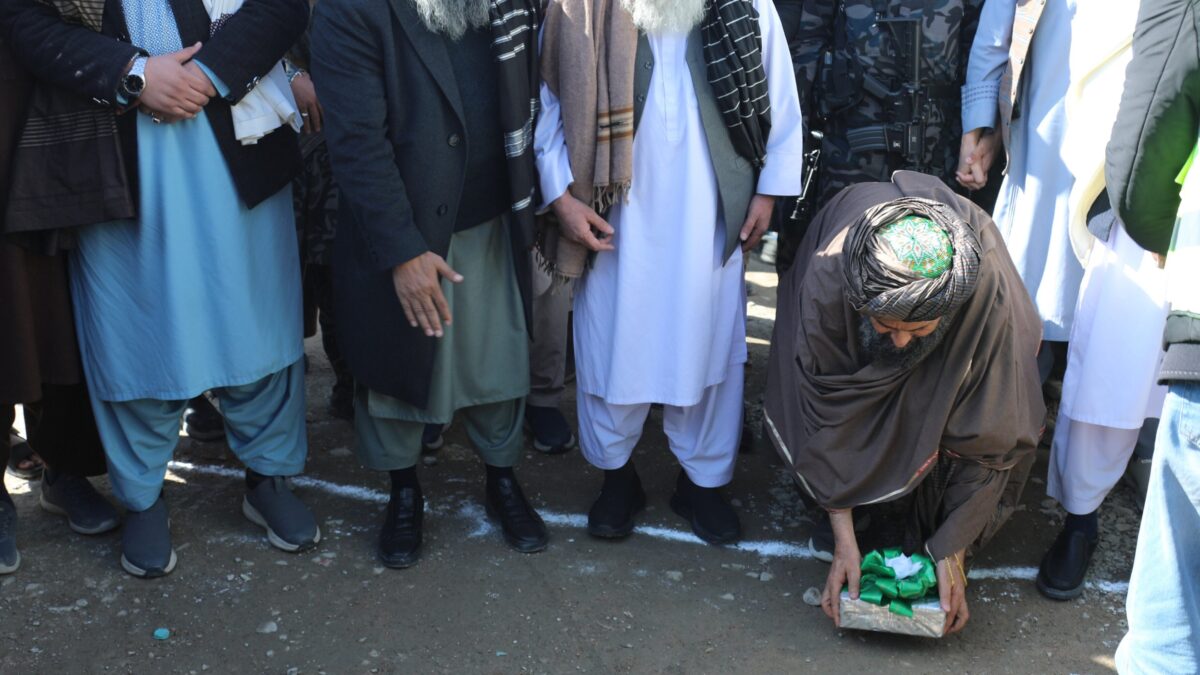
Taliban authorities on Thursday launched construction of a 6.2-km (3.8-mile) road linking Kabul to Bagram, a project they said would cost 455 million afghanis ($7.05 million) and be funded from their administration’s budget.
The Taliban deputy chief minister, Abdul Ghani Baradar, said the road was part of broader urban development plans and efforts to strengthen regional connectivity.
He described the road as an important route connecting Kabul to Parwan province and other northern provinces.
He said the road would form part of the core transport infrastructure of what officials call “New Kabul City” and would be significant for urban expansion as well as social and economic activity.
Speaking at the ceremony, Baradar also referred to Afghanistan’s past political divisions, saying the country had previously been split among multiple political parties and along ethnic, regional and linguistic lines, weakening national unity.
He said the Taliban administration was working to remove such divisions and cited the unification of the curriculum between religious schools and public schools up to sixth grade as one step taken in that direction.
Baradar urged Afghans not to engage in what he called “blind imitation” of others and said Afghanistan was “the home of Afghans”, encouraging citizens to return and invest.
His remarks come amidst criticism of the Taliban’s administration for not being inclusive. A study by the Middle East Institute shows that 90 percent of members of the Taliban cabinet is from one ethnic group.
In his remarks, Baradar also called on regional and global countries to engage positively with Afghanistan, saying stronger regional and international connectivity and the pursuit of shared development goals were necessary.
Countries depend on one another for geography, airspace, labour, raw materials and trade, he said, adding that such needs are better addressed through formal relations.
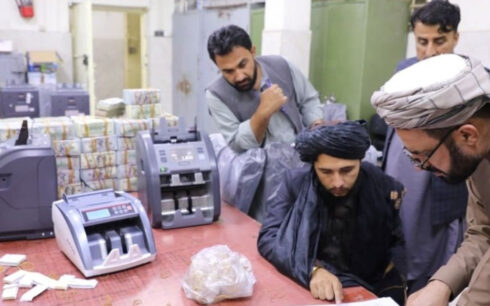
The comments come as Afghanistan’s economy remains fragile more than four years after the Taliban returned to power. Restrictions imposed by the Taliban on women’s employment and a sharp reduction in international aid have been cited as major factors weighing on the economy.