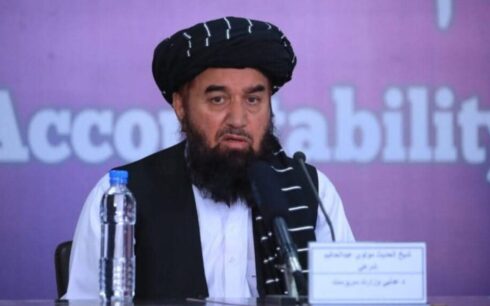
The Taliban-run education ministry has made the implementation of all education projects by non-governmental organzations and donor agencies conditional on what it called “full coordination”, financial transparency and strict adherence to its development project procedures, according to an official document seen by Amu TV.
The directive, signed on Feb. 1, 2026, sets out a new oversight framework that effectively places all education-related initiatives under the direct authority of the ministry, which it describes as the main body responsible for regulating, leading and supervising educational activities nationwide.
Under the order, implementing organisations must submit detailed documentation before launching any project, including project proposals, budgets, target areas, and implementation and monitoring mechanisms, and obtain formal approval from the ministry.
Any changes to budgets, timelines or project content must also receive prior authorisation.
The document states that the ministry has the right to directly monitor projects at all stages and to halt activities if it finds violations of procedures, lack of financial transparency or breaches of applicable rules. In such cases, implementing organisations would be held accountable and the ministry would make a final decision.
It also requires regular, transparent and documented reporting on project progress and outcomes.
The ministry says in the document that the move was intended to prevent parallel programmes, enhance accountability and ensure alignment with its priorities.
Although no specific organizations or programs are named, the directive applies to all education projects, including community-based classes that have been supported in recent years by international agencies such as UNESCO. These classes have provided basic education in parts of the country to children who lack access to the formal school system.
Thousands of students in remote areas are currently enrolled in UN-supported community classes.
The decision comes as girls above grade six remain barred from attending school under Taliban policy, a restriction that has drawn widespread international condemnation and sharply curtailed funding for the education sector.
The Taliban education ministry and the UN Assistance Mission in Afghanistan (UNAMA) did not respond to requests for comment on the directive.