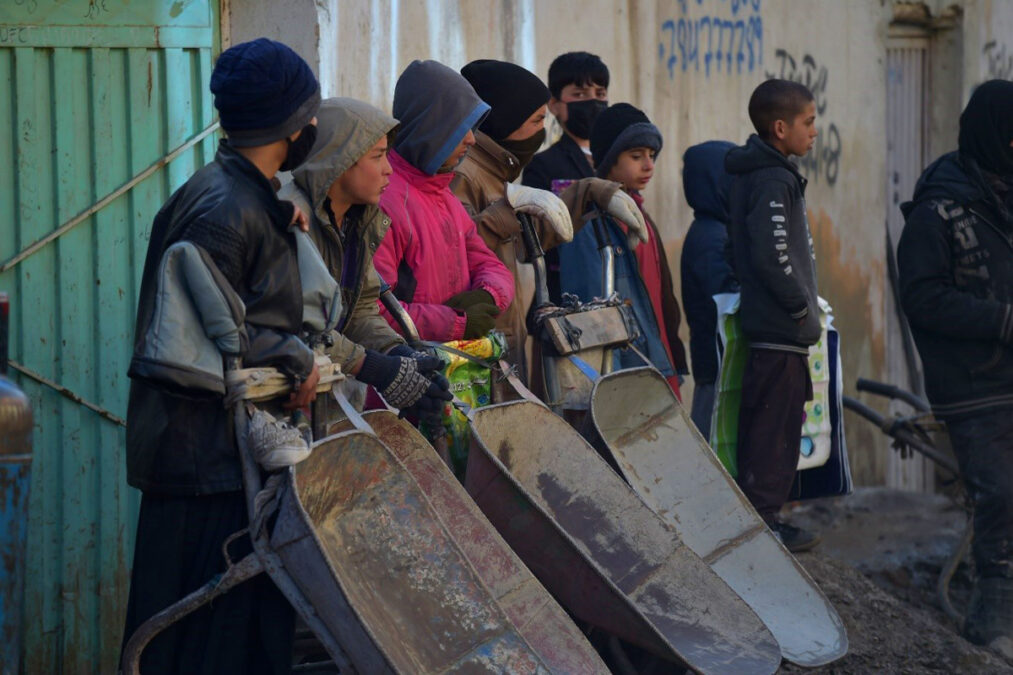
Afghanistan is expected to face its most severe food and income shortages of the year over the next three months, with emergency levels of hunger likely to emerge in at least three provinces as the annual lean season reaches its peak, the Famine Early Warning Systems Network (FEWS NET) said in a report released on Tuesday.
According to the early warning body, access to food and income will be most constrained between February and April, particularly in Faryab, Ghor and Daikundi provinces, where Emergency (IPC Phase 4) conditions are expected to emerge as households struggle to secure enough food to survive.
Poor households in these provinces have exhausted food stocks from their own production and are expected to rely almost entirely on markets, despite extremely weak purchasing power, FEWS NET said. Income opportunities remain scarce as agricultural and casual labour demand declines seasonally, compounding the impact of years of drought and economic stagnation.
As a result, FEWS NET warned that some families are likely to adopt negative coping strategies to access food, including selling their last livestock, forcing early marriages of daughters and resorting to begging.
“Despite expectations of relative stability in food prices, household incomes are likely to remain limited,” the report said. “Poor households will most likely turn to harmful livelihood coping strategies.”
The warning reflects conditions already visible across large parts of the country.
Gulali, a 40-year-old mother of five from Uruzgan province, said she has no fuel to heat her home and cannot afford warm clothing for her children during the harsh winter.
“It is extremely cold and we have nothing to warm our homes,” she said. “God is my witness, these children have no shoes and no clothes.”
Similar conditions are reported across rural areas, where humanitarian aid has declined amid global funding shortages.
FEWS NET said Crisis (IPC Phase 3) and Stressed (IPC Phase 2) food insecurity is expected to remain widespread across the rest of Afghanistan through May, driven by the effects of a multiyear drought, reduced remittances, limited labour opportunities and the continued return of large numbers of migrants from neighbouring countries.
Between December and the end of January, around 507,000 Afghans were forcibly returned from Iran and Pakistan, adding pressure to already strained labour markets and household resources, the report said.
Abdul Ghafar, another resident of Uruzgan, said winter conditions and poverty were taking a direct toll on children’s health.
“Our children have no warm clothes,” he said. “Because of the cold, many of them get chest and lung illnesses. Sometimes these illnesses take their lives.”
While food security conditions are expected to improve from May as the 2026 harvest begins, FEWS NET said the coming months will remain critical, particularly in remote and drought-affected areas.
The report noted that staple food prices rose modestly in December, with wheat prices increasing by 5% due to higher demand and stockpiling ahead of the lean season. Vegetable oil prices rose by 8%, driven largely by the closure of the Afghanistan-Pakistan border, which disrupted trade and increased transport costs for food imports such as rice, oil and vegetables.
Despite adequate market supply routes from Central Asia and a relatively strong afghani currency, purchasing power has continued to decline. The amount of wheat that can be bought with a day’s wages from unskilled labour fell by 36% compared with December last year, FEWS NET said.
Power Qudratullah, a resident of Uruzgan, said many families can no longer afford basic necessities.
“We are completely broken economically,” he said. “In winter, our children have nothing to wear and we cannot afford medical treatment. We don’t know what will happen.”
The United Nations has previously said that around 75% of Afghanistan’s population suffers from livelihood insecurity, while female-headed households are among the most vulnerable. According to UN data, nearly nine out of 10 households led by women are unable to meet basic needs, and only about 7% of women are employed outside the home.
Humanitarian agencies have repeatedly warned that without sustained international funding, Afghanistan’s humanitarian crisis could deepen further in 2026, leaving millions at risk during the peak hunger months.