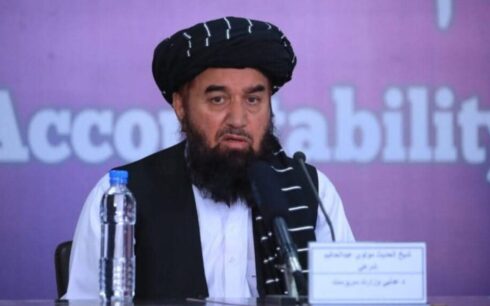
The Taliban-run Ministry for the Propagation of Virtue and the Prevention of Vice on Monday dismissed a new United Nations report documenting rights abuses in the country, calling its findings “baseless” and urging the public not to trust UN assessments.
The ministry’s spokesperson said the report by the UN Assistance Mission in Afghanistan (UNAMA) contained misinformation and denied allegations of arbitrary arrests, violence or mistreatment of women and men.
“The restrictions mentioned in the UNAMA report are propaganda and far from reality,” ministry spokesperson Saifuddin Khyber said. “All activities of the Ministry for the Propagation of Virtue are carried out in accordance with Sharia and existing regulations. People should not believe unfounded and misleading reports, whether from UNAMA or other organizations.”
UNAMA’s latest quarterly report said Taliban morality enforcers had arbitrarily detained at least 520 people over a three-month period and documented 50 cases of ill-treatment involving women and men. The report also cited a case in which a Taliban court ordered the arrest of a girl under the age of 18 for refusing a forced marriage; she remains in detention, according to the UN.
Some women who said they had witnessed or experienced Taliban enforcement actions told local media that restrictions and pressure had not eased but were intensifying.
“Taliban officials always deny violence against women,” said one Kabul resident who asked to be identified only by her first name for security reasons. “Every day life becomes harder. The UN report reflects reality, but the situation needs even deeper scrutiny.”
The Taliban response comes as restrictions on women and girls remain in force, including bans on secondary and higher education, limits on employment, constraints on travel without a male guardian and restrictions on public participation.
A recent report by the UN’s sanctions monitoring team said Taliban policies had effectively excluded nine out of ten women in Afghanistan from work, education and skills training, deepening what UN officials have described as one of the world’s most severe women’s rights crises.