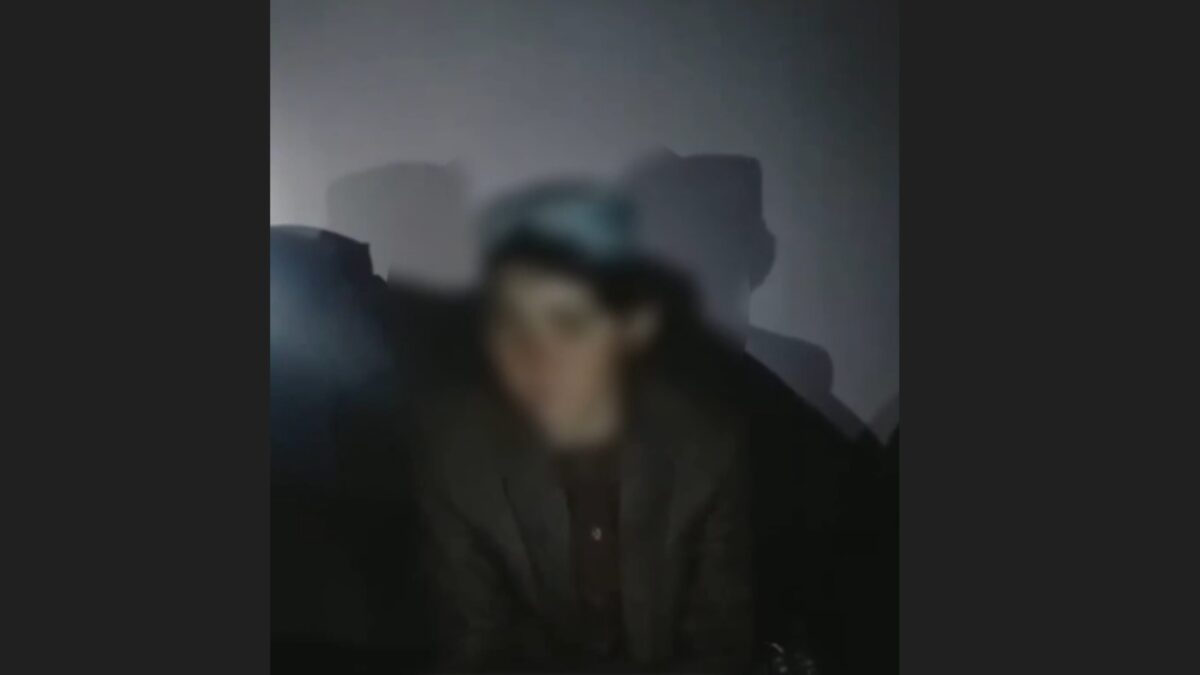
More than two decades after Afghan filmmaker Siddiq Barmak portrayed a girl forced to disguise herself as a boy under Taliban rule in his film Osama, a video circulating on social media has renewed scrutiny of the Taliban’s treatment of women and girls, showing what rights groups say is the forced confession of a young girl detained for wearing male clothing to earn a living.
In the video, which has been widely shared online, the girl identifies herself as Noria, says she is 13 years old and originally from Ghor province, and explains that she wore men’s clothing because of severe poverty. She says she worked at a café in Helmand province after her father died, leaving her responsible for supporting her family.
“I have no supporter except God,” the girl says in the footage. “This was out of necessity. No one does this willingly. My father has passed away.”
The video appears to show a Taliban member questioning the girl. Amu TV could not independently verify the date, location or circumstances under which the video was recorded, but its circulation has sparked widespread condemnation from human rights activists, lawyers and social media users.
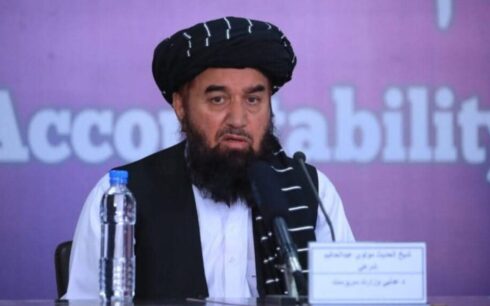
The Taliban rejected claims that the incident was recent. Saif Khyber, a spokesperson for the Ministry for the Propagation of Virtue and Prevention of Vice, said the video dated back four years and had already been addressed by authorities at the time. He said the footage was being misrepresented but provided no evidence to support the claim.
Human rights groups said the case reflected broader patterns of abuse under Taliban rule, including arbitrary detention, forced confessions and public humiliation, particularly targeting women and girls.
The Human Rights Activists Union said the filming and dissemination of the girl’s interrogation violated basic human rights standards. “This is a clear case of arbitrary detention and forced confession,” the group said in a statement, calling for the girl’s immediate and unconditional release and urging international organizations to document the case as a human rights violation.
Ghulam Farooq Alim, a former prosecutor, said the incident amounted to multiple legal breaches. “The Taliban have violated child protection laws, the right to privacy and the fundamental principle of human dignity,” he said.
The case has drawn comparisons to Osama, the 2003 film that depicted a young girl cutting her hair and dressing as a boy to support her family during the Taliban’s first period in power, when women were barred from work and education. Rights advocates say the similarities highlight how economic desperation and strict gender restrictions continue to force women and girls into dangerous choices.
Since returning to power in 2021, the Taliban have imposed sweeping restrictions on women and girls, banning them from secondary schools and universities, severely limiting employment opportunities and enforcing strict dress codes and movement rules. The United Nations and international rights groups have described the measures as institutionalized discrimination and have warned of a deepening humanitarian and human rights crisis.
The Taliban say they respect women’s rights in accordance with their interpretation of Islamic law and Afghan culture, a claim repeatedly rejected by international organizations and Afghan activists.