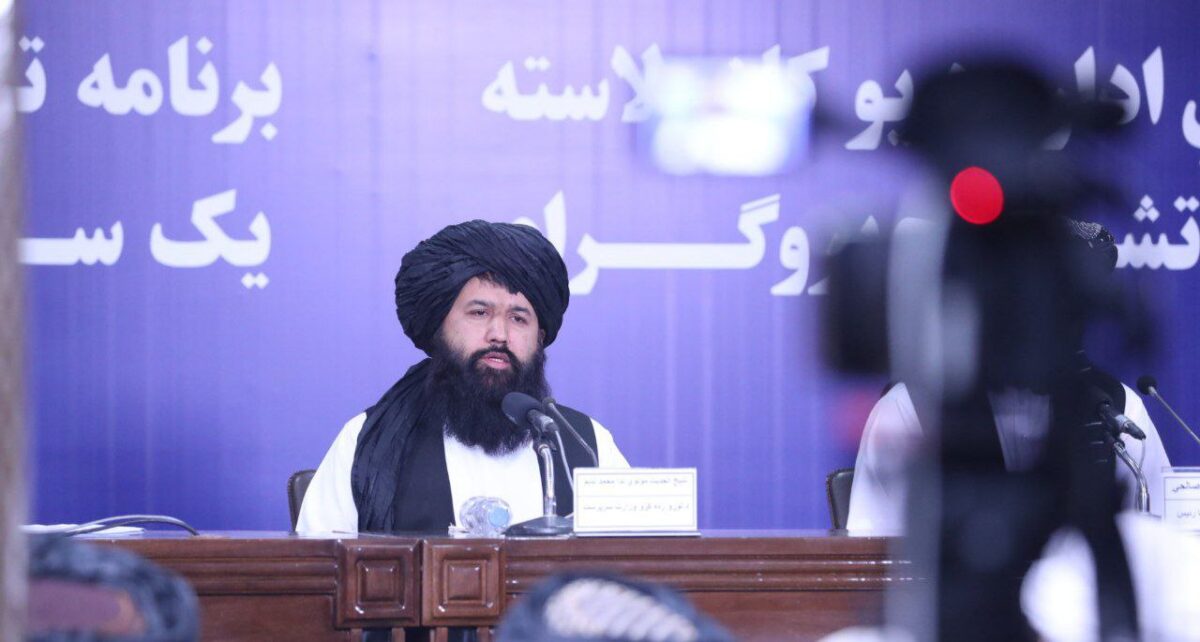
Taliban higher education minister Neda Mohammad Nadim has labelled critics of their newly approved penal code as “infidels,” as opposition mounts against the rules from rights groups, legal experts and some religious scholars.
Nadim, who is a close aide to Taliban leader, made the remarks during a graduation ceremony for students at the Abdullah bin Mubarak religious school in Paktia province.
The Taliban-run national broadcaster, RTA, published an audio recording of Nadim’s remarks, without video, in line with the Taliban’s “morality law” that restricts the broadcast of images of living beings. Some Taliban officials, including Nadim, have publicly supported enforcement of those restrictions.
“The laws and decrees of the Islamic Emirate are based on Islam and sharia,” Nadim said. “These laws are not made so that infidels can object to them. Now a penal code has been approved and they object, saying it is too harsh. They raise their voices to distance people from law, sharia and Islam.”
The comments come as the Taliban leader has endorsed a penal code that has drawn widespread criticism at home and abroad. Activists, former officials and some Islamic scholars say the code reflects the Taliban’s strict interpretation of Islam and violates basic human rights.
The Taliban say the penal code is fully rooted in Islamic law. The justice ministry has warned that opposing the laws amounts to opposing sharia and constitutes a criminal offence subject to legal prosecution.
The penal code contains one preamble, three sections, 10 chapters and 119 articles and is expected to be published in the Taliban’s official gazette.
Reviews of the text by Amu TV indicate the code imposes severe punishments for dissent, including flogging and prison terms for insulting Taliban officials or providing shelter to opponents.
One article prescribes up to 20 lashes and six months in prison for insulting Taliban authorities, while another sets penalties of up to 39 lashes and five years in jail for harbouring critics or opponents.
The code also includes provisions governing religious conduct. Individuals who follow the Hanafi school of Sunni Islam and later abandon it can face prison sentences of up to two years, according to the text.
Legal experts say punishments for women are, in some cases, harsher than those for men. Under one article, women accused of apostasy face life imprisonment combined with 10 lashes every three days until they return to the faith.
Another provision has drawn criticism for reinforcing male dominance within households. Under Article 32, a husband accused of beating his wife faces a maximum sentence of 15 days in prison only if the assault leaves visible injuries such as bruises, wounds or broken bones.
Human rights groups say the code entrenches discrimination, restricts freedom of expression and institutionalises unequal justice. They warn it could further marginalise women and silence dissent in a country already facing sweeping social and political restrictions.
The United Nations and international rights organisations have repeatedly called on the Taliban to halt corporal punishment and revise laws they say violate international human rights standards. The Taliban have rejected those calls, insisting their legal system is an internal matter governed by Islamic principles.