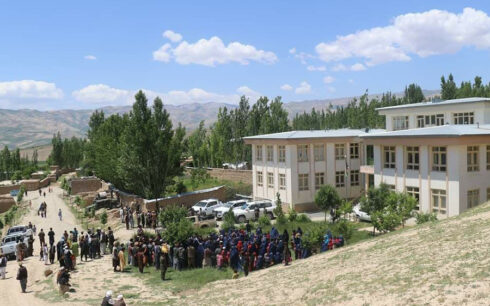
Protests over gold mining in Afghanistan’s northeastern Takhar province intensified on Tuesday, with residents setting fire to vehicles and equipment belonging to mining companies, local sources said.
The demonstrations in Chah Ab district have entered their fifth day, as residents accuse mining companies and authorities of exploiting local resources without transparency and damaging farmland and livelihoods.
“We are here to seek justice,” said Hibatullah, a resident of Chah Ab. “We have no roads, dams or hospitals. Everything is being taken away. You can see the excavators here.”
“We are protesting for justice,” said Abdal, another resident. “We have repeatedly gone to the offices of the Islamic Emirate and submitted our demands, but we are asking for our rights to be recognised.”
“We are here to demand our rights,” said Mohammad, a local resident. “Our farmland and livelihoods are being destroyed. We have visited the governor and other officials, but no one has paid attention.”
Local sources said clashes erupted a day earlier after Taliban forces opened fire during protests, prompting demonstrators to torch mining equipment, vehicles and tents and continue their protest with stones and sticks.
At least five people have been killed and 16 wounded since the protests began on Friday, including four civilians and one Taliban member, according to local accounts. Reuters could not independently verify the casualty figures.
The Taliban-run Ministry of Mines and Petroleum said it had dispatched a delegation to investigate the incident. Spokesman Humayoun Afghan said the probe was under way but did not provide further details.
The unrest centres on the Samti gold mine in Chah Ab district, one of Afghanistan’s major gold deposits, covering about 12 square kilometres. The Taliban signed a five-year contract nearly two years ago with a Chinese firm operating under the name China-Afghanistan and its Afghan partners, with a declared investment value of $310 million.
Mining and processing at the site began about five months ago, and gold reserves are estimated at between 12 and 24 tonnes, according to Taliban officials. Under the contract, 56% of revenues go to the Taliban authorities, with the remainder allocated to the company and its Afghan partners. Security for the operation is provided by Taliban forces.
Residents say they have received no tangible benefits from the project, despite bearing the environmental and economic costs.
Disputes over mining have become increasingly common since the Taliban returned to power in 2021 and moved to contract out many of Afghanistan’s large mineral deposits, with a significant share awarded to Chinese companies.