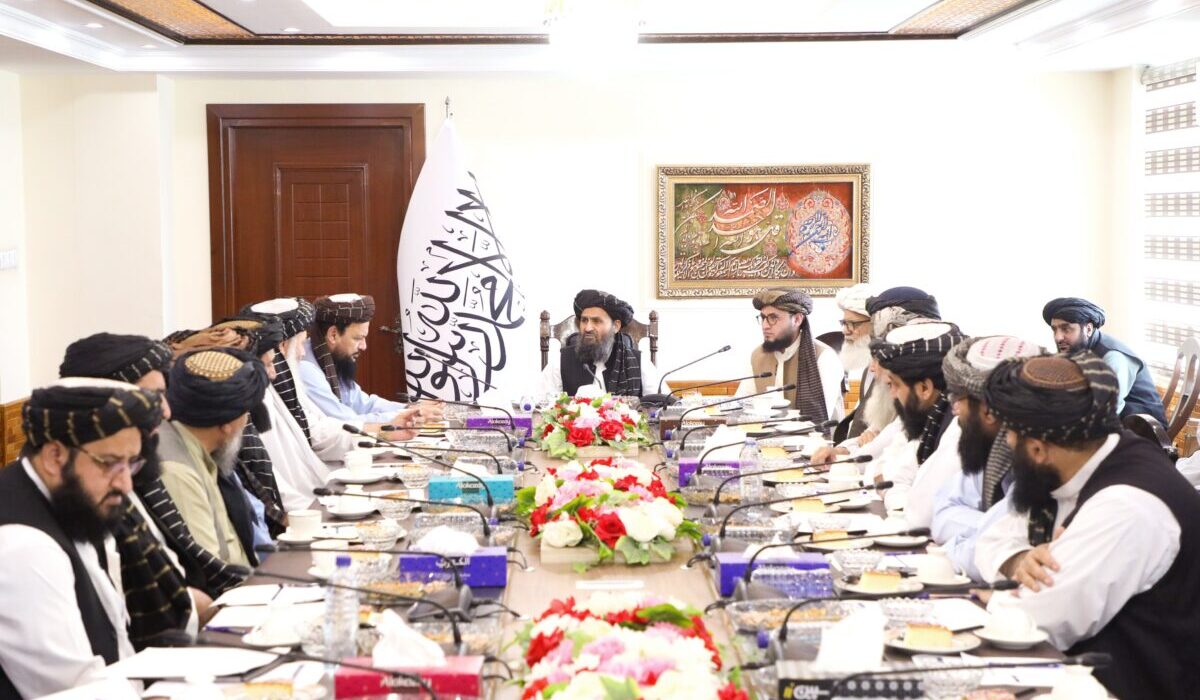
Taliban on Tuesday informed of the approval of 11 development and infrastructure projects worth 1.54 billion afghanis ($23.2 million) at a meeting of their National Procurement Commission chaired by Abdul Ghani Baradar.
The commission reviewed 30 proposals in total, approving 11, ordering amendments to 15, cancelling one contract, reinstating another and directing relevant committees to conduct further assessments on two projects, according to a statement.
The approved projects include reinforcement works in Yateem Tepa in Takhar’s Darqad district, repairs to the runway at Ghor airport, maintenance contracts for Kabul International Airport, construction of a 17-km road in Baghlan’s Dahana-e-Ghori district and a road project linking Zargaran to Gardiz in Paktika.
Other projects cover the purchase of mining equipment for a state-owned northern coal company, vehicles for a government tourism firm, installation of electrical substations from Qarabagh and Muqur to Shah Joy, an electricity supply scheme for Musahi district in Kabul, and survey and design work for a 220-kV substation in Barikab, Kabul province. The Taliban said all projects will be funded by their administration’s budget.
Since returning to power in 2021, Taliban have repeatedly faced criticism for limited transparency around Afghanistan’s national budget and public spending.
Taliban publish only partial budget documents and often omits detailed revenue projections, expenditure breakdowns or information on security-related allocations, making independent assessment difficult. International financial institutions no longer review or verify Afghanistan’s fiscal plans, and most foreign development funding has been halted since the Taliban takeover.
The Taliban say development projects are financed through domestic revenues, including customs duties, taxation and earnings from natural resources. However, economists note that without public financial reporting, it remains unclear how funds are allocated or whether revenue growth can sustain rising commitments.