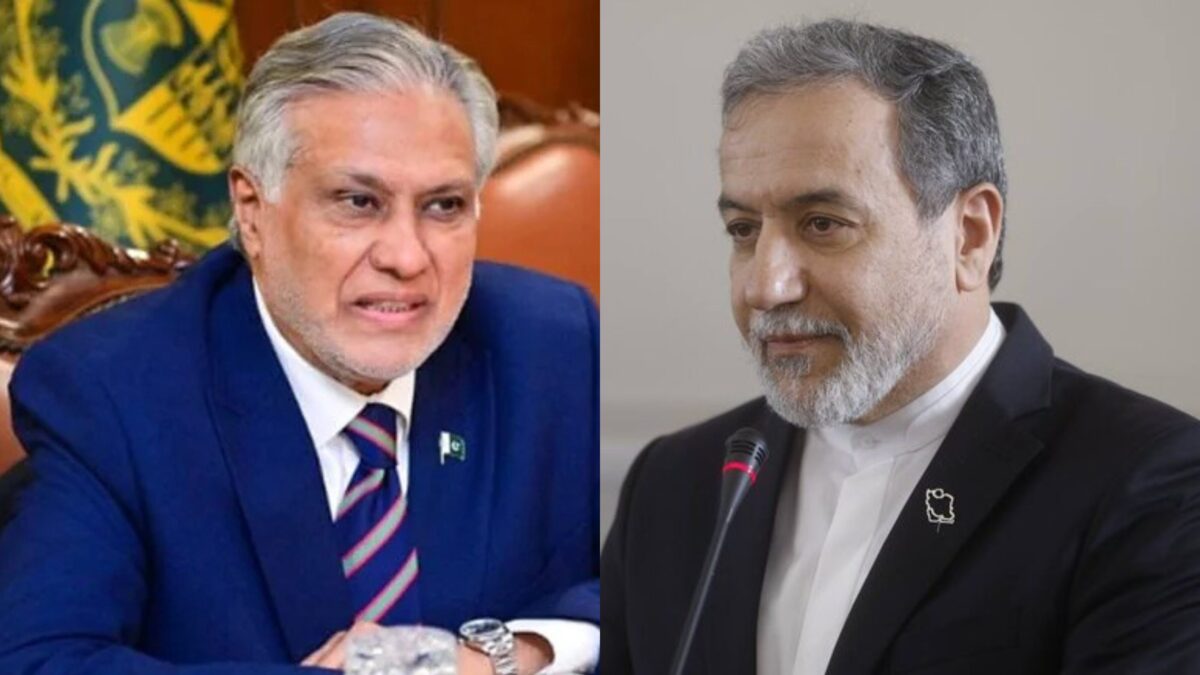
Iran’s Foreign Minister, Abbas Araghchi, expressed concern over escalating tensions between Taliban and Pakistan during a phone call with his Pakistani counterpart, Ishaq Dar, and emphasized the need for continued dialogue between the two sides, according to a statement released by Iran’s Ministry of Foreign Affairs on Saturday.
“Araghchi voiced concern about the current situation between Afghanistan and Pakistan and stressed the necessity of ongoing dialogue between the two sides, with the cooperation of influential regional countries, to reduce tensions and resolve disputes,” the statement said.
The Iranian minister also conveyed Tehran’s willingness to assist “in any way possible” to support the peace process and de-escalation efforts.
Pakistan’s foreign minister, in turn, briefed Araghchi on the latest developments and outcomes of recent negotiations with the Taliban. He reiterated Islamabad’s commitment to maintaining peace and stability in the region.
The two sides reportedly agreed to continue consultations on the matter.
The diplomatic outreach comes at a time of heightened instability between Afghanistan and Pakistan. The third round of high-level talks between Taliban and Pakistani delegations in Istanbul, mediated by Turkey and Qatar, ended earlier this week without a breakthrough. The discussions, focused on curbing cross-border militancy and preventing attacks by the Tehrik-i-Taliban Pakistan (TTP), have failed to yield any tangible agreement.
Both sides have accused each other of irresponsible behavior during the talks. Pakistani Defense Minister Khawaja Asif warned in a televised interview that the situation could deteriorate further if the negotiations collapse, stating that “if talks fail, things may worsen.”
Pakistan has long accused the Taliban of harboring TTP militants on Afghan soil—a charge the Taliban deny. Tensions flared in recent weeks following deadly border clashes in Spin Boldak, prompting the closure of key crossings and disrupting trade and the return of Afghan migrants.