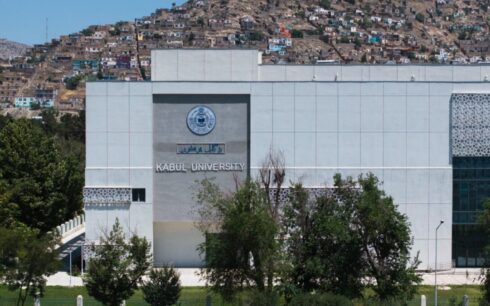
Five years ago on November 2, 2020, gunmen stormed Kabul University, killing at least 22 people, most of them students, in one of the deadliest attacks on a higher education institution in Afghanistan’s history.
The assault lasted nearly six hours, as three armed militants entered the Faculty of Public Administration and Policy around midday, opening fire on students and hurling grenades inside classrooms.
Among the dead were 18 students, many of them women, as well as a university staff member and a member of the Afghan special forces. More than 40 others were injured during the prolonged firefight with security forces.
The victims included promising young men and women between the ages of 20 and 26 — many of whom had been preparing for final exams or participating in academic seminars at the time of the attack.
The victims
The students killed in the attack were:
Mohammad Rahed Amin, 21
Hedayatullah Saadat, 20
Mohammad Bilal Hashimi, 20
Ahmad Ali Mohammadi, 23
Soheila Yari, 22
Raqia Karimi, 26
Mohammad Raouf Aref, 23
Idris Azimi, 23
Nadima Aziz, 22
Maryam Hakimi, 21
Hasni Yousufi, 23
Marzia Taheri, 21
Dawood Ishaq, 23
Hanifa Afshar, 22
Ahmad Ali Danish, 24
Hosseina Hakim, 22
Sara Habib, 22
Ziba Asghari, 21
Also killed were Shirshah, an administrative staff member, and Mushtaq Kohbandi, a special forces soldier who responded to the attack.
The Islamic State’s Khorasan Province (ISIS-K) later claimed responsibility for the massacre. However, officials in the former Afghan government blamed the Haqqani Network, a militant faction closely tied to the Taliban, for planning and executing the assault — a claim the Taliban denied.
The Kabul University attack sent shockwaves through the country, particularly among its youth. At the time, the university was seen as a bastion of learning, debate and progress in a nation grappling with decades of war. The attack marked the second assault on an educational institution in Kabul within two weeks, following a suicide bombing at a tutoring center in Dasht-e-Barchi that killed at least 30 students, most of them ethnic Hazaras.
Since the Taliban’s return to power in 2021, attacks on education centers have continued, though attribution and accountability remain murky in the current security environment. On 19 April 2022 a set of explosions hit the Abdul Rahim Shahid School in a Hazara-neighbourhood of Kabul. The blasts killed at least 6 people and injured many, mostly students. Human rights organizations have repeatedly warned that both Daesh and other armed groups continue to pose a grave threat to civilians, especially students, women, and minority communities.
As families mark the fifth anniversary of the Kabul University tragedy, many are still waiting for justice, and for answers.