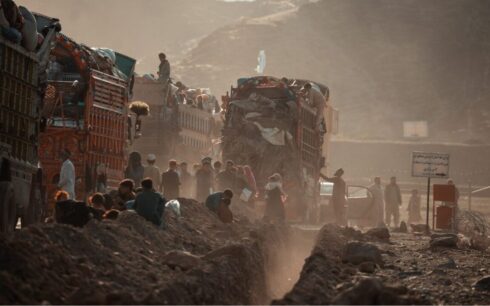
Pakistan has intensified its crackdown on Afghan migrants in the neighboring country, with the provincial government of Punjab issuing new orders that target undocumented immigrants, including arrests, forced deportations, and strict prohibitions against providing housing or shelter to them.
The measures, which mark a sharp escalation in Pakistan’s ongoing campaign against Afghan refugees, came just as negotiations between Taliban and Pakistani delegations failed to reach a conclusion over demands from both sides, mainly on border security issues.
In a statement issued on Wednesday, Punjab authorities directed local police to detain undocumented Afghan nationals and begin deportation procedures without delay. Landlords and hotel owners were warned that renting property to Afghan citizens would be met with legal consequences, and announcements were made in mosques encouraging residents to report Afghans living in their communities without documentation.
The timing of the order—coinciding with the breakdown of talks in Turkey—has raised concerns among rights groups and Afghan refugees that they are being used as political leverage.
In interviews with Amu, several Afghan migrants described their growing fear following the announcement. Malik Ullah Khan, a long-time Afghan resident of Rawalpindi, said that late-night raids had resumed after a brief pause.
“Every day, every night, we live in fear,” Khan said. “The police knock at the doors, they search our homes, and they take people without documents to the Haji Camp. We have no idea what will happen next.”
Another Afghan, speaking from a detention center, said he had been separated from his family. “They took us in a police van and told us we would be deported. There is no lawyer, no process, just fear. We escaped war, and now we are being forced to go back.”
Rights activists say the latest crackdown has affected thousands of families who had sought refuge in Pakistan after the Taliban’s return to power in 2021. Many are former civil servants, soldiers, journalists and women’s rights defenders who fled Afghanistan in fear of persecution, and have been awaiting resettlement to third countries.
On Wednesday, Oct. 29, local sources confirmed that Atifa Fasihi, an actor, was arrested by the Pakistani police in Islamabad.
“After the failed talks between the Taliban and Pakistani officials, the situation for Afghan refugees has become unbearable,” said Izzatullah Bakhshi, a human rights activist in Islamabad. “We stay awake at night and hide during the day. Our only crime is seeking safety.”
The enforcement campaign against Afghan migrants follows a string of harsh public statements from both Islamabad and Taliban.
Pakistan’s Minister of Defense, Khawaja Asif, on Wednesday warned that his country “does not require even a fraction of its full arsenal to completely obliterate the Taliban regime and push them back to the caves.”
Taliban officials have insisted that TTP is Pakistan’s internal problem, and denied that the group operates openly in Afghanistan. Instead, the Taliban have accused Islamabad of violating Afghan sovereignty, including through drone activity and alleged support to ISIS-K and other anti-Taliban armed groups.
A Taliban official, speaking to Amu on condition of anonymity, said Pakistan had made “unreasonable demands” during the Istanbul talks and refused to respond to Afghan concerns, including alleged cross-border airspace violations and the use of Pakistani soil by extremist groups to stage attacks inside Afghanistan.
Caught between the two sides are more than three million Afghan nationals in Pakistan, many of whom have lived in the country for decades. The Pakistani government ended visa extensions for Afghans months ago, leaving many in legal limbo and vulnerable to arrest.
While Islamabad insists the policy is a matter of national security, international observers warn that forced returns could constitute refoulement—a violation of international law that prohibits returning asylum seekers to countries where they may face danger.
According to a recent statement by the United Nations, more than 2.2 million Afghan girls remain out of school due to Taliban restrictions. The Taliban’s bans on women’s work, education and public life have also drawn condemnation from the global community, but with few practical consequences.
Pakistan’s campaign to deport undocumented Afghans comes as winter approaches and humanitarian needs inside Afghanistan remain acute. Many of those facing deportation say they have no homes, jobs, or safety guarantees in the country they fled.