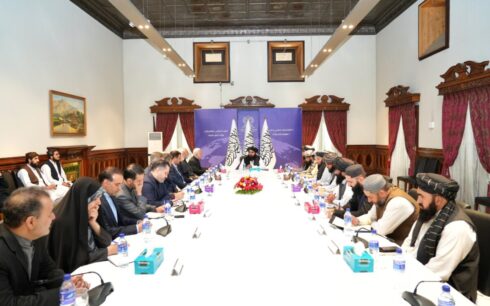
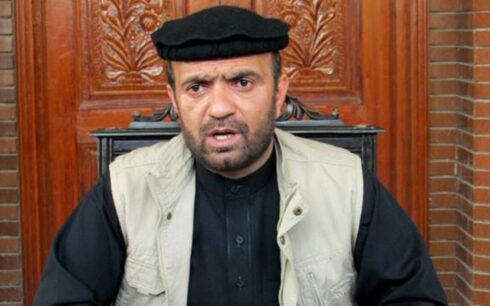
A senior Taliban official told Amu TV that Pakistan’s negotiating delegation is lacking authority and preparing to exit ongoing talks in Istanbul, as frustrations mounted over stalled progress and diverging expectations.
The official said that the Pakistani side may abandon the negotiations due to internal disagreements and interference from “specific military circles” within the Pakistani establishment.
“There is no unified coordination in the Pakistani government,” the official said, adding that the delegation at the table “lacks both authority and coherent reasoning.” He claimed the Pakistani side is “unwilling or unable to justify its positions,” which may lead to an early withdrawal from the talks.
The Taliban official reiterated that the issue of Tehrik-e-Taliban Pakistan (TTP) — the militant group Islamabad accuses of launching attacks from Afghan soil — is “an internal problem for Pakistan,” not a matter for Afghanistan to resolve.
“The TTP issue is not new, and it did not originate under our government,” the official said. “Pakistan should deal with this problem within its own borders. Asking Afghanistan to control attacks inside Pakistan or represent the TTP is neither logical nor feasible.”
These remarks follow similar claims made by the Taliban’s state-run television channel, which reported on Monday that the Pakistani delegation at the Istanbul talks was “unauthorized” and “reluctant to engage in constructive negotiation.” The broadcaster accused the Pakistani military of obstructing progress and preventing meaningful dialogue.
According to earlier Taliban statements, their delegation presented proposals urging Islamabad to respect Afghanistan’s airspace and to prevent anti-Taliban groups from operating inside Pakistan. They also proposed the creation of a four-party monitoring mechanism to oversee any future agreements.
Meanwhile, Pakistani sources have maintained that their delegation submitted a clear position to the Taliban, demanding concrete steps to dismantle terrorist networks and end cross-border attacks. Reports in the Pakistani media suggest Islamabad is growing increasingly frustrated with what it perceives as Kabul’s unwillingness or inability to rein in groups like the TTP.
Tensions between the two sides have escalated since early October, following eight days of deadly border clashes. Five key border crossings — including Torkham and Spin Boldak — remain closed for trade and transit for a 17th consecutive day as of Tuesday, October 28.
Further straining ties, Pakistan has intensified the deportation of undocumented Afghan migrants. On Sunday alone, nearly 8,000 Afghans were expelled, with more than 7,300 deported the following day. Humanitarian agencies have warned of mounting needs at the border.
No Pakistani officials have yet commented on the reported possibility of walking away from the Istanbul negotiations. But the lack of a joint communiqué — despite earlier Taliban claims that an agreement was within reach — suggests deep and unresolved rifts between the two sides.
As diplomatic efforts falter, observers fear that without third-party mediation or political will on both sides, the already fragile relationship may deteriorate further, with serious implications for regional security and humanitarian conditions.