Five key commercial crossings along the Afghanistan-Pakistan border remain closed, despite a ceasefire agreement between the two sides following deadly military clashes last week.
The closures — at Torkham, Chaman, Ghulam Khan, Angoor Adda and Dand-e-Patan — were enacted after Pakistani airstrikes targeted areas in Kabul as well as southeastern provinces, prompting retaliatory tensions. While a truce, brokered by Qatar and Turkey, was reached late Saturday, Oct. 19, the resumption of cross-border trade and passenger travel has yet to materialize.
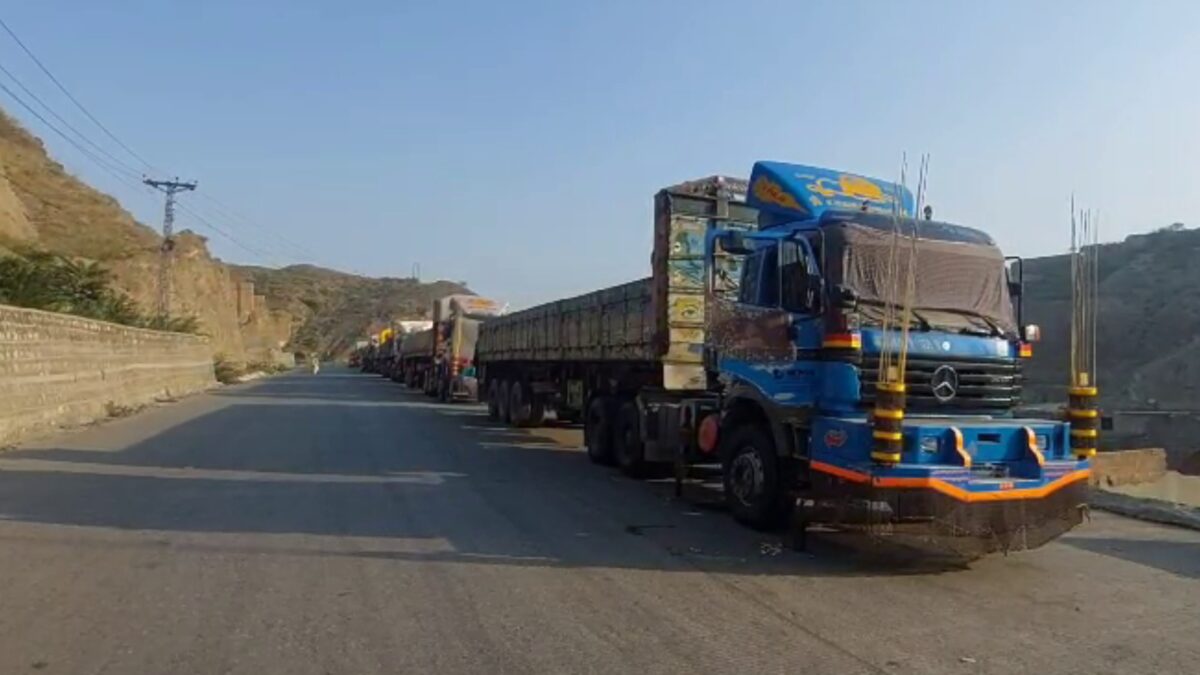
Hundreds of trucks carrying perishable goods have been stranded on both sides of the border for more than a week, causing growing financial losses for traders and transport operators.
“This is a huge loss for the traders, the drivers, and even the governments of both countries,” said Azizullah, a truck driver idled near the Torkham crossing. “Goods have spoiled. On the other side, vegetables and fruits are rotting inside trucks.”
At least 500 trucks are currently held at the Chaman crossing, and another 140 at Angoor Adda, according to transport workers. The total number of stranded vehicles across all five routes remains unclear.
The disruptions began roughly 10 days ago, when rising tensions between Taliban and Pakistani forces led to air and artillery exchanges across the border. Although both governments have since agreed to de-escalate and pledged to refrain from supporting hostile groups, traffic at the major crossings remains frozen.
Only the Spin Boldak border was reopened temporarily for three days to facilitate the return of Afghan migrants. Commercial traffic, however, remains blocked.
Local business owners and drivers have warned that the prolonged shutdown is not only hampering trade but also driving up food prices and straining markets in border regions.
“People are suffering. Traders are suffering. Shops are suffering,” said Imam Jan, a driver waiting near one of the sealed crossings. “The crossing must reopen immediately.”
Taliban and Pakistani officials have not announced when the crossings might reopen. Nor has there been any indication of compensation or relief measures for businesses affected by the disruption.
Cross-border commerce is a critical economic lifeline for Afghanistan, which remains heavily reliant on imported food, fuel and consumer goods.