Some doctors in Kandahar say “pressure and mistreatment” by the Taliban have forced several male and female health workers to resign.
They say the Taliban have blocked professional licenses issued during the republic era and now refuse to allow medical staff to work without presenting an official license. They add that without such a license, individuals are not permitted to open pharmacies.
“One of the doctors, speaking on condition of anonymity because of the sensitivity of the matter, said, “I have worked in health care for more than 10 years, but now they refuse to let me establish a private pharmacy on the pretext I don’t have a license. Licenses were frozen during Hamid Karzai’s time, and since then thousands of medical graduates have appeared; where should we get a license now?”
He is a surgeon at one of Kandahar’s public hospitals and added: “I have worked for the people for years, but now I want to open an independent pharmacy and they say I lack the license. We’re tired of the humiliating treatment from the Ministry of Public Health.”
Doctors estimate there are over 8,000 pharmacies in Kandahar, yet only about 30 percent hold official licenses or rented licenses. The rest are run by qualified physicians who lack legal authorization and have no way to obtain it.
According to these doctors, the issue is not confined to Kandahar. Across Afghanistan, about 70 percent of physicians do not have legal licenses to establish pharmacies.
They are calling on the Taliban Ministry of Public Health to establish a transparent and orderly licensing procedure so they can work under the law. They also demand an end to “humiliation, harassment and unreasonable restrictions.”
One doctor said, “Now every physician and nurse in society is weary and disenchanted with the Taliban’s conduct.”
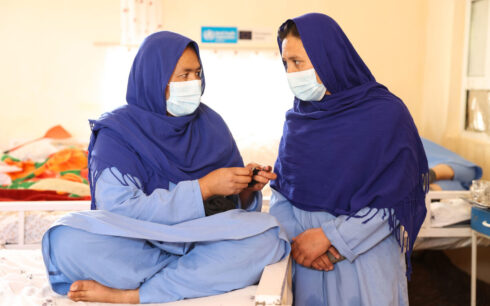
They also revealed new restrictions imposed on female staff. One doctor said: “Female personnel have been told not to wear the chador or niqab, and only masks are permitted. This is inconsistent with personal freedom and the Islamic definition of hijab. Yet women accepted the condition to preserve their jobs.”
According to these doctors, the Taliban recently decreed that female employees must come to the hospital with a mahram (male relative) and that the mahram must remain on site throughout the workday.
One physician said: “We were told every female employee must bring her mahram to the hospital and he must stay until evening. In the past, men were not even allowed in women’s wards; now the mahram—even if he doesn’t work—has to stay all day. Under current economic conditions, how can any family allocate one person just to sit in the hospital all day?”
Many female staff, they say, have left their jobs and now remain at home as a result of the restrictions.
The Taliban have not issued any comment on these allegations. Over the past four years, they have introduced increasing constraints on women’s participation in work, daily activities and public life.