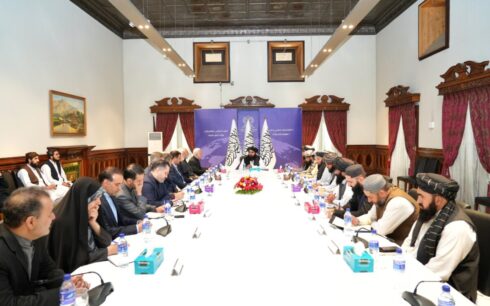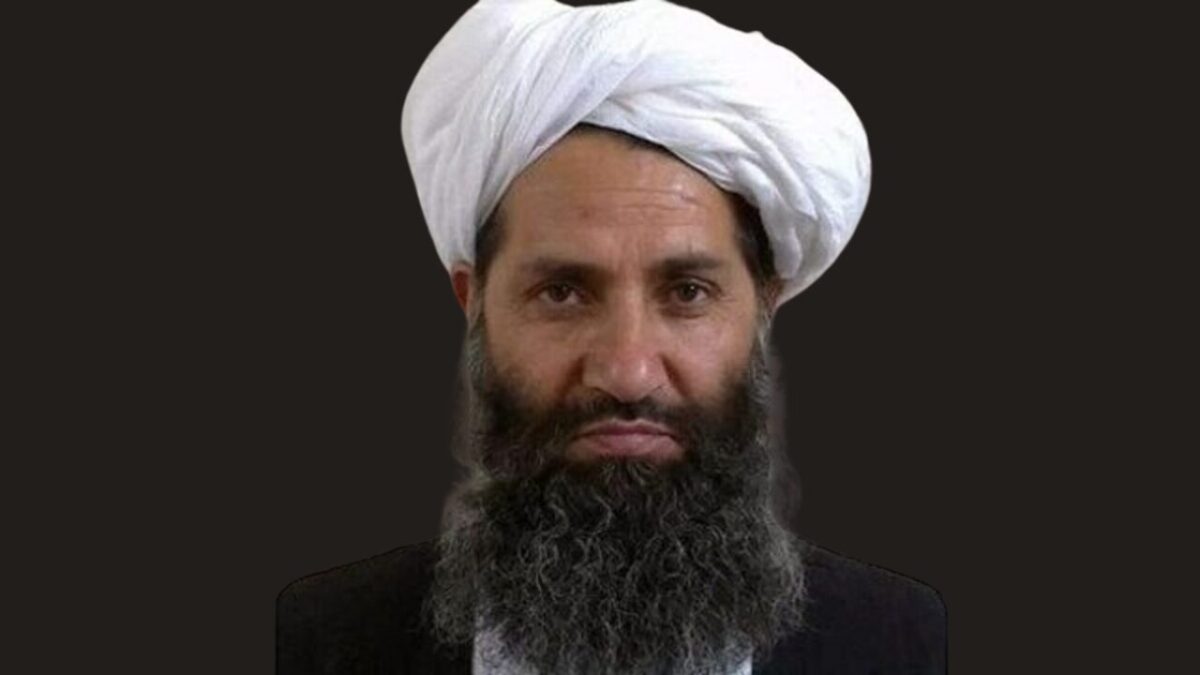
Hibatullah Akhundzada has reassigned 15 Taliban officials across various ministries, provincial administrations, and military units, continuing his pattern of rotating existing members within the ranks.
The reshuffle, outlined in a decree Monday, included changes to four deputy minister posts, three provincial governors, three deputy governors, four key security positions, and one municipal leadership role.
Among the notable changes, Mohammad Qasim Khalid, previously Taliban governor of Nimroz, was appointed Talibvan deputy minister for counter-narcotics at the Ministry of Interior.
Mohammad Wazir Badshah was named Taliban deputy minister for logistics at the same ministry.
Abdul Haq Hamkar, who previously held the counter-narcotics role, was shifted to the Ministry of Public Works as Taliban deputy minister for finance and administration.
Similarly, Mohammad Amin Jan Omari, former Taliban governor of Badghis, was appointed to a parallel administrative post at the Ministry of Telecommunications and Information Technology.
In the military structure, Abdul Qayum Rohani, previously Taliban governor of Khost, was reassigned as commander of the Taliban’s 203 Mansoori Army Corps, while Mohammad Ismail Rasekh, who formerly held that command, was appointed Taliban police chief in Jawzjan. Abdul Sattar Saber, who served as Taliban police chief in Jawzjan, has now taken over as chief of staff of the Taliban’s central 313 Corps.
Mohibullah Hamas, formerly Taliban deputy governor of Zabul, was appointed their police chief in Nangarhar.
Governorships were also rotated. Mohammad Hanif Hamza, who was Taliban deputy minister at the telecom ministry, was sent to lead Badghis province; Abdul Manan Mahmood, formerly head of staff at the Taliban’s 313 Corps, became their governor of Nimroz; and Abdullah Mokhtar, previously Taliban deputy minister for logistics, took over as Taliban governor of Khost.
In the deputy governor roles, Sayed al-Rahman, formerly in Maidan Wardak, moved to Zabul; Faridullah Qiyam, previously police chief in Nangarhar, became deputy governor of Maidan Wardak; and Sardar Mohammad Madani, once Taliban head of borders and tribal affairs in Logar, was appointed Taliban deputy governor of Ghazni. Additionally, Abdul Rashid, former deputy governor of Ghazni, was reassigned as mayor of Khost.
Over the past four years, all top appointments within the Taliban administration have been directed by Akhundzada and consist largely of internal reassignments.
A study by the Middle East Institute found that the Taliban’s cabinet is heavily dominated by members of a single ethnic group and continues to exclude women from any official roles.