If the US military’s presence by agreement in other countries does not constitute occupation, why should its presence in Bagram be considered a violation of Afghanistan’s sovereignty? Afghanistan, like Germany, Japan, or Qatar, could host a US base without losing its independence.
In this article, the writer argues that NATO’s presence in Afghanistan over the past two decades — based on an agreement with the former Afghan government and authorization by the UN Security Council — did not violate national sovereignty. There is a fundamental difference between a negotiated presence and a military occupation.
Not every foreign military presence equals occupation.
A negotiated presence is established through bilateral agreements or international mandates, such as those issued by the UN Security Council. Occupation, on the other hand, occurs when foreign forces enter and remain in a country without consent, usually following military defeat or coercion.
Therefore, NATO’s presence in Afghanistan — despite its political flaws and the weak legitimacy of the former government — was not considered an occupation, as it was based on an agreement and international authorization.
Unfortunately, Afghanistan’s political history is full of secret deals and betrayals. Many of its leaders have publicly raised the banner of independence and freedom while secretly trading away national interests for personal or factional gain — a pattern that continues today.
The Taliban, for instance, loudly proclaim independence but rely on US and Western funds. International aid, which is meant for the Afghan people, in reality lifts much of the burden from their shoulders.
If Afghan leaders, for once, were to speak openly and transparently with their people about international agreements and partnerships, many of the country’s problems could be resolved.
US Military Bases Around the World
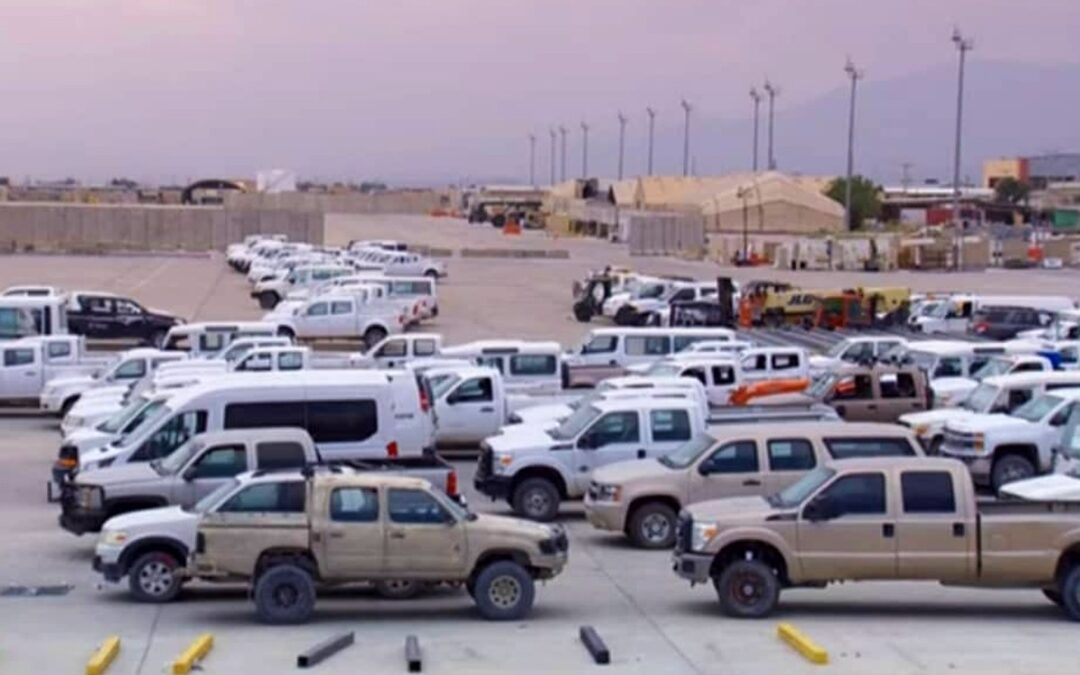
Since World War II — and especially during the Cold War — the United States has built a vast network of military bases across the world, many of which remain active today. These bases, located in Europe (Germany, Italy, Poland), Asia (Japan, South Korea, the Philippines), and the Middle East (Qatar, Bahrain, Kuwait), have served strategic purposes such as deterrence against rivals, control over trade and energy routes, support for regional allies, and crisis management.
While controversial in some countries, most US bases have been established through mutual agreements rather than coercion. Apart from Cuba and Iraq — where the US presence began as occupation — most such arrangements have been consensual and even mutually beneficial.
So if the US presence in these nations does not amount to occupation, why should its presence in Bagram be seen as one? Afghanistan, too, could — through transparent and legal agreements — host an American base without compromising its sovereignty.
The Taliban will likely, sooner or later, hand over Bagram to the US for political or financial gain. They already maintain secret relations with Western countries and benefit from international funding. The difference this time should be that any Bagram arrangement happens transparently and within a mutually beneficial framework.
In conclusion, any Afghan government must abandon hollow slogans and hypocrisy in foreign policy. If an agreement on Bagram is reached, it should not be branded an occupation. Just as Germany, Japan, and South Korea remain independent and powerful despite hosting major US bases, Afghanistan, too, could gain economic, security, and political benefits from a transparent, negotiated US presence.
Afghanistan’s leaders must, for once, be honest with their people — tell the truth, act openly, and put national interests above everything else. Only then can a potential US presence in Bagram be seen as an opportunity for Afghanistan, not a threat to its sovereignty. We must think of our own interests — and ours alone.
Mohammad Afzali received his Ph.D. from Delhi University and previously taught at Herat University. He has also served for 20 years within Afghanistan’s Ministry of Foreign Affairs, both at home and abroad — from heading the ministry’s office in Herat to serving as Minister-Counselor in India. He has authored books on literature and history and translated several books from English into Persian.
The opinions expressed in this article are those of the author and do not necessarily reflect the views of Amu.